
Free on-site gate assessment - hinges, posts, and your LiftMaster or Nice gate operator checked before anything is quoted
The assessment is free and the quote is the invoice.

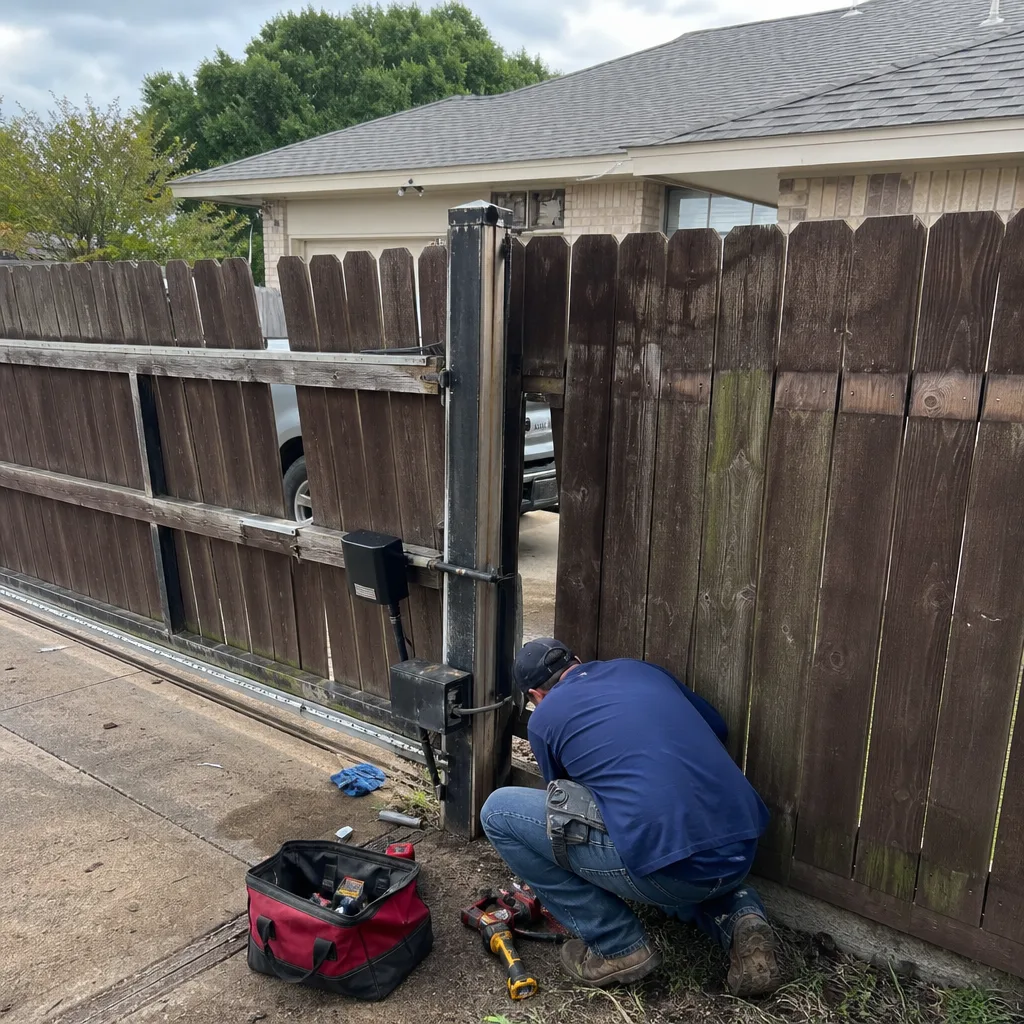 Before
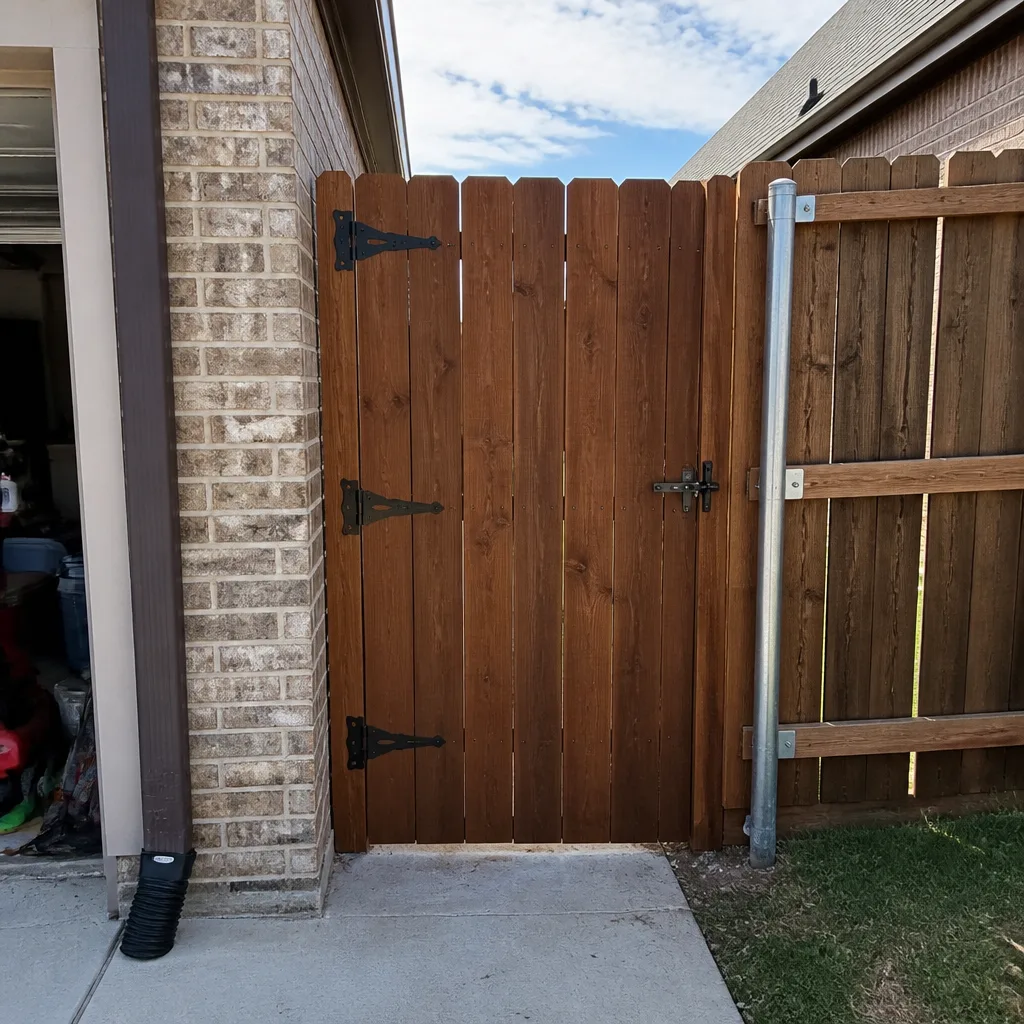 After
After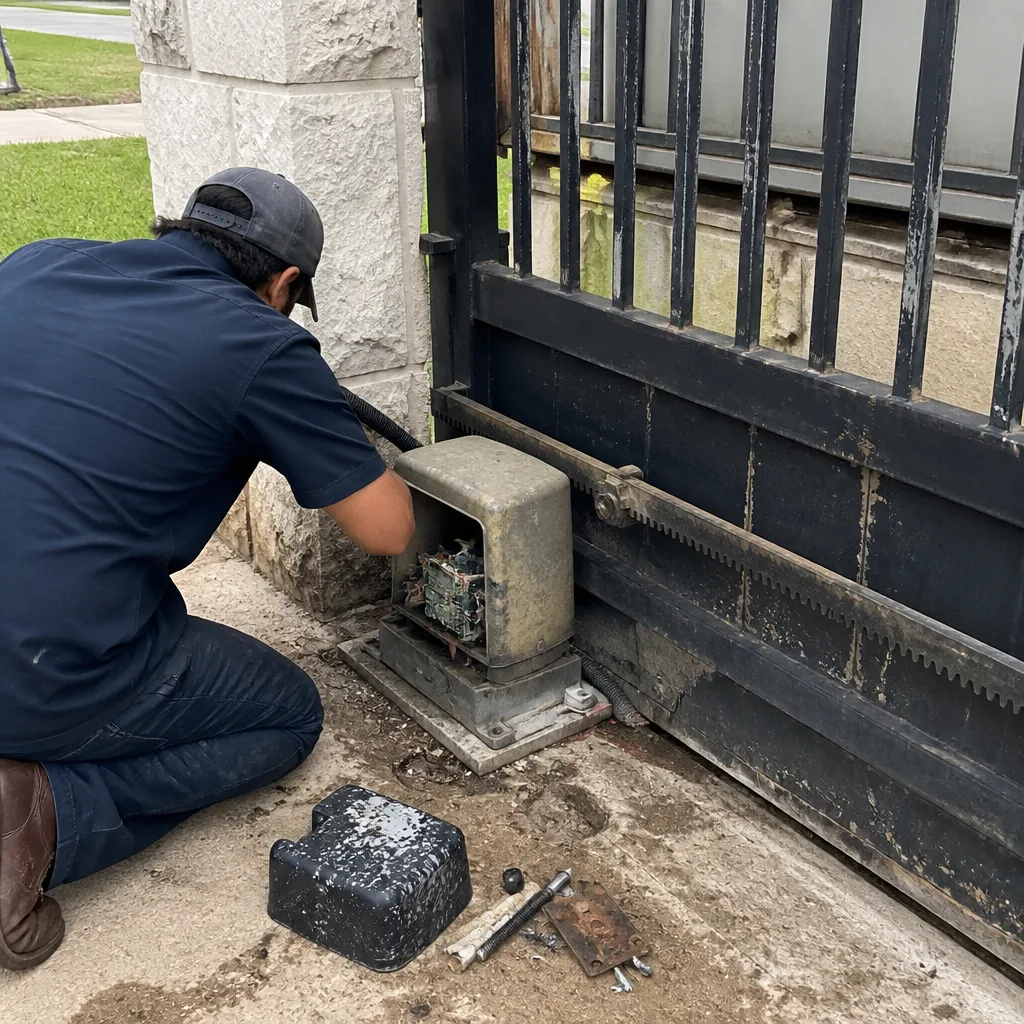 Before
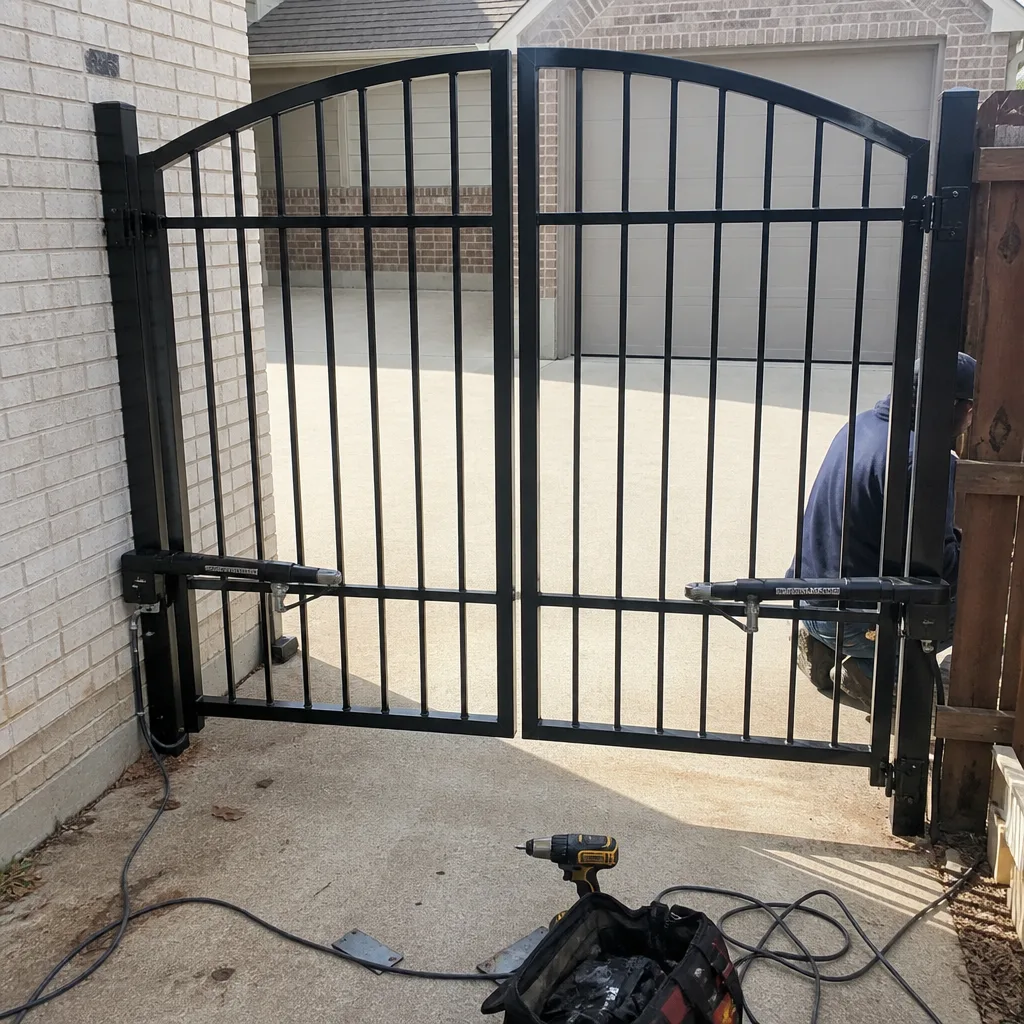 After
After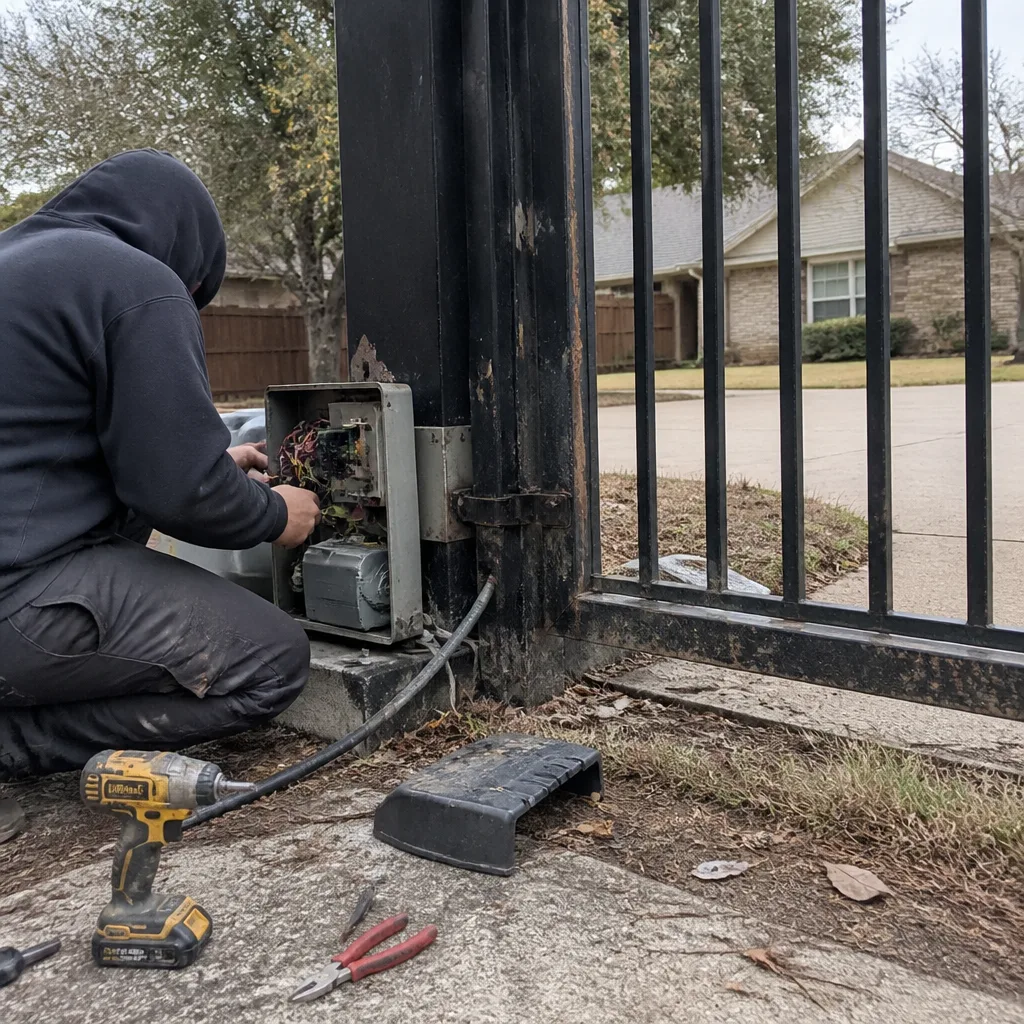 Before
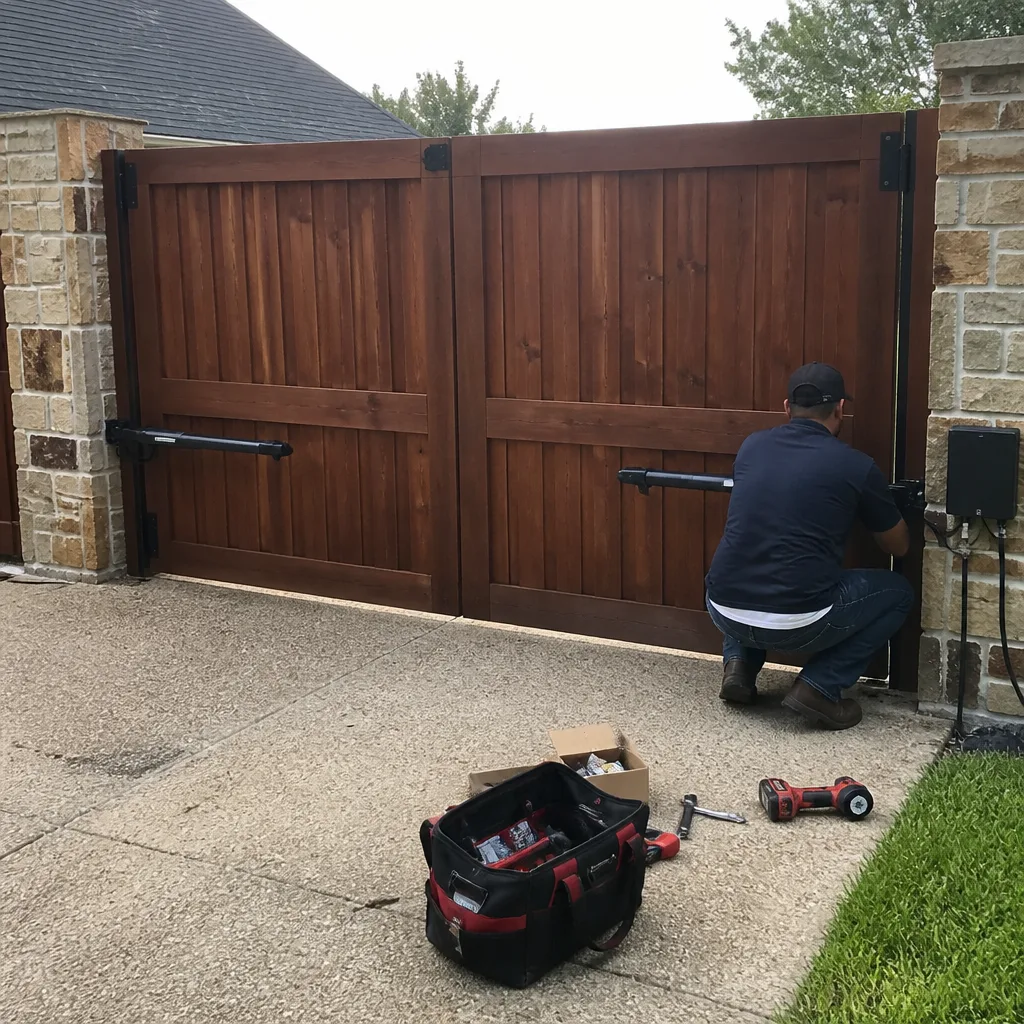 After
AfterLinear Gate Motor Replacement: The Lewisville Owner’s Guide
A Linear gate motor replacement in Lewisville typically runs $650 to $1,450 installed, depending on the model and whether the arm bracket, receiver, and wiring are still intact. We stock Linear-compatible replacement motors on the truck and can usually complete the swap the same day we diagnose the failure. Most owners discover the problem when the gate starts moving slower than it did last month, then stops mid-travel, then won’t respond at all from the keypad.
What usually happened: the capacitor dried out, the limit switch drifted past its set point, or the gear train stripped after years of Lewisville heat cycling the housing. The motor itself rarely “burns out” all at once. It degrades in stages, and most people don’t notice until the gate is stuck open, which leaves the driveway exposed overnight. That’s the moment this page matters to you.
Which Linear Models This Applies To
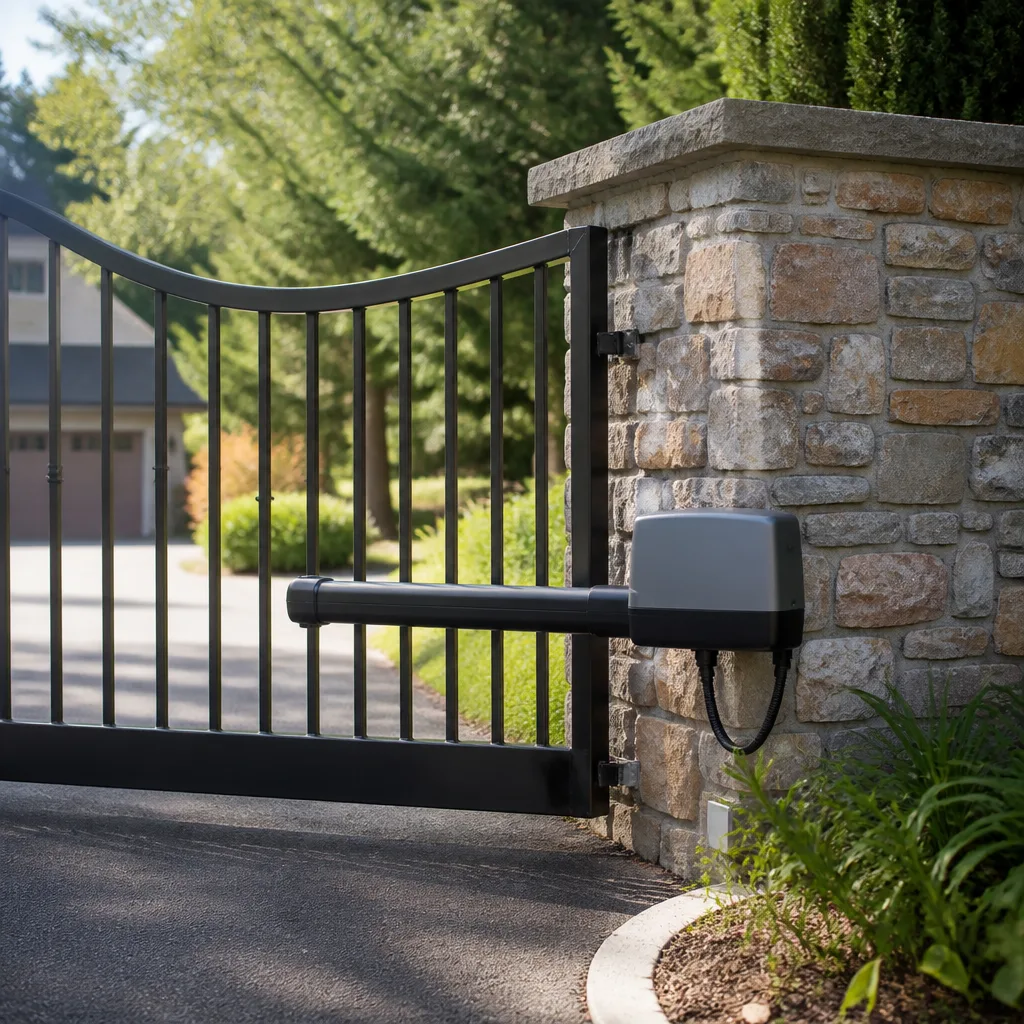
We replace Linear gate motors across the LRA, LD, and H series swing-arm lines, plus the older SL and VS slide units still running in Lewisville subdivisions where the HOA approved Linear back in the 2000s. The key identifier is the nameplate on the underside of the operator arm: Linear stamps the model and serial there, and the serial prefix tells us the production year, which matters for parts compatibility.
Here’s the gotcha most people don’t know: Linear swing arms come in 12V DC and 24V AC configurations, and the two are not interchangeable. Put a 12V motor on a 24V board and the limit switches will never track correctly, even if the arm physically bolts on. We confirm the voltage before ordering or installing anything, and we photograph the original nameplate as part of every visit. On the OEM-vs-aftermarket question: for Linear motors, we generally stock and recommend OEM Linear replacement motors because the control board logic and limit-switch spacing are tuned to the original motor’s RPM. A generic aftermarket arm will run, but it often cycles the gate faster, which wears rollers and hinge hardware in ways the original never did. Some Lewisville gates near Vista Ridge Mall run through 40 to 60 cycles a day; at that volume, motor speed matters.
Signs Your Linear Gate Motor Replacement Is Failing
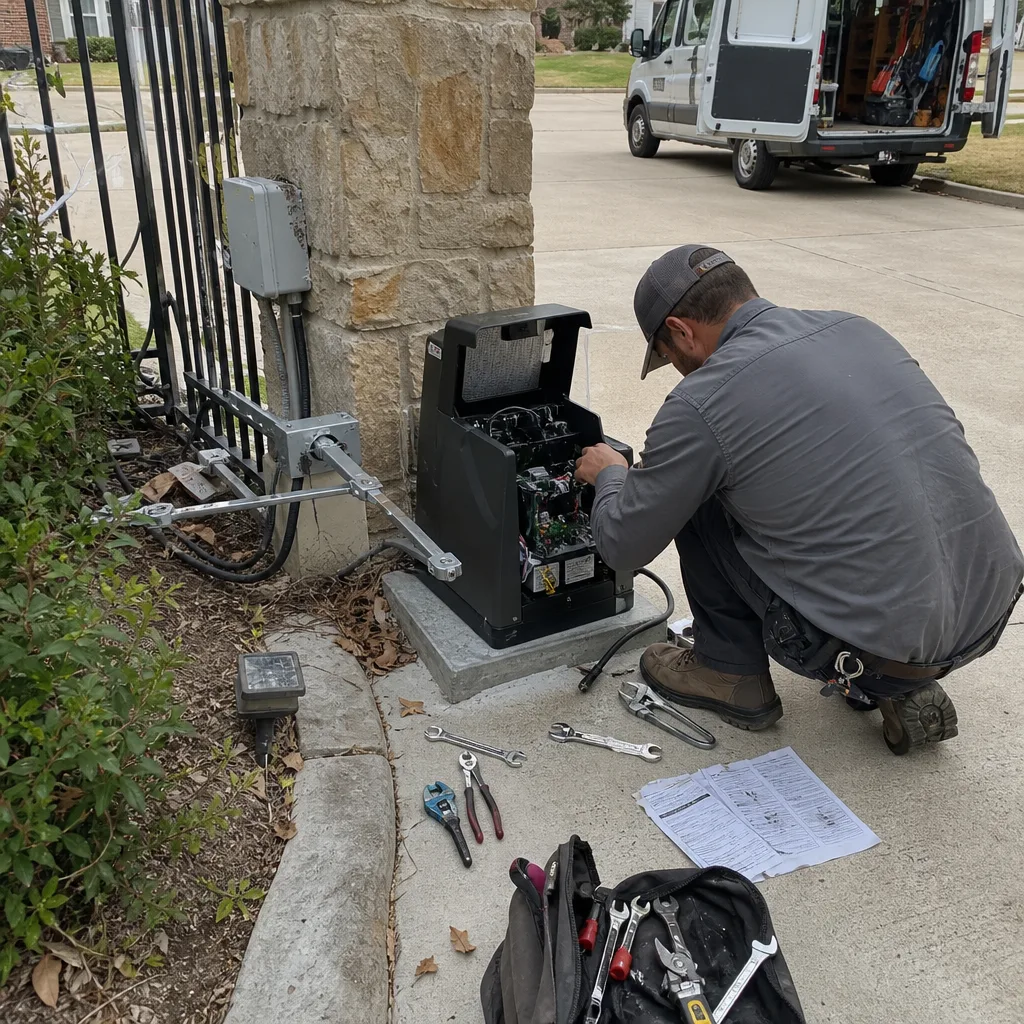
Here are the five symptoms we see most often on Linear operators in Lewisville, and what’s behind each one:
- Gate moves slower than it did last season. This is almost always a failing start capacitor or a motor drawing higher amperage than the board can supply cleanly. On Linear LD series units, we’ve measured gate travel times that doubled over a four-month span before the motor quit entirely.
- Gate jerks or stutters partway through travel. Linear motors use a worm gear that wears unevenly if the gate is slightly out of balance. The motor is fighting the gear on every cycle, and the stutter is the gear skipping under load. If left alone, it takes the limit switch with it.
- Gate stops at random points and reverses. On Linear boards, this usually means the current-sensing circuit is tripping because the motor is pulling too hard. It’s not a board problem; it’s the motor telling you it’s done. Swapping in a new motor resolves it in most cases we see.
- Humming or clicking from the operator, but no movement. The motor is trying to start but the capacitor can’t give it the initial push. We’ve seen this on Linear LRA units that sat through a full Lewisville summer; the capacitor shell expands, the dielectric dries, and all you get is a sad hum from the housing.
- Gate was hit or forced open recently, now it behaves strangely. A forced-open event strips the gear teeth and bends the motor shaft on Linear arms. The motor may still spin, but the gate position never matches what the board thinks it is. You’ll see the gate reverse at random or fail to close fully.
BeforeAfterReplacement Cost & What’s Included
In Lewisville, a complete Linear gate motor replacement runs $650 to $1,450 installed, with most single-swing residential jobs landing between $750 and $1,100. The range depends on the motor voltage (12V DC vs 24V AC), whether the existing control board is still healthy enough to drive the new motor, and whether the arm bracket from the previous install can be reused. If the bracket is bent or the receiver board is scorched, the job goes higher because more components come with it.
Your price includes the motor itself, the labor to remove and reinstall, calibration of the limit switches to the exact open and closed position of your gate, and a full function test through at least five cycles. We write the price down and hand it to you before any work begins, under Haven Standard Clause 1: have it in writing. The installed motor carries the manufacturer’s warranty, and our work is covered by the 365-Day Done Right Promise. If the gate doesn’t run right within that year, we fix it. No argument, no fee.
DIY or Call Us?
You can check three things on a Linear arm without opening the housing: the manual release lever, the condition of the clevis pin at the arm-to-gate bracket, and whether the photo-eye lenses are crusted over with dust. Those are safe to look at and often explain a stopped gate. What you should not do is open the motor housing yourself. Linear operators carry live 120V inside the chassis even when the gate is motionless, and the capacitor holds a charge after power is cut. A discharged capacitor through your hand is not a lesson you want to learn on a Saturday afternoon.
If the arm hums, stutters, or needs a multimeter to diagnose, call us at (817) 826-9477. We’ll send a background-checked technician with the right Linear motor and the right test equipment on the truck, and we’ll show you the written price before anything comes off the gate.
FAQs
A Linear swing-arm motor in the Lewisville climate typically lasts 7 to 10 years on a residential gate that runs 10 to 20 cycles a day. Gates that run hotter, like the high-traffic driveways near Vista Ridge Mall or any property where the gate cycles 40+ times daily, burn through motors faster because heat is the primary killer of the capacitor and gear assembly. If your Linear operator is past year eight and behaving oddly, the motor replacement is usually the conversation we have.
The capacitor can be replaced as a repair, and a stripped gear set can sometimes be rebuilt on newer units, but the labor involved rarely saves money over a full motor replacement. When a Linear motor fails, at least two components are usually gone, and the motor shaft often shows wear that will take out the new gear within a year. We’ll tell you honestly which path makes sense for your specific unit, and the recommendation goes in the written scope before you pay anything.
A standard single-swing Linear motor replacement in Lewisville takes 90 minutes to 3 hours on site, from power-down to final cycle test. If the control board or photo-eyes were damaged along with the motor, it runs longer. We can usually start the same day we diagnose it, since we keep Linear motors and matching brackets on the truck.
Yes. Our trucks carry Linear OEM motors in both 12V DC and 24V AC configurations, plus matching control boards, capacitors, and arm brackets for the LRA and LD series. We also maintain parts inventory for LiftMaster, Mighty Mule, and Ghost Controls systems, so if you have a mixed setup on your property, one visit covers it. Call (817) 826-9477 for a free replacement estimate, and you’ll have the price in writing before we touch a tool.
Written by Adrian Vance, Owner, Vance Gate Repair Lewisville at Vance Gate Repair Lewisville, serving Lewisville and nearby areas.