
Last updated September 20, 2026
Free on-site gate assessment - hinges, posts, and your LiftMaster or Nice gate operator checked before anything is quoted
The assessment is free and the quote is the invoice.

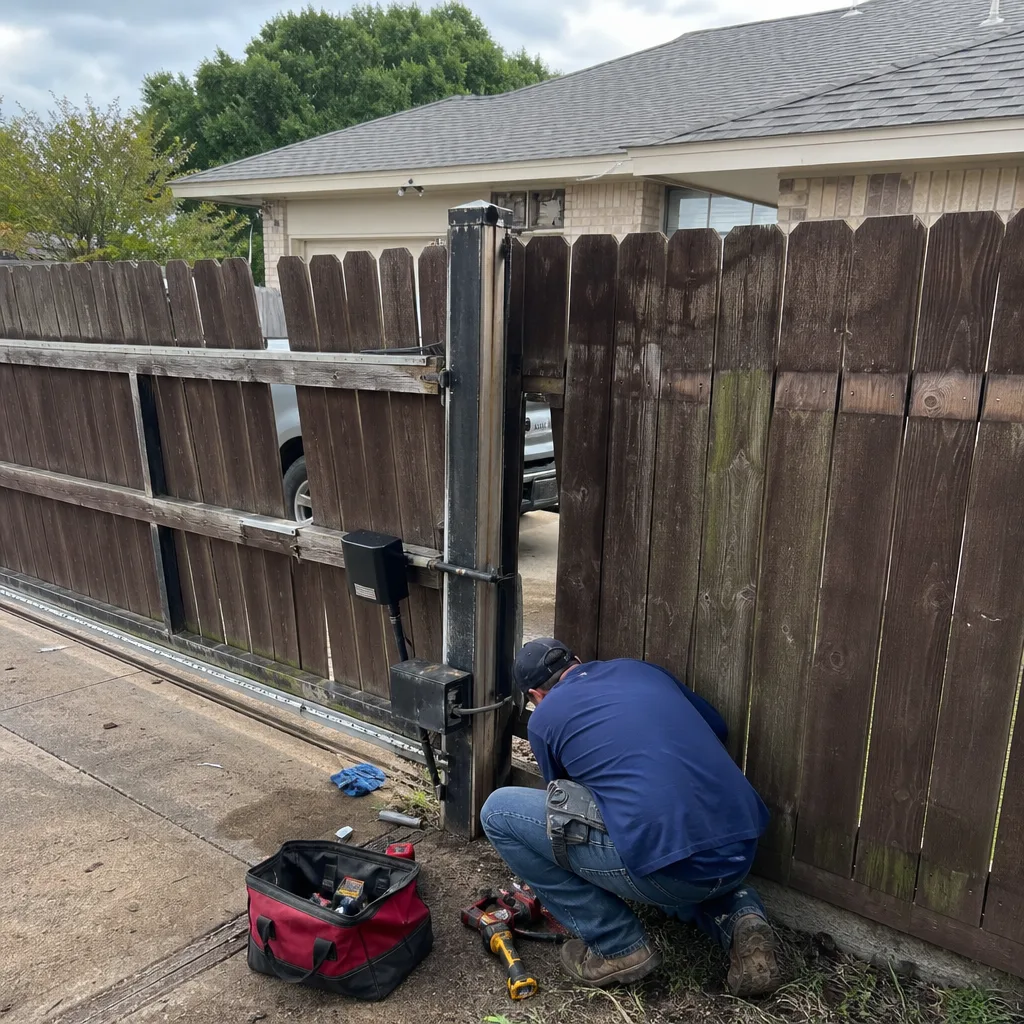 Before
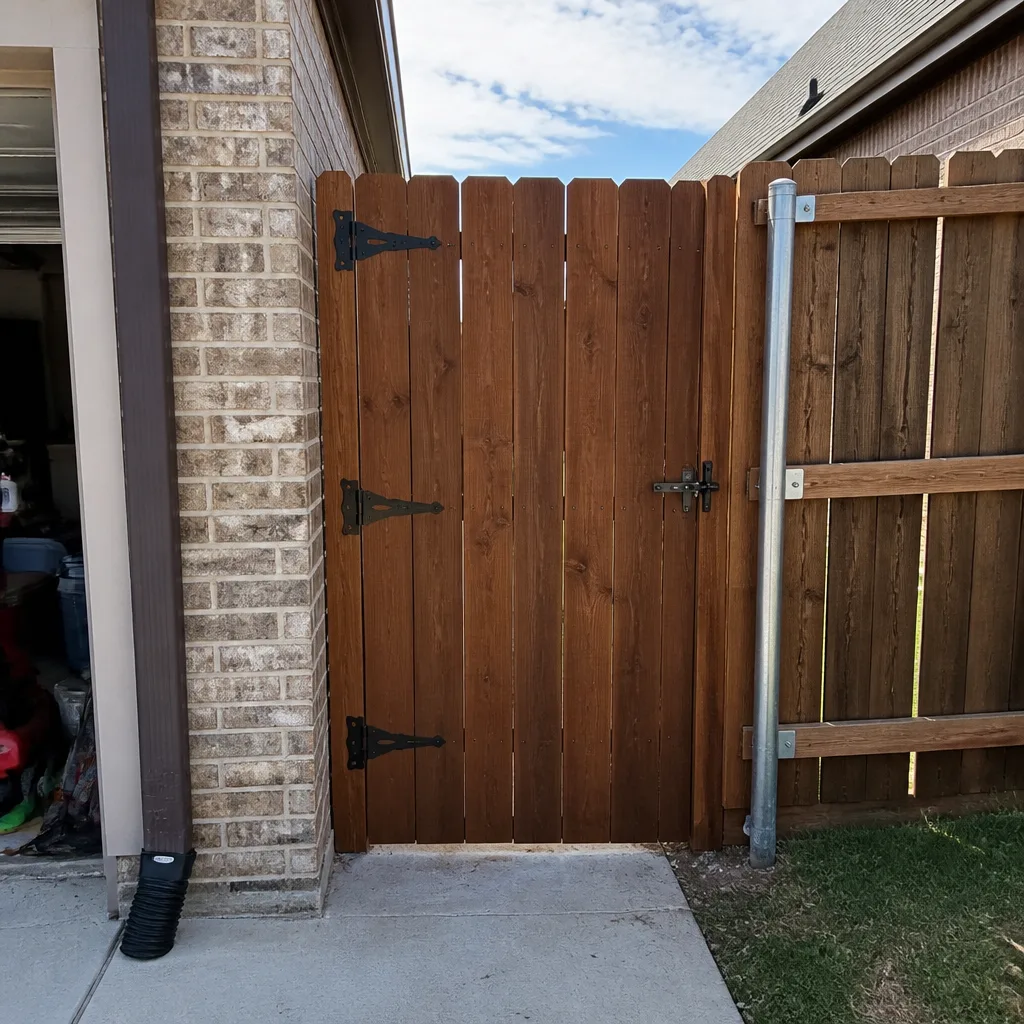 After
After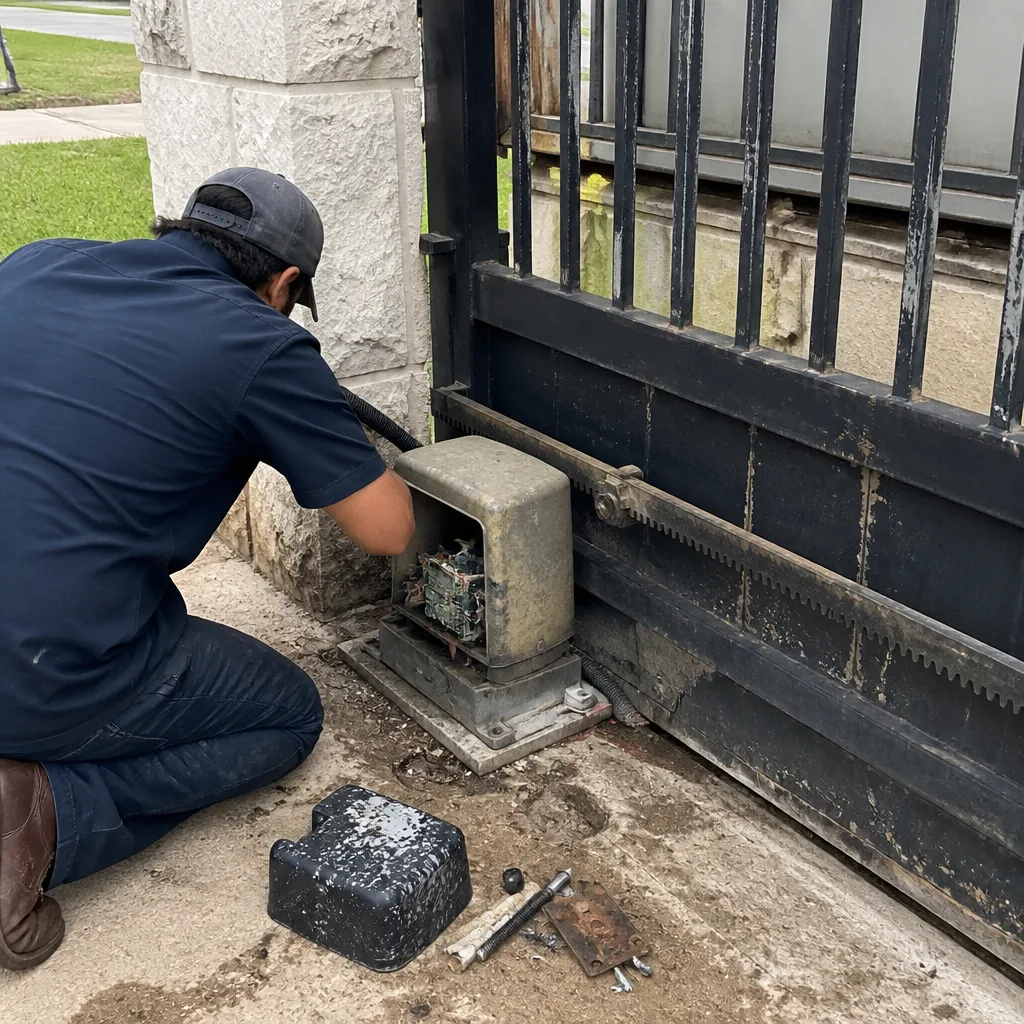 Before
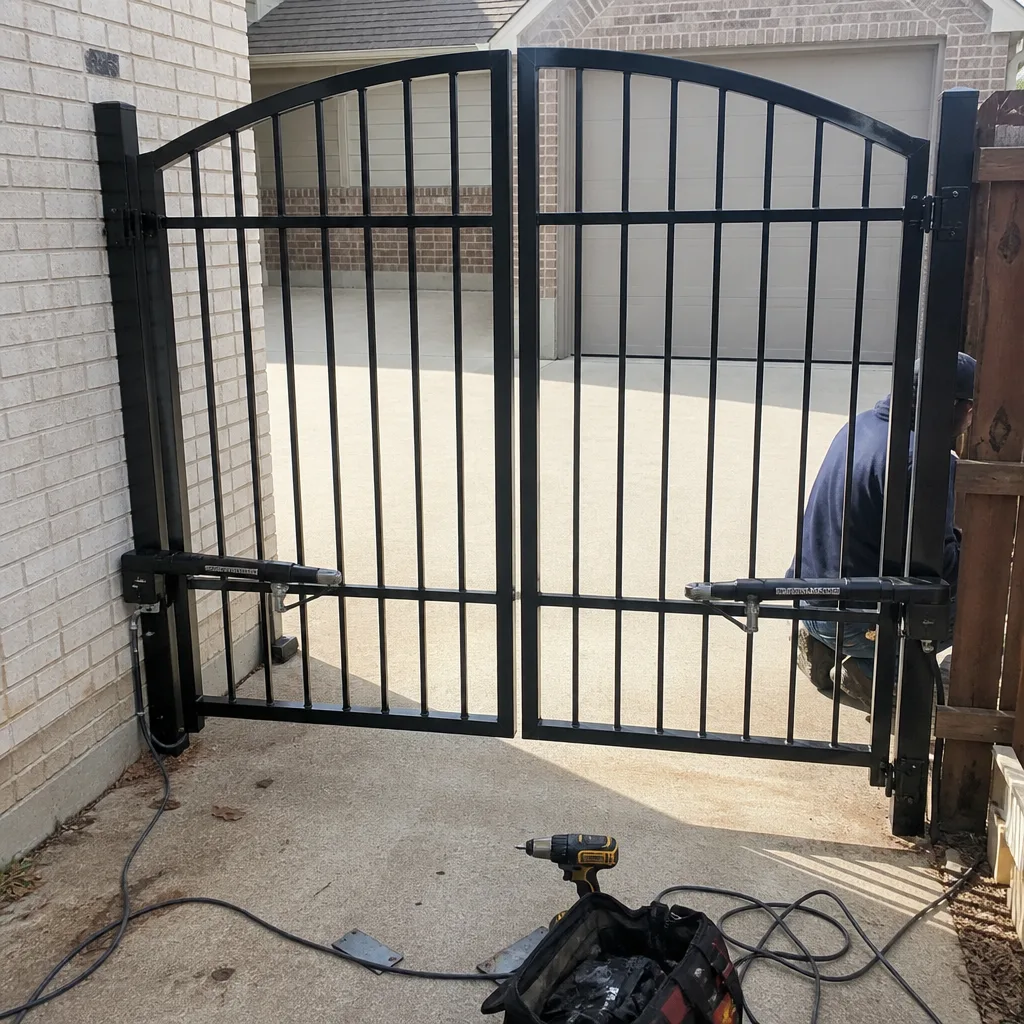 After
After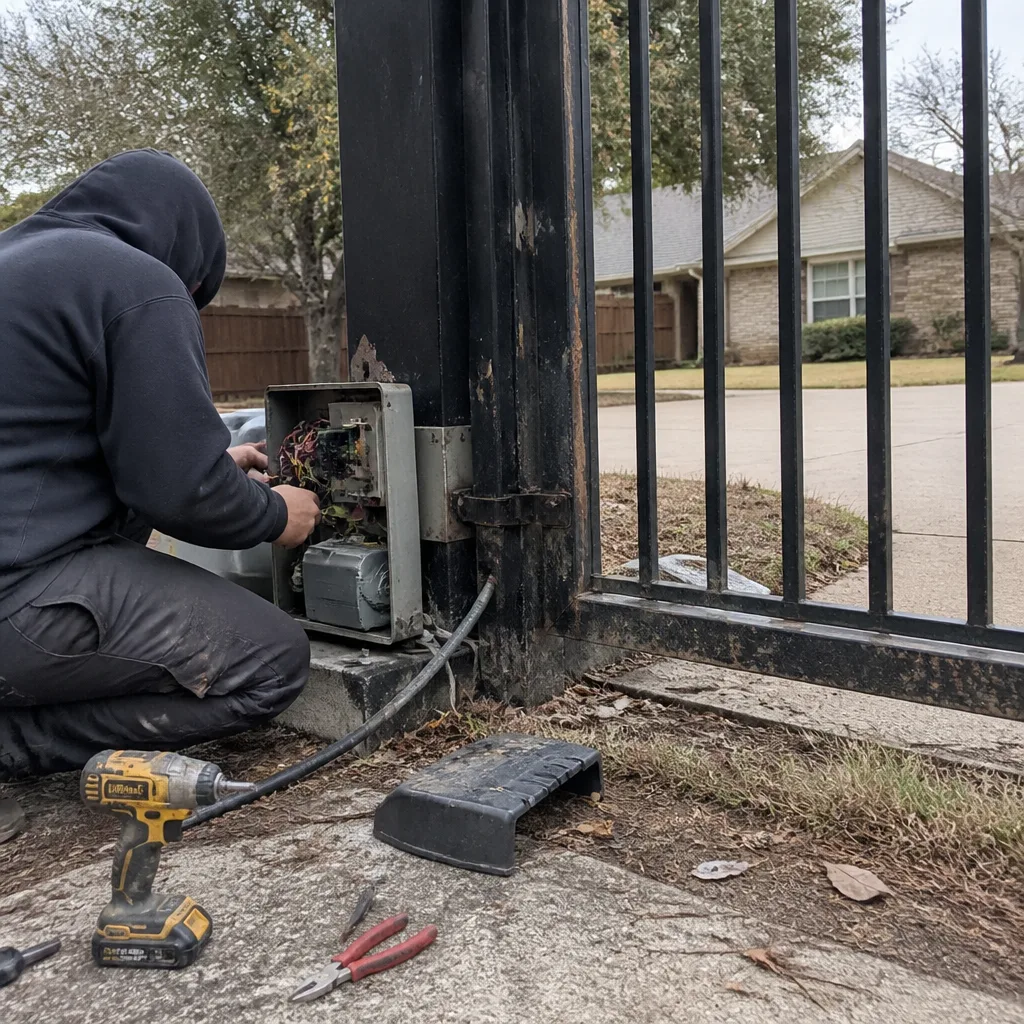 Before
 After
AfterThe Complete Guide to Gate Repair in Lewisville
The same gate that runs fine in Phoenix will bind, sag, or fry its control board in Lewisville within two summers. Not because the gate is cheap. Not because the installer cut corners. Because the soil here moves, the heat index is a different animal, and the power grid gets stressed in ways that show up directly inside your gate operator. This guide maps those local conditions to specific components, so you know exactly what breaks, why it breaks, and what DIY vs Professional Gate Repair: The Lewisville Homeowner’s Decision Guide recommends a documented repair should show when the technician leaves. No fluff, no fear tactics. Just the mechanical reality of gates on North Texas clay.
Quick Answer
Gate repair in Lewisville, TX typically runs between $180 and $650 for most mechanical and electrical fixes, with full operator replacements ranging from $850 to $2,400 depending on brand and site conditions-see our Gate Repair Cost Breakdown: The Lewisville Homeowner’s Reference for 2026 for detailed pricing. The most common failures stem from expansive clay soil shifting the posts, summer voltage brownouts damaging control boards, and photo-eye misalignment caused by gate frame movement. A quality repair includes a written price before work starts and a documented record of what was found, adjusted, and replaced.
Table of Contents
- How Lewisville Clay Soil Causes Post Lean and Gate Binding
- Summer Voltage Brownouts and Gate Control Board Failure
- Component-by-Component: What a Complete Gate Repair Should Address
- The Repair Record: What Documentation Should Look Like
- HOA Gate Requirements in Lewisville Master-Planned Communities
- Permanent Repair vs. Band-Aid Fix: How to Tell the Difference
- What Gate Repair Costs in Lewisville
- When to Call a Professional
BeforeAfterHow Lewisville Clay Soil Causes Post Lean and Gate Binding
Lewisville sits on the Eagle Ford Shale and Woodbine formations, which means one thing for your driveway gate: expansive clay. This soil swells when wet and shrinks when dry, and it does both aggressively. Over a single season, the ground beneath a gate post can move enough to tilt the post a few degrees. On a 16-foot gate, two degrees of post lean translates to about three inches of sag at the latch end. That’s the gap you see when the gate no longer closes square. That’s the grinding sound when it drags across the driveway.
We’ve seen gates in Highland Village and Castle Hills where the post lean was visible to the naked eye within eighteen months of installation. The gate didn’t fail because the hinges were weak or the welds broke. It failed because the post moved, and the gate frame twisted to accommodate it.
Early Signs of Post Lean
- The gate scrapes the driveway at the latch end but clears fine at the hinge side
- The gap between the two gate leaves grows wider at the top than the bottom
- You hear a popping sound when the gate opens, especially after rain
- The hinge bolts show visible stress marks or the plate has pulled away from the post by even an eighth of an inch
- The gate starts to close, then reverses without hitting anything, because the frame binds against the post midway through travel
Reading these signs early matters because the hinge plate tear is the expensive end of this failure. Once the plate rips free from the post, you’re not just resetting a post. You’re welding, re-drilling, possibly replacing the post entirely, and re-hanging the gate. The $400 repair became a $2,000 repair because the lean went unchecked.
What a documented fix looks like: the technician photographs the post with a level held against it before and after realignment, records the degree of lean, and notes whether the existing concrete footing was adequate. In our records, we log the post angle in degrees, the fix applied (typically removal, re-setting in fresh concrete with proper depth, and re-hanging), and photos of the gate in the closed, open, and mid-travel positions after the job.
Summer Voltage Brownouts and Gate Control Board Failure
Lewisville averages 97 days per year above 90 degrees, and the peak electricity demand during July and August afternoons puts real strain on the local grid. You’ll notice it as flickering lights or an AC unit that seems to struggle for a moment. Your gate operator notices it too, but it can’t tell you. Instead, the low-voltage condition causes the control board to work harder to pull current, which produces heat, which degrades capacitors and solder joints over time.
The board is the brain of the gate system. It reads inputs from the photo-eye, the keypad, the remote receiver, and the limit switches. When a brownout hits, the board’s power regulation circuit absorbs the irregularity. Repeated brownouts during a Lewisville summer can take a board from healthy to dead inside one season, even if the op erator motor itself is still in good shape.
We see a predictable pattern: gates in neighborhoods with older transformer infrastructure, like parts of Old Town Lewisville and the neighborhoods east of I-35E, report board failures more frequently than newer subdivisions with updated service lines. The age of the operator brand shifts the timeline, not the outcome. A Viking or Linear board holds up better than bargain-basement electronics, but no board is immune to repeated undervoltage events.
A proper repair addresses the root cause, not just the symptom. That means installing a surge-protected power supply or a brownout-rated voltage regulator where the site conditions warrant it, and documenting the protection in the wiring diagram. The leave-behind record should show the input voltage reading at the time of repair and the protection added. If the technician replaces a board and walks away without checking incoming voltage, you’re likely to lose another board the next time the grid sags.
Component-by-Component: What a Complete Gate Repair Should Address
A driveway gate is a system with seven distinct failure points. Most repairs only address the one that stopped working, which is why the same gate seems to need service every year. A complete repair in Lewisville looks at the entire chain, because the conditions here stress every link.
The Seven Gate Components That Fail in Lewisville
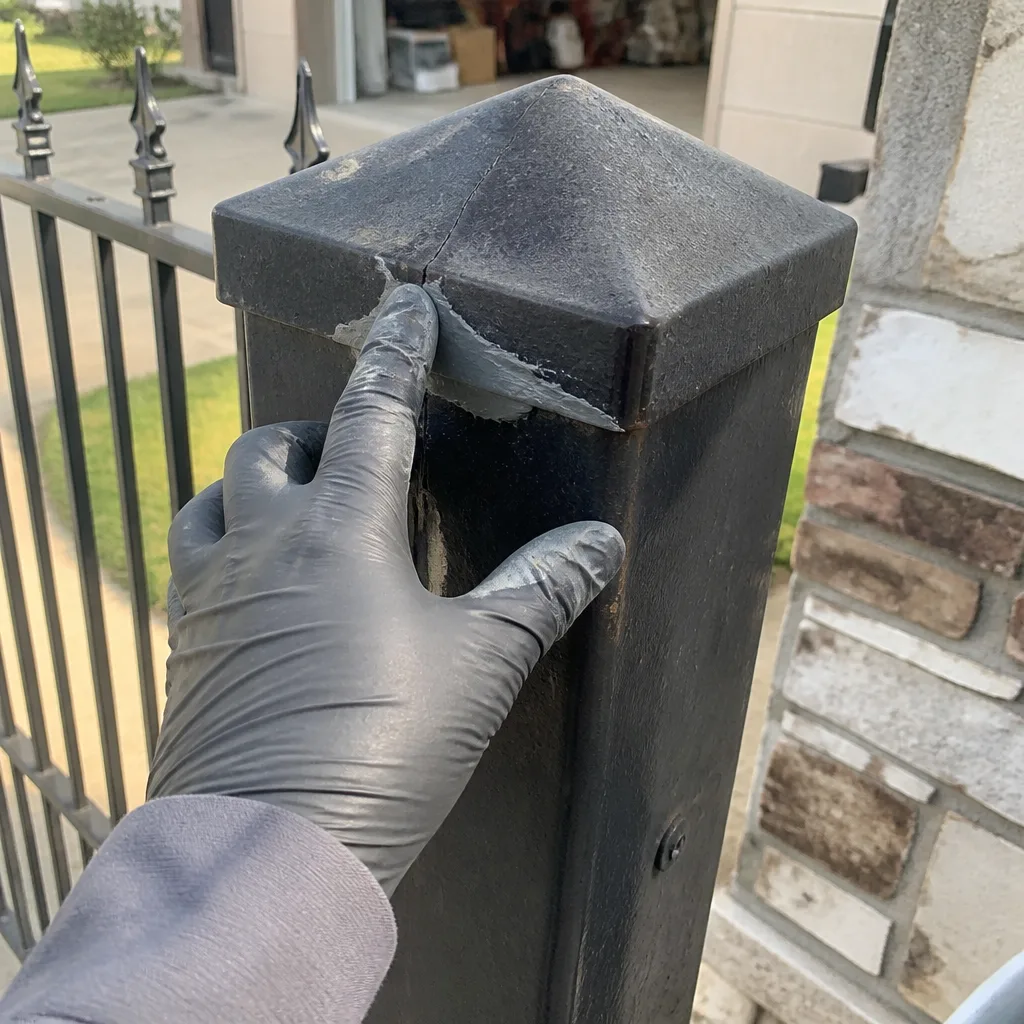
- The gate frame and hinges. Steel gate frames rust from the bottom up in humid North Texas summers. Check for rust blooming at the bottom rail, hinge play, and cracked welds at stress points where the frame meets the horizontal rails.
- The posts. Expansive clay moves them, as covered above. Check for lean, cracking at the concrete collar, and standing water at the post base.
- The gate motor and gearbox. Heat accelerates oil degradation in gearboxes. A motor that runs hot on a 105-degree Lewisville day is fighting both the heat and any frame binding caused by post movement.
- The control board. Brownout damage, lightning surges, and moisture intrusion from poorly sealed enclosures. Check for swollen capacitors, scorched traces, and corrosion on the terminal strip.
- The photo-eye sensors. Gate frame movement misaligns them, causing the gate to refuse to close or to reverse mid-travel. They need re-aiming, not replacement, in most cases.
- The limit switches. These tell the gate where to stop. If the gate slams against the stop or doesn’t close all the way, the limit switch is set wrong or has failed. In one recent job in Lewisville, the limit switch was set 12 degrees past travel; we reset it and photographed the new position.
- The wiring and connections. Rodents, UV degradation, and movement at the hinge point damage wiring. Loose terminal connections create intermittent failures that drive homeowners crazy because the gate works fine when the technician is standing there.
A repair that only replaces the dead board without checking the frame binding that killed it, or that only re-aligns the photo-eye without addressing the post lean behind the misalignment, is a repair that will need to be redone. We’re not being dramatic. It’s arithmetic. One unaddressed failure point creates load that accelerates the next failure downstream.
The Repair Record: What Documentation Should Look Like
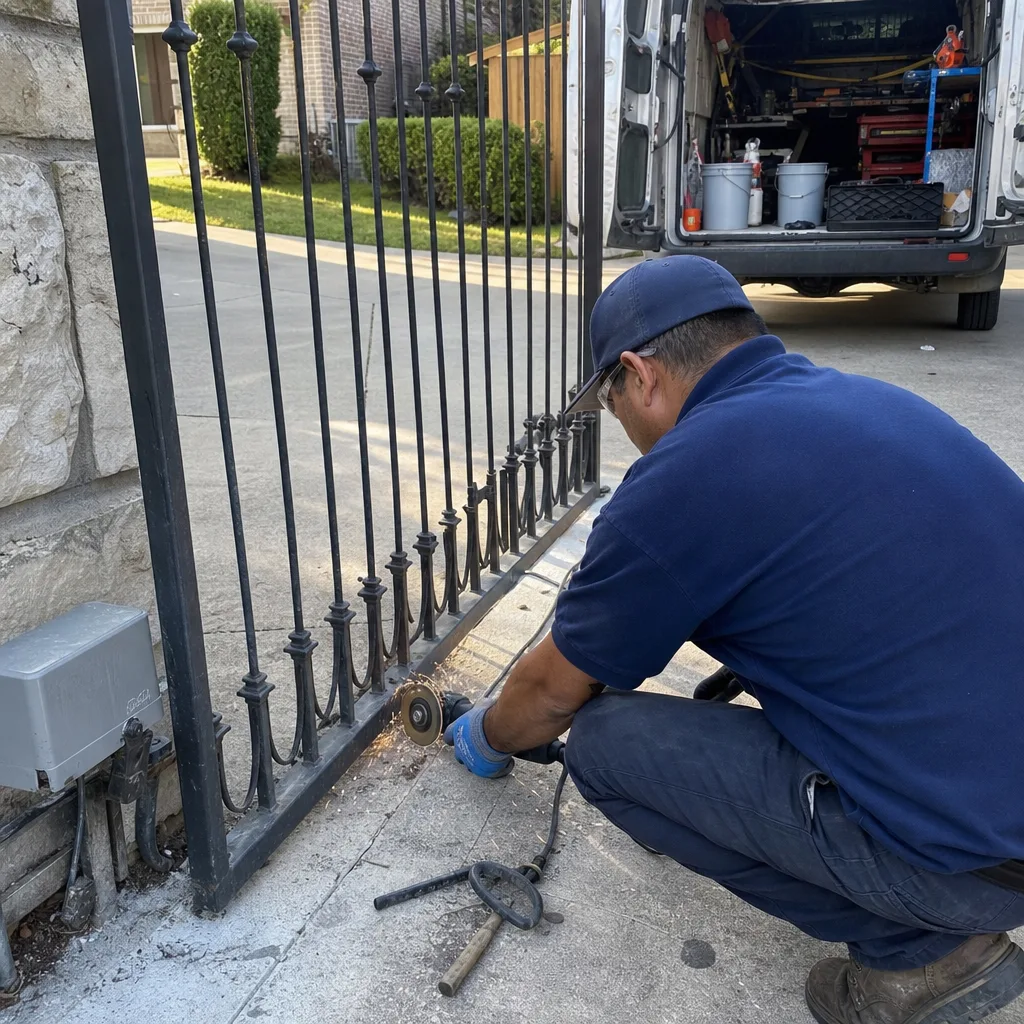
Most gate repair companies in Lewisville hand you an invoice. Some give you a verbal summary. Very few hand you a written record of what was found, what was measured, what was adjusted, and what was installed. That record matters more than most homeowners realize, because gates outlive their repair technicians and their owners’ memories.
Adrian Vance started documenting gate systems the same way he documented commercial access-control installations back in 2014. The habit carried over to our Gate Repair services at Vance Gate Repair. Every visit now includes a photo log and written record because future repairs go faster when the technician doesn’t have to rediscover what the last guy already found.
What a Complete Repair Record Includes
- Photos of the gate in three positions: fully closed, fully open, and mid-travel. These capture frame alignment and sag.
- Post lean measurements: degrees of deviation from plumb, measured with a level, recorded for reference at the next service visit.
- Limit switch readings: the exact degree or position where the gate stops in both directions, so any future drift is detectable.
- Torque arm alignment photos: whether the operator’s torque arm is parallel to the gate in the closed position, what was adjusted, and the final position.
- The wiring diagram with any changes marked: what was added, what was rerouted, what was protected.
- Part numbers and brand names: the exact control board model, the hinge spec, the capacitor rating, so replacements are matched correctly next time.
- Voltage readings: incoming line voltage at the time of service, and the downstream voltage delivered to the board.
If your technician hands you an invoice that says “repaired gate” and nothing else, you have no evidence the repair was done properly, no record for the next technician, and no way to verify the work if it fails again. We leave the record with the homeowner and file it in the job record. That’s how it should work.
HOA Gate Requirements in Lewisville Master-Planned Communities
Lewisville has a patchwork of HOA-governed subdivisions, and several master-planned communities impose design and function standards on driveway gates that go beyond what the city of Lewisville requires. Castle Hills and Lakeside are two of the more active examples, but the pattern holds across the city’s newer developments: the HOA wants a specific gate aesthetic, specific materials, and in some cases, specific automation behavior.
The city of Lewisville requires a permit for gate installation when the gate sits on the property line or within the front-yard setback, and the gate must not swing outward over a public sidewalk or right-of-way. That’s city code. The HOA layer often adds requirements around gate height, color, materials (wrought iron vs. tubular steel vs. aluminum), and whether the gate can be automated at all. Some HOAs restrict solar-powered openers in front-facing installations. Others require the gate to match the fence along the entire property line.
Here’s what this means practically: a gate repair that changes the appearance or function of the gate may trigger HOA review. Replacing a wooden gate with a steel one, changing the color, adding a keypad, or converting a manual gate to an automated one can all require approval in governing communities. Installing a new gate or making changes without checking the HOA’s architectural guidelines is a fast way to get a violation letter.
A thorough estimate in Lewisville checks both layers. We’ve worked with enough HOAs in the city to know that the time to find out about restrictions is before the work starts, not after the gate is installed and the violation letter arrives. The written price should note whether the work requires HOA submission and what the timeline implications are.
Permanent Repair vs. Band-Aid Fix: How to Tell the Difference
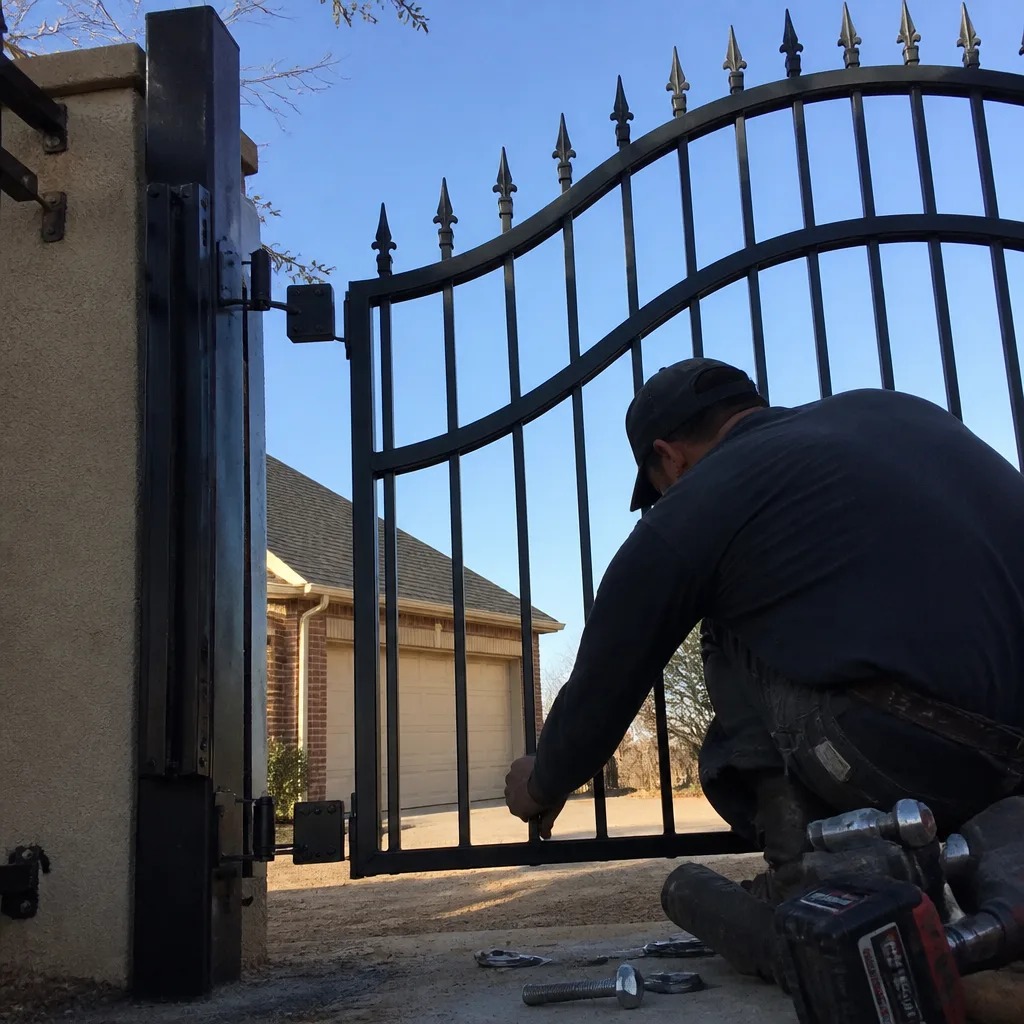
Every gate repair in Lewisville eventually falls into one of two categories: the fix that addresses the root cause, or the fix that buys time. Both have a place. Neither is inherently wrong. The problem is when a band-aid fix is sold at a permanent-repair price, or when a permanent fix isn’t offered because the band-aid is easier.
Band-Aid Fixes (Sometimes Appropriate, Often Oversold)
- Adjusting the hinge bolts to compensate for post lean without re-setting the post
- Re-aligning the photo-eyes without addressing the frame movement that knocked them out of alignment
- Replacing a blown fuse without diagnosing the short that blew it
- Tightening a loose wire connection without checking the corrosion that caused it
- Replacing a capacitor on a control board that’s showing multiple signs of age
Permanent Repairs (Root-Cause, Documented)
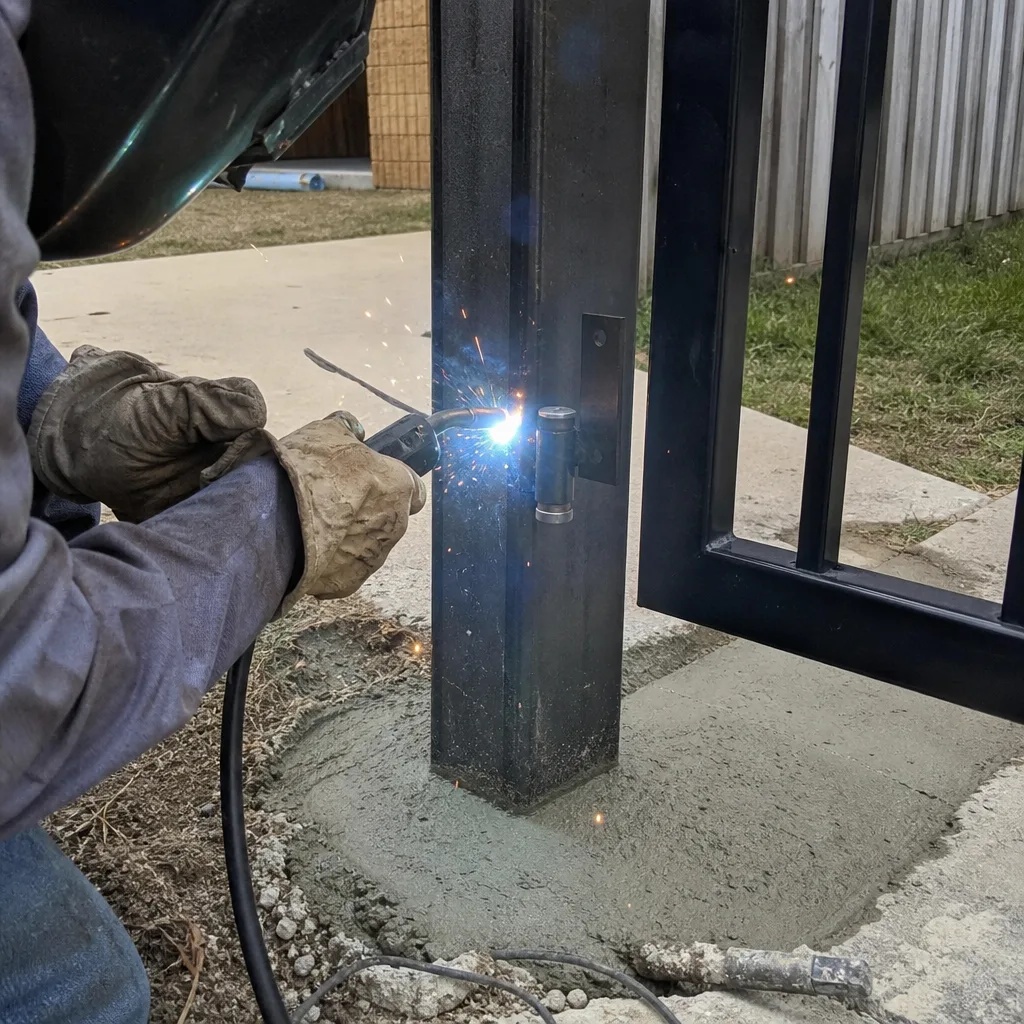
- Re-setting posts in fresh concrete with proper depth and re-hanging the gate square
- Adding surge protection and a voltage regulator, then documenting the improvement with before and after readings
- Replacing the entire control board when multiple components have failed, then photographing the new board for the record
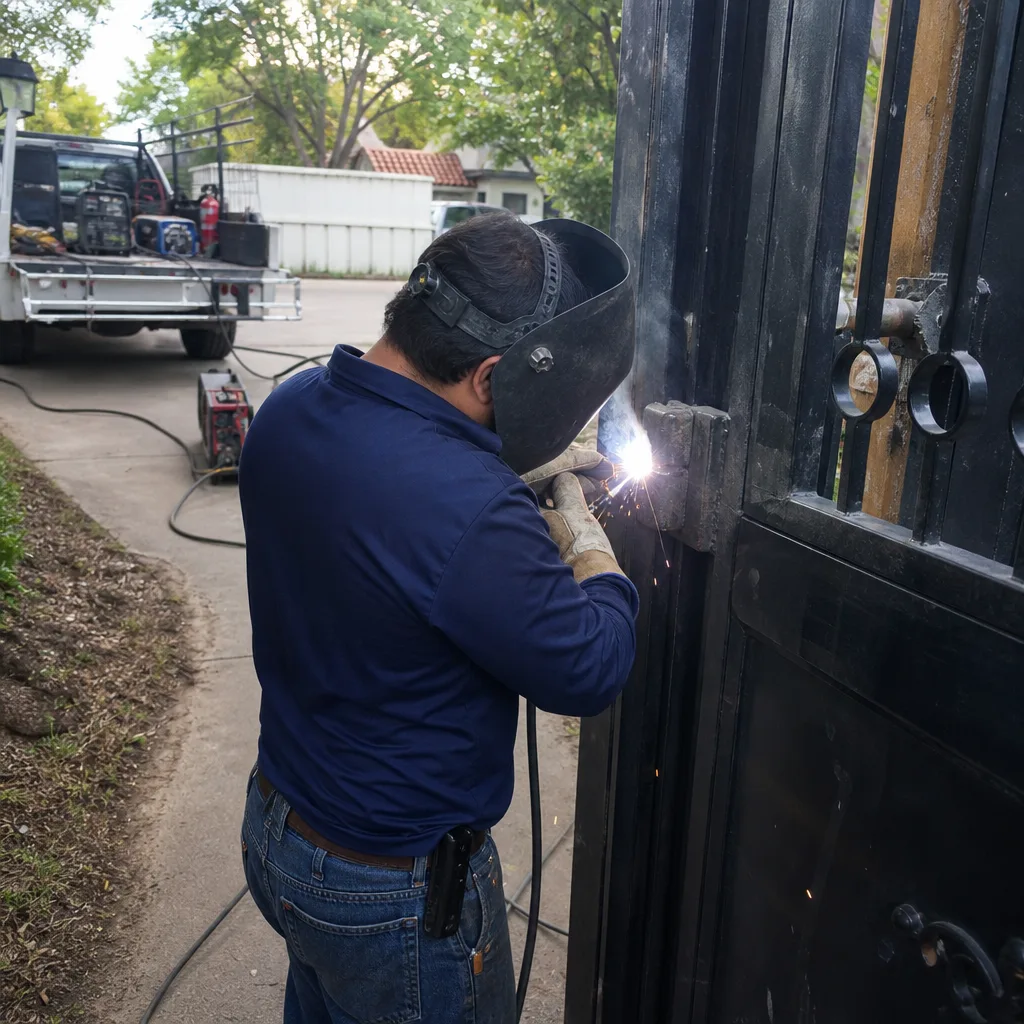
- Rebuilding the hinge plate with proper reinforcement, then photographing the welds
- Replacing degraded wiring run with UV-rated, properly routed conductors, then updating the wiring diagram
The way to tell which fix you received is to read the documentation. A permanent repair has evidence: before and after photos, measurements, readings, part numbers. A band-aid fix has an invoice that says “adjusted gate.” Ask for the record. If the technician can’t produce it, you didn’t get a permanent repair.
What Gate Repair Costs in Lewisville
Gate repair pricing in Lewisville is more predictable than most contractors would like to admit. The ranges below reflect what we’ve seen across the city, from the older neighborhoods around Old Town to the newer subdivisions off FM 407. The exact number depends on the brand, the site conditions, and whether the repair is mechanical or electrical.
Gate Repair Price Ranges in Lewisville, TX
- Photo-eye realignment or replacement: $120 to $280
- Limit switch adjustment or replacement: $150 to $320
- Hinge plate repair or replacement: $180 to $450, depending on whether welding is required
- Post re-setting (single post, with re-hanging): $400 to $900
- Control board replacement: $300 to $750, excluding brand-specific board costs
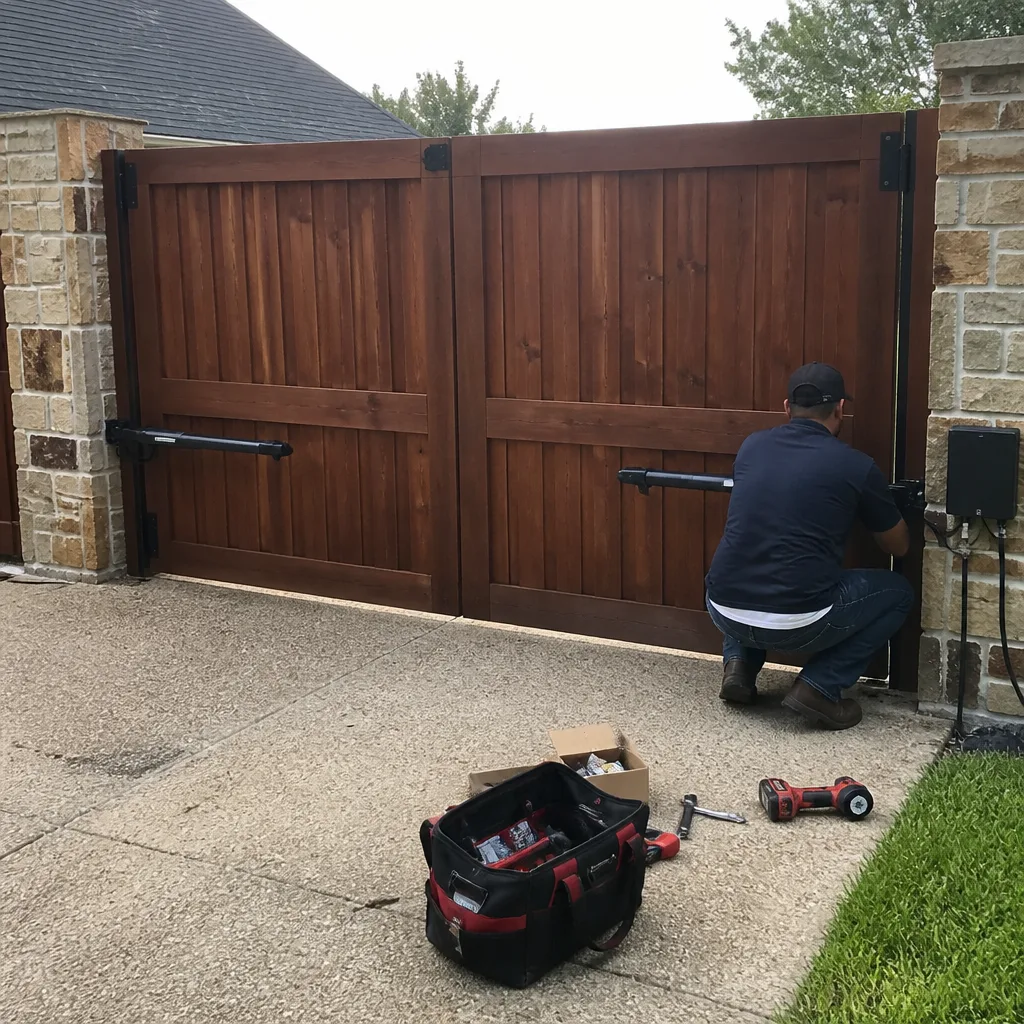
- Full operator replacement (motor and board): $850 to $2,400, depending on brand (FAAC and BFT typically run higher than Linear or Mighty Mule)
- Complete gate repair package (mechanical + electrical, all components addressed): $600 to $1,800
Every one of these prices is written and agreed before any work starts. No one at Vance Gate Repair touches a tool until the homeowner has the number in hand. If a quote from another Lewisville company comes in lower or higher, bring the paperwork and we’ll review it at no cost, or explore our more guides & resources to compare. A second opinion on a written estimate is free, and it costs you nothing to know whether the other quote is for the same scope of work.
For a deeper look at the specifics of gate repair in our city, see our Gate Repair in Lewisville page. And if you’re weighing repair against replacement, start with the numbers on our Vance Gate Repair Lewisville home page to understand what a full system replacement involves.
When to Call a Professional
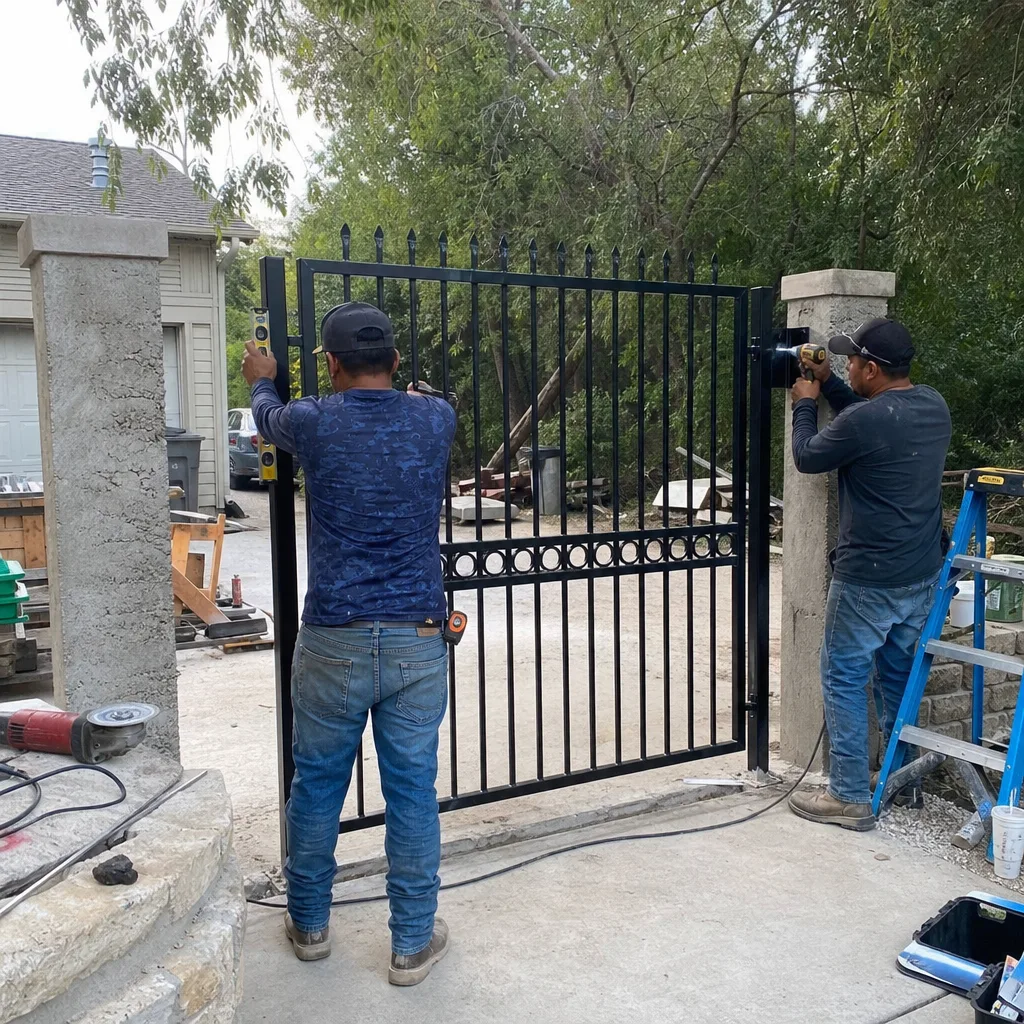
Gate systems involve high-tension springs, heavy moving steel, and live electrical components. When a spring is under load or a control board is being diagnosed, the risk of injury is real. A trained professional with the right tools and the habit of shutting down power before opening the enclosure is the difference between a controlled repair and a trip to urgent care. If your gate is sparking, if a spring looks damaged, or if the post has shifted enough to cause visible binding, call someone who does this work daily.
Vance Gate Repair Lewisville offers free estimates in Lewisville and surrounding areas. Call (817) 826-9477. We’ll send a background-checked, uniformed technician with the name and photo provided before arrival. The written price comes before any work begins. The documented record comes with every visit. That’s the standard, in writing, every time.
Common Mistakes to Avoid
- Ignoring a gate that scrapes for a few months. That scrape is the sound of the frame loading against a moving post. The longer it runs, the more expensive the repair. What starts as a hinge adjustment becomes a post re-set.
- Replacing the motor without checking the frame. If the gate post has leaned and the frame binds, a new motor will fight the same resistance the old one did, and it will burn out faster. Diagnose the frame before touching the motor.
- Buying a generic control board online and trying to wire it into a FAAC or BFT opener. The boards are not interchangeable across brands, and a mismatched board can damage the motor or the new board itself. Match the board to the operator.
- Skipping surge protection in Lewisville summers. We see more boards die from brownouts and lightning than from old age. Protection is a $150 part that saves a $500 board.
- Accepting a repair with no documentation. An invoice that says “fixed gate” is not evidence. Ask for photos, readings, and a part number. If the technician balks, you know what kind of company you’re dealing with.
- Replacing a gate without checking HOA guidelines. In Castle Hills, Lakeside, and several other Lewisville communities, the wrong gate material or color can trigger a violation notice. Check the guidelines before spending the money.
- Assuming the lowest quote is the best deal. A $95 service call that turns into a “$400 parts run” is not cheaper than a $250 written flat rate. Written pricing removes the surprise.
Frequently Asked Questions
Most gate repairs in Lewisville run between $180 and $650, with full operator replacements from $850 to $2,400 depending on brand and site conditions. The most common repairs, photo-eye realignment and limit switch adjustment, sit at the lower end of that range. Before any work starts, you should receive a written price. Call (817) 826-9477 for a free estimate with the number in writing.
In most cases, yes. A sagging gate in Lewisville is usually caused by post lean from expansive clay soil rather than a broken gate frame. Re-setting the post in fresh concrete below the frost line and re-hanging the gate square typically resolves the sag. If the frame itself has cracked or the hinge plate has torn free, welding and reinforcement are required, but replacement of the entire gate is rarely necessary.
Intermittent gate operation in Lewisville is usually caused by one of three things: a photo-eye that drifts in and out of alignment as the gate frame shifts, a loose or corroded wiring connection, or a control board that operates erratically under heat or voltage fluctuation. The fix is to diagnose all three, not to guess. The Gate Motor & Opener in Lewisville page covers opener-specific failures in more detail.
Most mechanical and electrical repairs are completed in one visit, typically two to four hours depending on the scope. Post re-setting and any repair that involves concrete work requires time for the concrete to cure, which typically means the gate is back in service within 24 to 48 hours. The Gate Installation in Lewisville page outlines timelines for full installations and replacements.
Repairs that preserve the existing gate’s appearance and function typically do not require HOA approval. Any change to the gate’s material, color, automation, or footprint may require architectural review, particularly in master-planned communities like Castle Hills and Lakeside. Check your HOA’s guidelines before authorizing any work that changes what the gate looks like or how it operates.
At minimum, you should receive a written invoice that specifies the work done and the parts installed. A better standard, and the one we follow at Vance Gate Repair, is a documented record: photos of the gate in multiple positions, measurements taken (including post lean and limit-switch readings), a wiring diagram with changes marked, and the part numbers installed. This record means the next technician doesn’t have to rediscover what was already found, and you don’t pay twice for the same diagnosis.
The Bottom Line
Gates in Lewisville fail differently than gates elsewhere. The clay soil moves the posts. The summer grid sags and kills boards. The HOAs add a layer of rules. None of this is mysterious if you know what you’re looking at, and most repairs are predictable when the diagnosis is honest and the work is documented. Get a written price before any work starts. Insist on a record of what was found and what was installed. Check the HOA guidelines before changing anything visible. And if the gate is sparking, binding under load, or shifting at the post, call a professional before the small fix becomes a big one. Vance Gate Repair Lewisville is at (817) 826-9477, with a live person answering at any hour, a written price before any tool is picked up, and a documented record on every visit.
Written by Adrian Vance, Owner at Vance Gate Repair Lewisville, serving Lewisville since 2014.