
Last updated September 20, 2026
Free on-site gate assessment - hinges, posts, and your LiftMaster or Nice gate operator checked before anything is quoted
The assessment is free and the quote is the invoice.


 Before
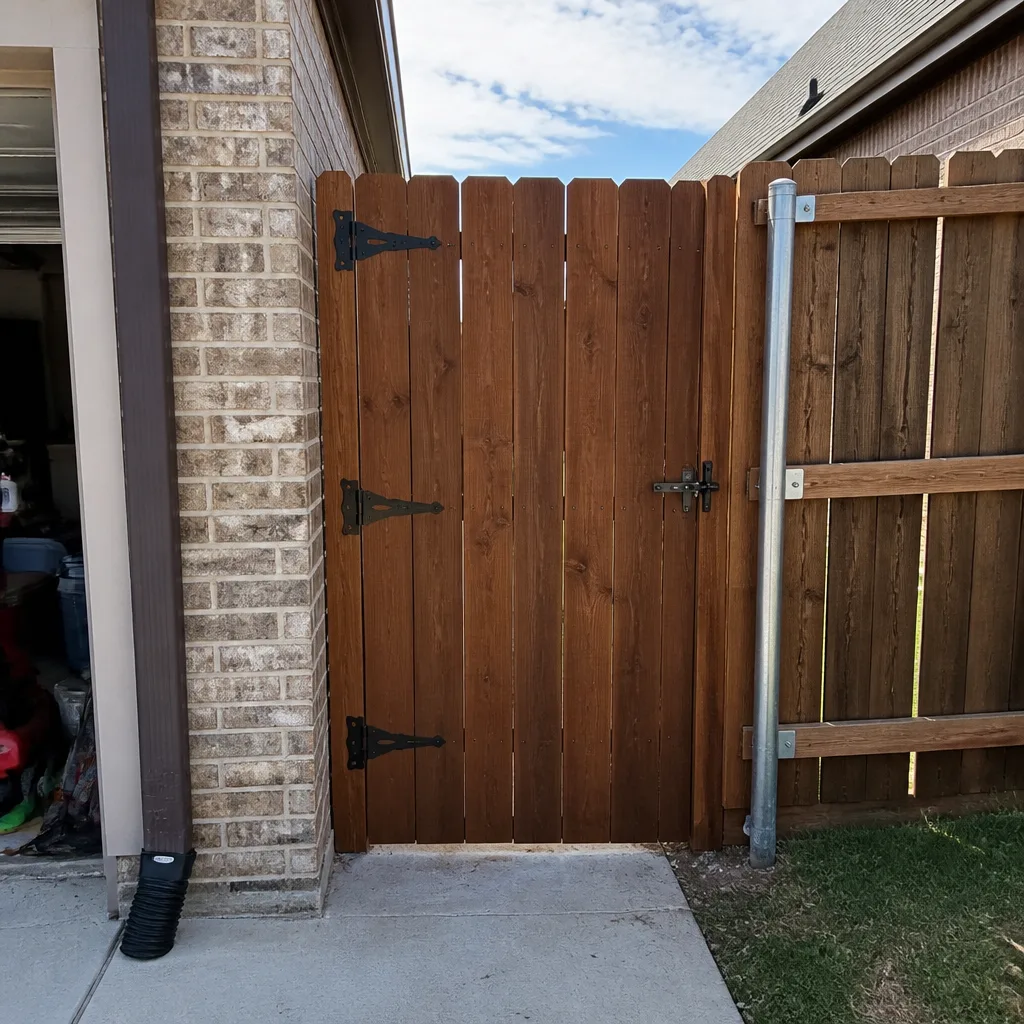 After
After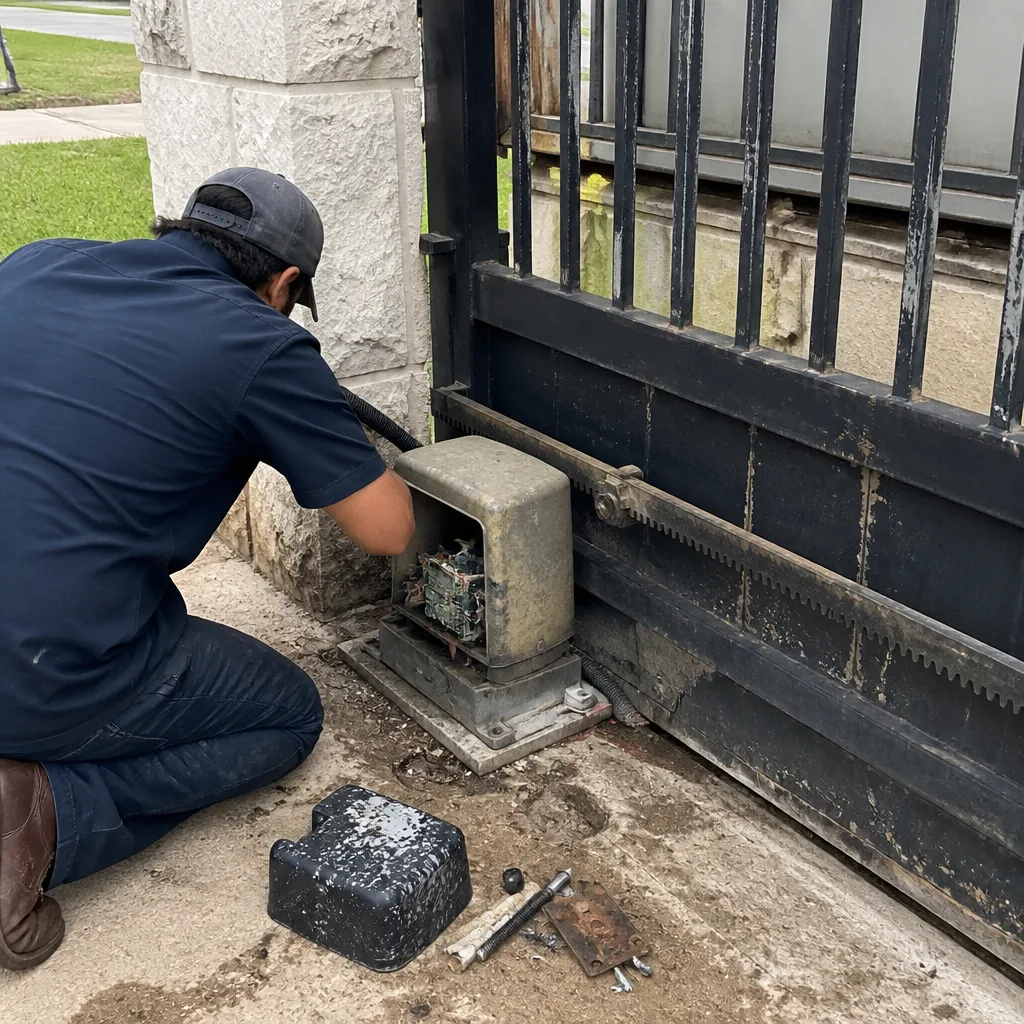 Before
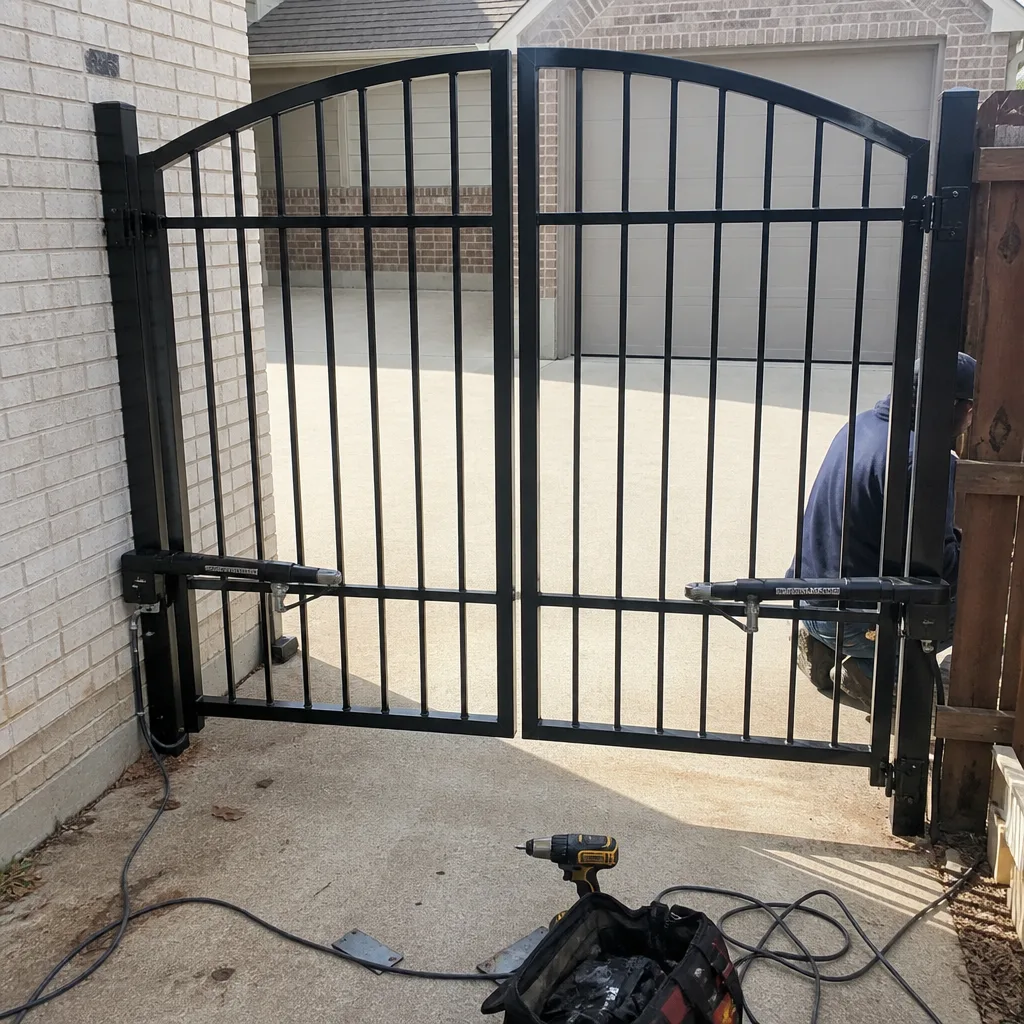 After
After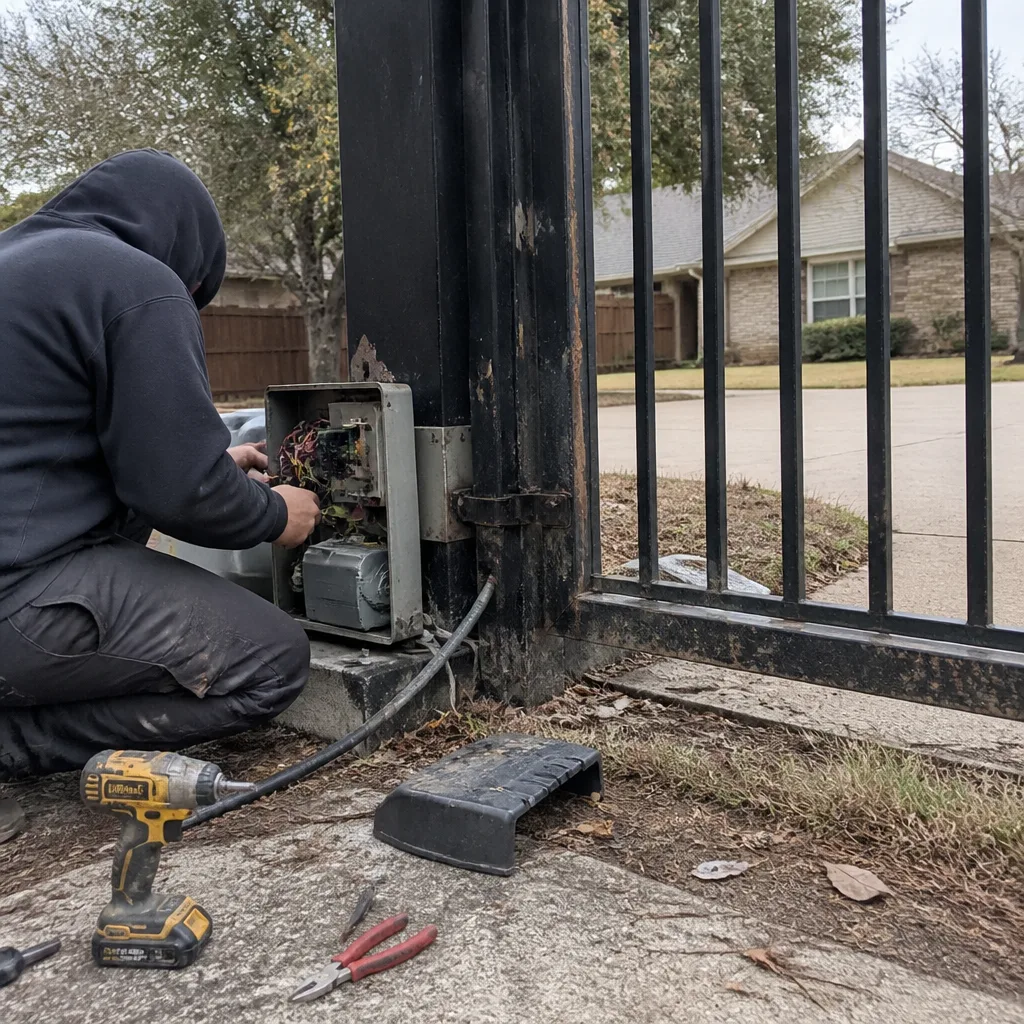 Before
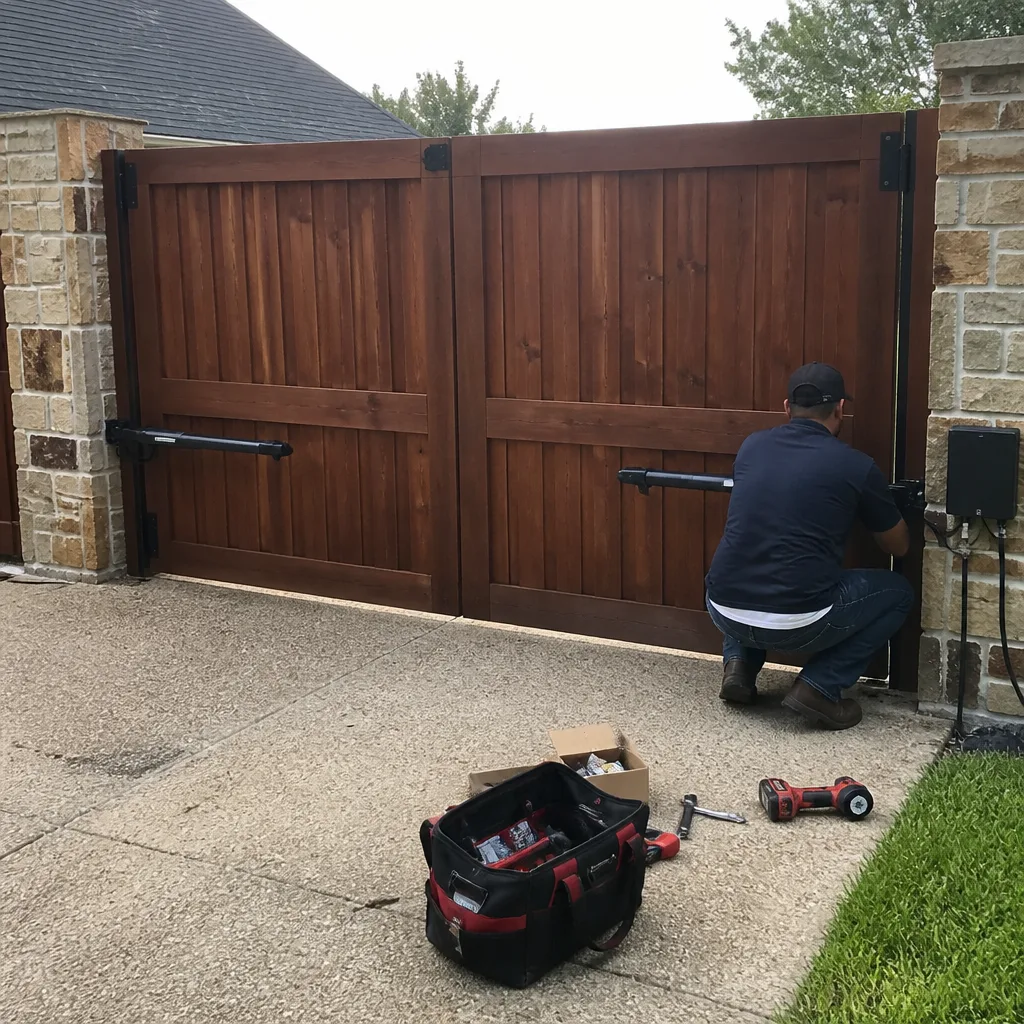 After
AfterDIY vs Professional Gate Repair: The Lewisville Homeowner’s Decision Guide
Here’s a number that surprises most Lewisville homeowners: roughly one in three professional gate repair calls we run involves a gate that a homeowner already tried to fix. The DIY repair itself usually worked, at least for a while. What it didn’t do was leave a trail. No photo of the original wiring, no note about which screw was tightened or which sensor got repositioned, no record of the part that was swapped out. So when something else fails six months later, the technician is not diagnosing a gate. They’re reverse-engineering a gate’s recent medical history, and that missing history is exactly what makes the second repair cost more than the first one should have. This guide is not going to tell you that DIY is always wrong. It’s going to tell you which tasks you can safely handle, which ones carry hidden costs that won’t show up for a year, and how to do any of it without leaving the kind of gaps that make Gate Repair more expensive than it needs to be.e next person guessing.
Quick Answer
DIY gate repair in Lewisville makes sense for cleaning, lubrication, minor limit adjustments, and visual inspections. Professional repair makes sense when the work involves a gate motor, circuit board, wiring, high-tension springs, or any structural weld. The deciding factor is not your skill level or tool collection. It’s whether the repair leaves a documented record that a future technician can use, something we cover in our Gate Repair Maintenance Checklist for Lewisville Homeowners. An undocumented DIY repair on anything electrical or mechanical will routinely cost you more in future diagnostic time than the professional service call would have cost up front.
Table of Contents
- The Documentation Divide: Why the DIY Question Is Really a Record-Keeping Question
- Tasks That Are Genuinely Safe for Homeowner DIY
- Tasks Where a DIY Error Creates Downstream Diagnostic Costs
- Texas Low-Voltage Law and What It Means for Gate Wiring
- How to DIY in a Way That Leaves a Usable Record
- The Hidden Cost of Undocumented DIY Repair
- When Professional Repair Pays for Itself: A Decision Tree
- Common Mistakes to Avoid
- When to Call a Professional
- Frequently Asked Questions
- The Bottom Line
BeforeAfterThe Documentation Divide: Why the DIY Question Is Really a Record-Keeping Question
Most DIY-versus-professional guides frame the decision around tools, skills, and danger. Those matter, but they’re the wrong starting point. The real dividing line in Lewisville, where swing gates bake in 100-degree summers and rack in clay soil, is whether the work you’re about to do can be recorded in a way that survives you selling the house, losing the receipt, or simply forgetting what you did eighteen months later.
Think about what a professional gate repair leaves behind when it’s done properly. The technician writes down what they found, what they adjusted, what setting was changed from what value to what value, and what part number went in. They photograph the wiring before they touch it and after they finish. That record lives in a file. Six months later, when a different symptom appears, the next technician reads the file and knows the gate’s history. They don’t have to re-discover it.
Now think about what a typical DIY repair leaves behind. A working gate, yes. Maybe a vague memory. A leftover part in a drawer. No photo of the original wiring. No note about the limit switch being moved from position A to position B. No record of which brand of capacitor went in. The repair worked, so the homeowner’s attention moves on. And that’s the trap: the repair was fine, but the record was never created.
This is why our technicians at Vance Gate Repair Lewisville home treat documentation as part of the repair itself, not an add-on. The written record is the difference between a $200 fix and a $500 diagnostic scavenger hunt a year later. If you’re going to DIY, you can borrow that habit for free. It costs you ten minutes and a phone camera. If you’re not willing to document what you did, that’s a solid signal the task belongs with a professional, because undocumented work on a gate becomes a liability the moment the gate’s next failure happens.
Tasks That Are Genuinely Safe for Homeowner DIY
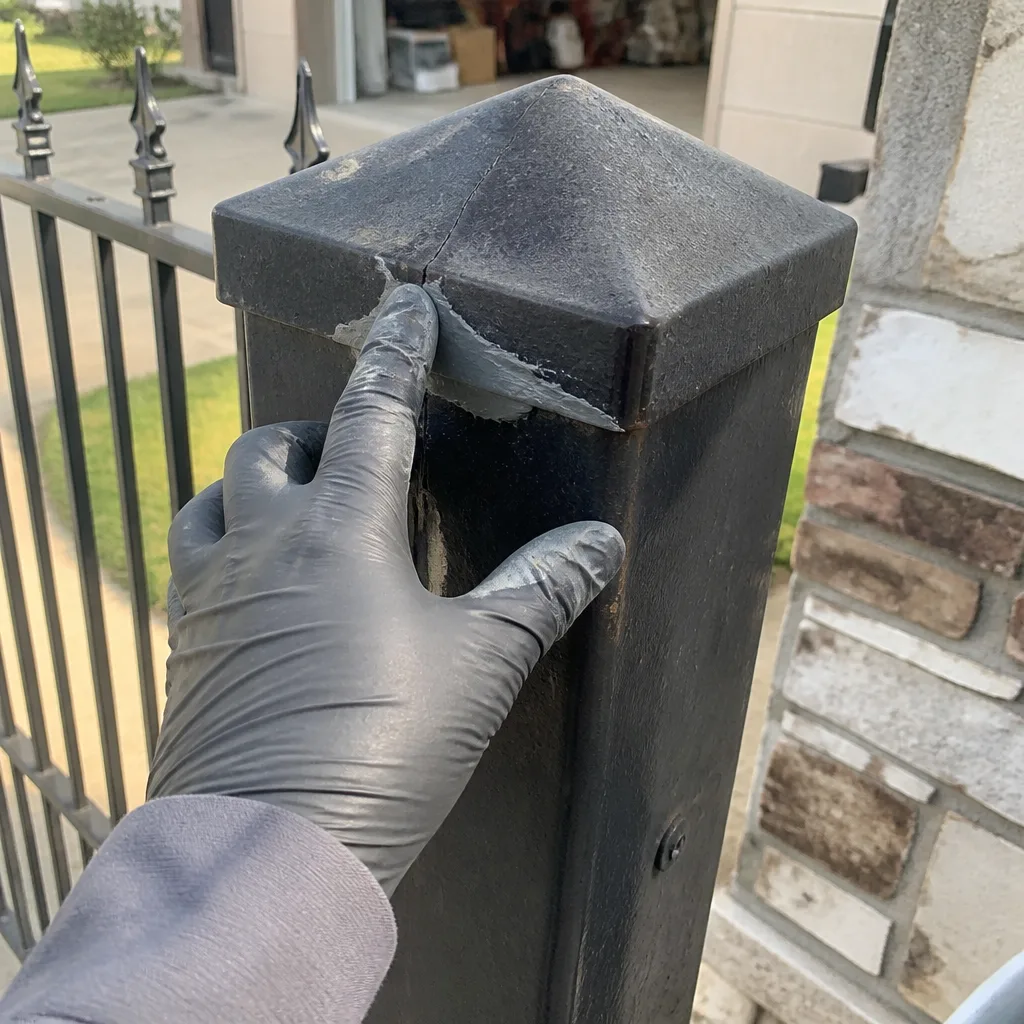
There’s a real list here, and it’s not trivial. These are the tasks where an error is visible, reversible, and inexpensive to correct. They don’t touch line voltage, they don’t involve springs under load, and they don’t require you to re-engineer a circuit board.
- Cleaning photo-eyes: The photo-eye is the infrared beam that stops the gate if something crosses the path. In Lewisville, dust, pollen, and spider webs accumulate on the lens. A soft cloth and glass cleaner fix most misalignment alarms. This is the single most common “gate won’t close” cause we see.
- Lubricating rollers and hinges: Use a dry silicone or white lithium spray on hinge pins and roller bearings. Do not use WD-40 as a long-term lubricant; it’s a solvent and will strip the existing lubrication. Shoot for twice a year, ideally before the hot season starts.
- Visual inspection of the track and hardware: Walk the gate’s full path. Look for cracked concrete, bent brackets, loose bolts, rust patches, and wear marks on the track. A five-minute monthly walk catches problems while they’re still cheap.
- Clearing debris from the gate path: Gravel, mulch, and grass clippings accumulate in the track and pivot area. Keep the path clear. This sounds too simple to mention, but track debris is a leading cause of motor strain and premature failure in Lewisville yards with decomposed granite and river rock.
- Testing the battery backup: Most gate openers have a battery backup for power outages. Unplug the unit and operate the gate to confirm the battery still holds a charge. If the gate barely moves or stops, the battery needs replacement.
None of these tasks requires opening the operator housing, touching wiring, or working with a spring under tension. And each one has a natural documentation step: photograph the sensor before and after cleaning, note the date of lubrication, write down the battery test result. Ten minutes of work, one minute of record-keeping, zero future diagnostic tax.
Tasks Where a DIY Error Creates Downstream Diagnostic Costs
This is where the guide gets less comfortable, because these tasks look approachable. They’re mechanical, they’re intuitive, and YouTube makes them look like a half-hour Saturday project. The problem is that when one of these goes wrong, it doesn’t just leave the gate broken. It leaves the gate broken in a way that looks like a different failure to the next technician, and finding that misdirection costs billable diagnostic hours.
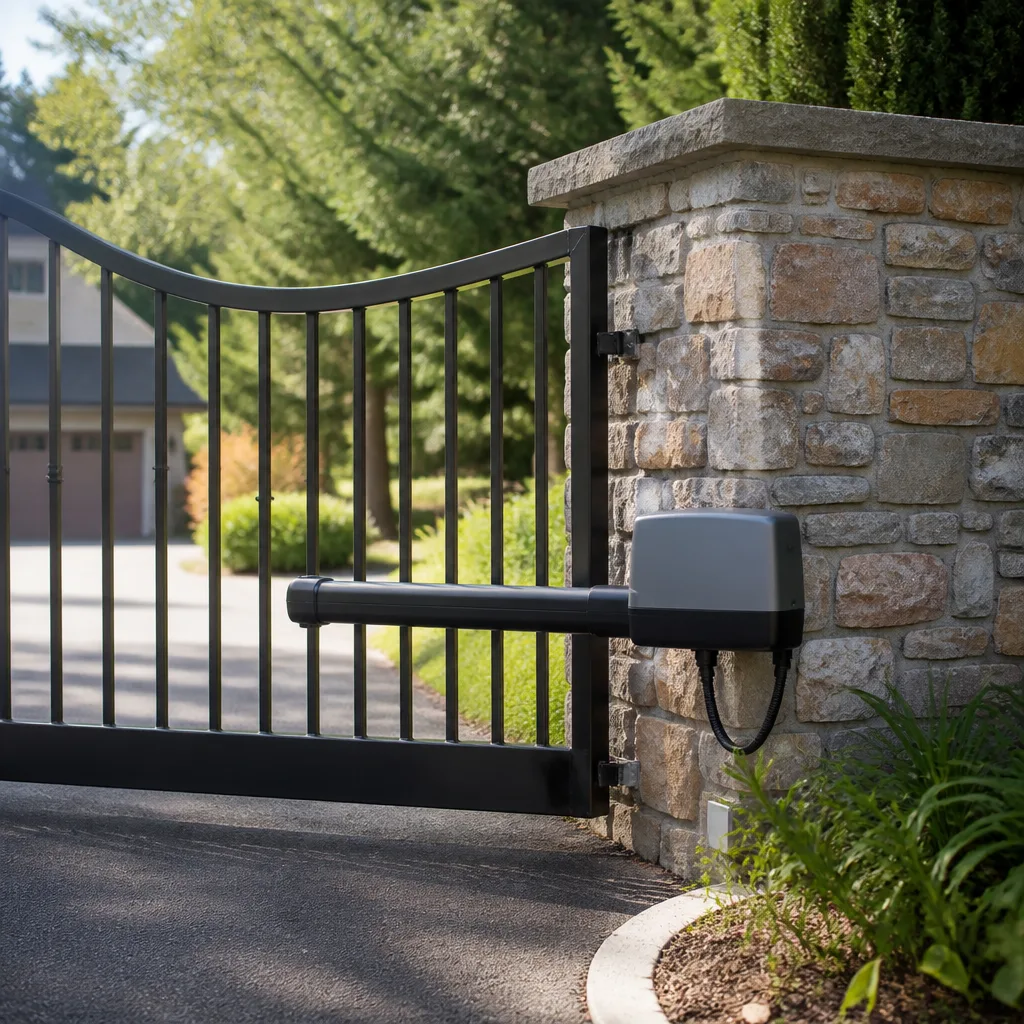
- Any wiring inside the operator housing: The control board, the capacitor, the motor leads, the limit switch wiring. A mislabeled wire or a ground that got moved creates intermittent symptoms that mimic a failing board. The next technician has to map every connection from scratch.
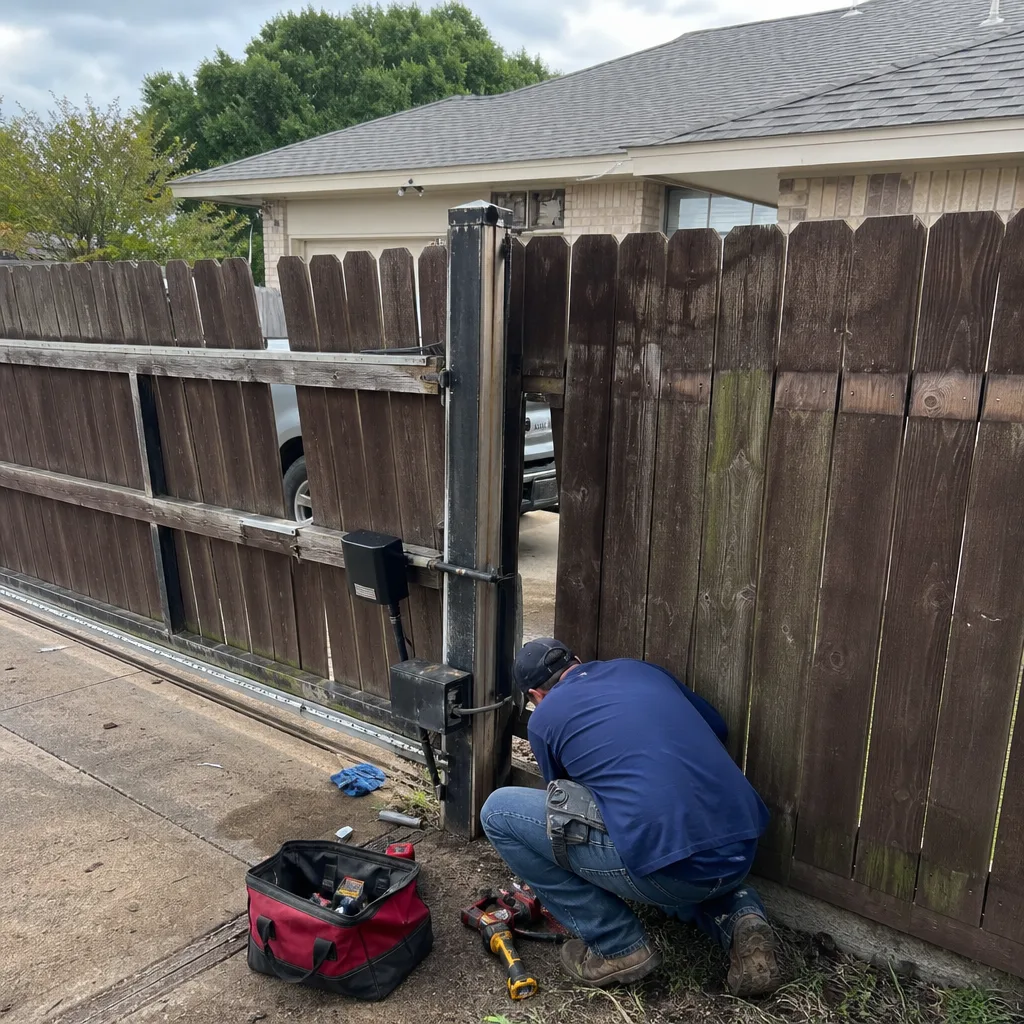
- Gate motor or opener replacement: Many homeowners buy a new motor online and attempt the swap. The physical mounting often goes fine. The limit settings, force adjustments, and safety-input wiring rarely do. We regularly see motors that work but won’t stop at the right point, or that reverse on nothing, or that ignore the photo-eye entirely.
- Limit switch adjustment on any motor you didn’t install yourself: The limit switch tells the motor where the gate stops. Moving it changes the gate’s stopping point and can over-travel the gate into the fence or the motor into a stall. If someone else set it, and you change it without recording the original position, the next adjustment becomes trial and error.
- High-tension springs on cantilever or sliding gates: Springs store energy. An uncontrolled release can break bone. This is not a skill-level issue. It’s a risk-management issue, and no amount of YouTube confidence changes the physics.
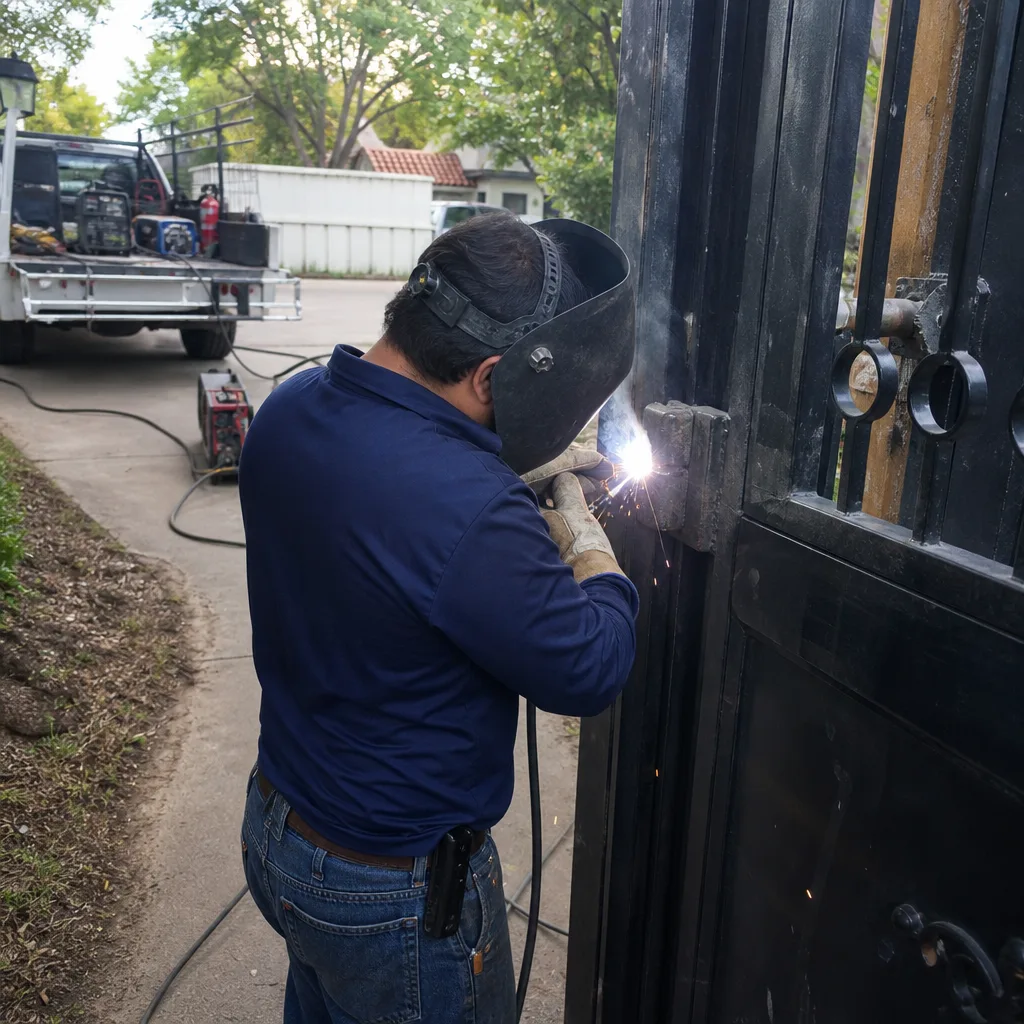
- Structural welding or bracket repair: A cracked weld on a gate frame or hinge bracket needs a certified welder and often a jig to hold alignment while the weld cools. A garage flux-core welder can make a joint that looks solid and fails in six months.
- Any work involving line voltage: If the gate operator runs on 120V or 240V, the circuit feeding it is line voltage. This is electrician territory, full stop.
Most swing-gate motor replacements in Lewisville run between $450 and $900, depending on the brand and whether the arm bracket is intact. For a deeper look at what drives these numbers, see our Gate Repair Cost Breakdown: The Lewisville Homeowner’s Reference for 2026. That’s a real number, and it’s a real cost to avoid if the existing motor is repairable. But the same job after a failed DIY attempt often runs $600 to $1,100, because the technician is now untangling inherited wiring and re-diagnosing a gate whose history was lost. The DIY attempt didn’t save the $450 to $900. It added a diagnostic surcharge on top of the professional repair that eventually happened anyway.
Texas Low-Voltage Law and What It Means for Gate Wiring
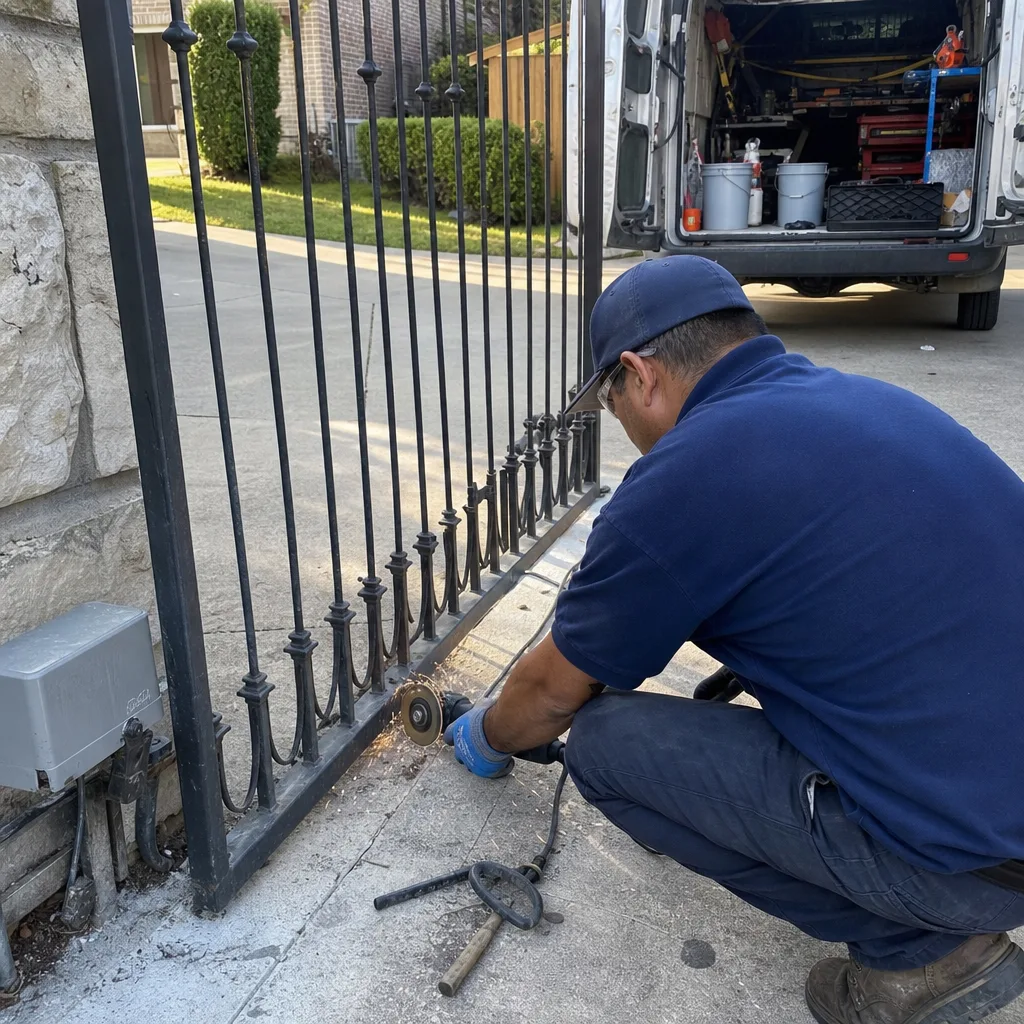
Here’s a legal detail most DIY guides never mention: Texas regulates low-voltage electrical work differently than line voltage, and gate operators sit in that middle zone. Under Texas law, certain low-voltage systems require a license to install or service. The specifics matter for anyone planning to rewire their own gate operator.
Texas requires a license for alarm systems, access control systems, and certain other low-voltage installations. A residential gate operator that connects to a keypad, intercom, or phone-entry system can fall under the access-control category. That means a homeowner who wires a new keypad into their gate operator may be doing work that Texas classifies as requiring a licensed technician. The fact that it’s 12 or 24 volts doesn’t mean it’s unregulated. The voltage is low, but the regulatory exposure is real.
Where does that leave the Lewisville homeowner? For practical purposes, the line is this: you can generally replace a like-for-like part without touching the system’s overall configuration. You can swap a remote, replace a battery, even change out a photo-eye if the wiring is plug-and-play. What you should not do is pull wire, add devices, integrate the gate with a new keypad or intercom, or modify the control circuit. That’s the space where Texas licensing law lives, and it’s also the space where a wrong connection creates a fault code that no amount of online forum reading will resolve.
Our advice to anyone in Lewisville considering gate wiring work: if you’re opening the operator housing and the wires aren’t already labeled, that’s your signal to call a licensed professional. We service nine major gate-automation brands, including BFT, Linear, and Viking, and we’ve never once diagnosed a wiring fault by looking at it across the fence. The housing has to come off, and once it’s off, what you see is what the next technician has to reconstruct if you guessed wrong.
How to DIY in a Way That Leaves a Usable Record
If you’ve read this far and you’re still planning to DIY one of the safe tasks, here’s how to do it without becoming the subject of a future diagnostic horror story. This is the documentation habit we follow in Lewisville on every professional job, adapted for homeowner use. It costs nothing but ten minutes.
- Photograph before you touch anything. Stand back and shoot the full gate, then get close and shoot the operator housing with the cover on, then the cover off if your task requires it. Shoot the wiring, the limit switches, the capacitor, the gear train. If you’re lubricating hinges, shoot the hinge pins first. These photos are your before-state reference.
- Write down what you’re about to do. One line, dated. “March 8, 2026: cleaning photo-eye lenses, both sides.” Or “Adjusting open limit switch because gate stops 3 inches too early.” This is not a diary. It’s a service record.
- Note any part numbers you touch or replace. If you pull a capacitor, write down the label. If you’re replacing a battery, record the part number and chemistry. If you’re adjusting a limit switch, write down the original position before moving it.
- Photograph after you finish. Same angles as step one. The change is visible in the pair. A future technician can see exactly what was altered.
- Tape a small note inside the operator housing. Paper and masking tape work fine. “Capacitor replaced Feb 2025, 35uF 450V. Limit switches not moved.” The next person to open that housing now has a starting point. This one habit has saved thousands of dollars in diagnostic hours across the gates we’ve inherited from thoughtful DIYers.
- Store the photos somewhere you’ll actually find them. An album on your phone named after the gate, a folder in Google Drive, anywhere. If you sell the house, leave the record for the buyer. It’s the single most useful piece of house history you can pass on.
The record doesn’t have to be pretty. It has to exist. A dated note and two photos beat a memory every single time. In our experience, the rare homeowner who does this well has effectively given their future technician a head start, and their future invoices reflect it.
The Hidden Cost of Undocumented DIY Repair
Let’s quantify the problem, because it’s more concrete than most people realize. When a gate fails and there’s no service history, a professional technician in Lewisville has to answer a series of questions before they can even start diagnosing the current symptom. Is this the original motor? Was it replaced, and if so, when and with what? Did someone change the limit settings? Is the wiring original? Has the board been swapped? Is this photo-eye the one that came with the operator, or is it a universal replacement?
Each unanswered question costs time. Time tracing wires, cross-referencing part numbers, pulling the motor cover and photographing the board to identify the generation. That’s billable time, and it’s time the previous homeowner’s undocumented repair made necessary. A gate with a complete service record typically gets a diagnosis in 20 to 40 minutes. A gate with unknown history and visible non-standard repairs routinely takes 60 to 90 minutes to diagnose. At hourly diagnostic rates in the Lewisville market, that’s an easy $80 to $150 in extra money spent just figuring out what happened before the actual repair even starts.
There’s a subtler cost too. Undocumented DIY work sometimes introduces a second, latent problem that hasn’t failed yet. The technician fixes the current symptom, and the latent problem shows up weeks later. The homeowner assumes the professional repair failed. In reality, the DIY work planted a time bomb that no one could see because there was no record of it being touched. This is why our written scope and photo record at Gate Repair in Lewisville matters. If we touch a gate, we write down everything we touched, in order, with photos. When the next symptom appears, the record reveals whether it’s connected to previous work or something new. That’s not a sales pitch. It’s the difference between a repair relationship and a series of expensive guesses.
When Professional Repair Pays for Itself: A Decision Tree
Enough theory. Here’s the practical walk-through. Start at the top and answer honestly. The path will take you to a clear answer, and it won’t be a sales argument either way.
- Is the task on the safe DIY list above? If yes, do it. Document it. Move on with your weekend. If no, continue.
- Does the task involve opening the operator housing or touching any wiring? If yes, the answer is professional, full stop. If no, continue.
- Does the task involve a spring, a weld, or a structural component? If yes, professional. If no, continue.
- If the repair fails, will the failure create a safety hazard? A gate that won’t open is an inconvenience. A gate that falls off its track or closes on a child is a hazard. If the failure mode is dangerous, professional is the only responsible answer.
- Do you have the documentation habit? If you won’t photograph, date, and note the work, the professional service call is cheaper than the future diagnostic tax. If you will document, revisit steps 1 through 4 with the confidence that your work won’t booby-trap the next repair.
This framework holds up whether you’re in central Lewisville, the Castle Hills area, or out toward Highland Village. The physics of the gate don’t change with the ZIP code, and the diagnostic tax on undocumented work doesn’t either.
Common Mistakes to Avoid
- Lubricating the gate track with grease. Grease attracts dirt and grit in the Lewisville clay and limestone dust. Use a dry lubricant on tracks and a silicone spray on rollers. Grease belongs in exactly zero places on a residential gate track.
- Replacing the gate battery with a different chemistry. A sealed lead-acid battery and a lithium battery are not interchangeable in most gate operator circuits. The charging profile differs, and the wrong battery can swell, fail early, or damage the charging circuit.
- Adjusting the force setting to compensate for a dragging gate. Cranking up the motor’s force to push through a binding track is the most common way Lewisville homeowners destroy a gate motor. The motor wasn’t designed to overcome that resistance, and it will burn out. Fix the drag, then reset the force.
- Buying a universal photo-eye and wiring it with butt connectors. Universal sensors often have different voltage requirements than the original. And butt connectors in an outdoor gate housing will corrode in the humidity. This repair fails in months and then disguises itself as a different problem.
- Ignoring rust on weld points. A small rust bubble on a gate frame weld is not cosmetic. It means the weld is oxidizing from the inside. Once the gate starts chattering or sagging, the repair is no longer a patch; it’s a re-weld and likely a reinforcement. Treat rust early.
- Disconnecting the safety reversing mechanism because it’s “too sensitive.” That photo-eye or reversing edge is not a nuisance. It’s the difference between a gate and a 400-pound crushing hazard. Never bypass a safety device to make a gate close. The gate is too sensitive because something is misaligned, and the alignment is the repair.
- Failing to note the gate operator’s brand and model before calling for help. The technician can identify it on arrival, but if you have the model number, they can bring the right parts on the first trip. That’s a real savings in trip fees and time. Ghost Controls, for example, uses different control configurations than LiftMaster or FAAC, and knowing the brand narrows the diagnosis before the truck even rolls.
When to Call a Professional
Some jobs are not negotiations. If your gate is sparking, smoking, or tripping a breaker, kill power at the panel and call a professional. If the gate has fallen off its track or is sagging against a broken weld, the gate is structurally unsafe, and a temporary support plus a service call is the right move. If the motor runs but the gate doesn’t move, or moves in the wrong direction, or stops at random points, you’re looking at a control or limit fault, and that lives behind the housing cover where the wiring is. If you’ve already tried a repair and the gate’s behavior changed, the job is no longer a repair. It’s a second opinion on a system that someone modified, and a professional is the only responsible answer. Vance Gate Repair Lewisville offers free estimates for homeowners in Lewisville. Call (817) 826-9477 and someone will pick up, day or night.
Frequently Asked Questions
Most residential gate repairs in Lewisville run between $180 and $650, depending on the part and the labor involved. Photo-eye cleaning and limit recalibration sit at the low end around $80 to $150. Motor replacements typically run $450 to $900. Repairs that follow an undocumented DIY attempt add diagnostic time and often land $100 to $250 higher than the same repair on a gate with a known history. Call (817) 826-9477 for an exact quote, written and handed to you before any work starts.
You can physically replace a gate opener yourself, but it’s rarely the right move. The mounting is the easy part. The limit settings, force calibration, safety inputs, and sometimes the integration with an existing keypad or intercom are the hard part, and an error there creates a fault that looks like a different failure to the next technician. Texas low-voltage licensing also applies to some access-control integrations, so the legal exposure is real. A professional motor replacement includes the documentation that a DIY swap doesn’t.
It depends on what the gate integrates with. Replacing a like-for-like plug-and-play part is generally fine for a homeowner. Pulling new wire, adding a keypad or intercom, or modifying the control circuit can fall under Texas low-voltage licensing requirements for access control systems. When the work touches anything beyond a direct part swap, a licensed professional is the safe route.
Because the technician has to reconstruct the gate’s history before diagnosing its current problem. An undocumented repair forces wiring tracing, part identification, and guesswork about which adjustments were changed. That’s extra billable time, typically 30 to 60 minutes. The documentation habit we leave on every professional job is the reason our future repair bills stay lower than they would on an undocumented gate.
Photo-eye cleaning, hinge and roller lubrication, track debris clearing, visual inspections, and battery backup testing are all safe homeowner tasks. Document each one with a before photo, an after photo, and a dated note. Those records become the history that keeps future diagnostics fast and cheap. Leave wiring, springs, welds, motor swaps, and limit switch adjustments to a professional.
We service nine major gate-automation brands, including BFT, Linear, Viking, Ghost Controls, LiftMaster, FAAC, DoorKing, Elite, and Mighty Mule. If the motor is repairable, we repair it. If it’s not, we’ll show you the failed part and give you a written replacement price before any work starts. We don’t steer toward replacement when a repair is the honest answer.
Yes. Every estimate is free, and every quote is written and handed to you before any work begins. We also offer a free second opinion on any written estimate from another company. Bring the paperwork and we’ll review it at no cost. Call (817) 826-9477 to schedule.
The Bottom Line
The DIY-versus-professional gate repair question in Lewisville comes down to one principle: a repair is not complete unless it leaves a record. Cleaning a photo-eye, lubricating a hinge, clearing a track, those are DIY work, and with a few photos and a dated note you can do them as well as any technician. The moment you open an operator housing, touch wiring, move a limit switch, or deal with a spring or weld, the cost of a mistake stops being about your time and starts being about the next technician’s diagnostic hours. Document what you do, know the legal line, and call a professional when the work creates a record you couldn’t write yourself. For more guides & resources on keeping your gate in top shape, explore our blog. Your gate, and your future invoice, will both be better for it.
Written by Adrian Vance, Owner at Vance Gate Repair Lewisville, serving Lewisville since 2014.