
Last updated September 20, 2026
Free on-site gate assessment - hinges, posts, and your LiftMaster or Nice gate operator checked before anything is quoted
The assessment is free and the quote is the invoice.


 Before
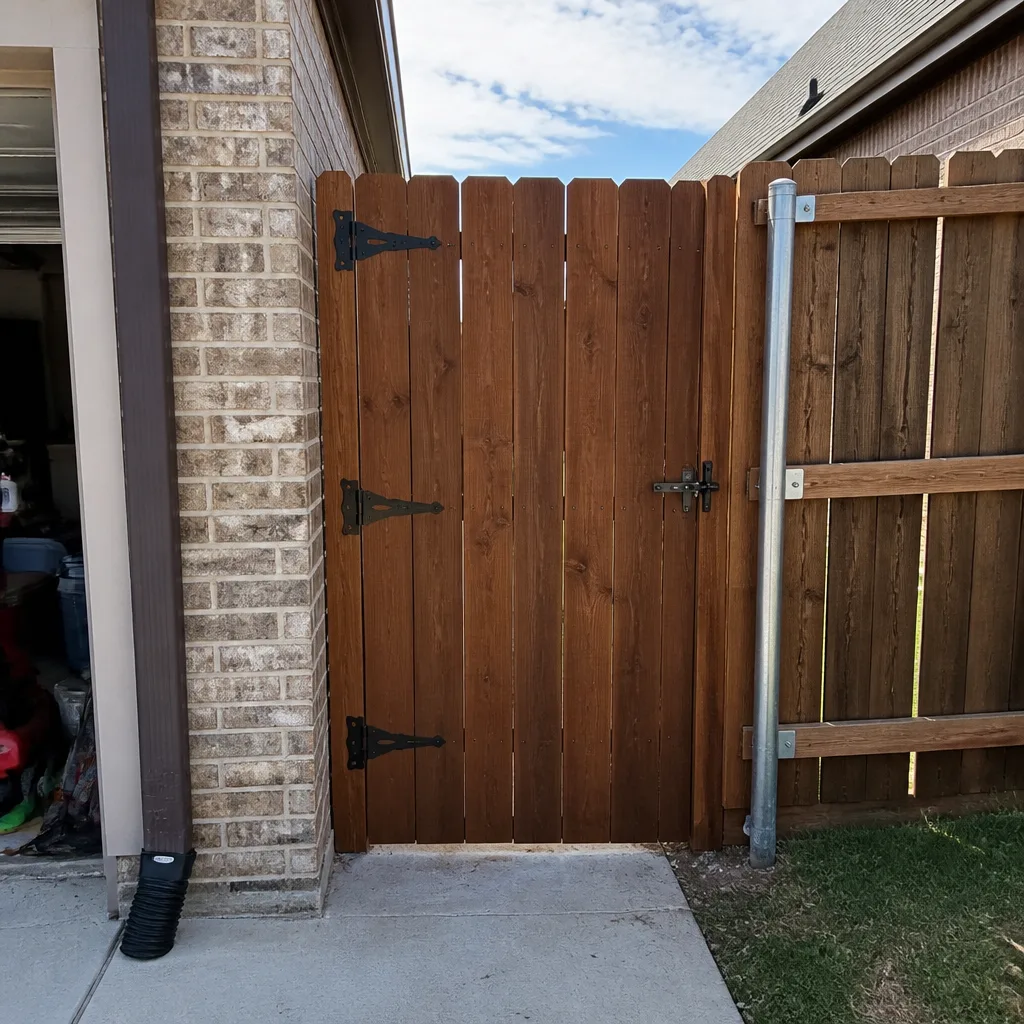 After
After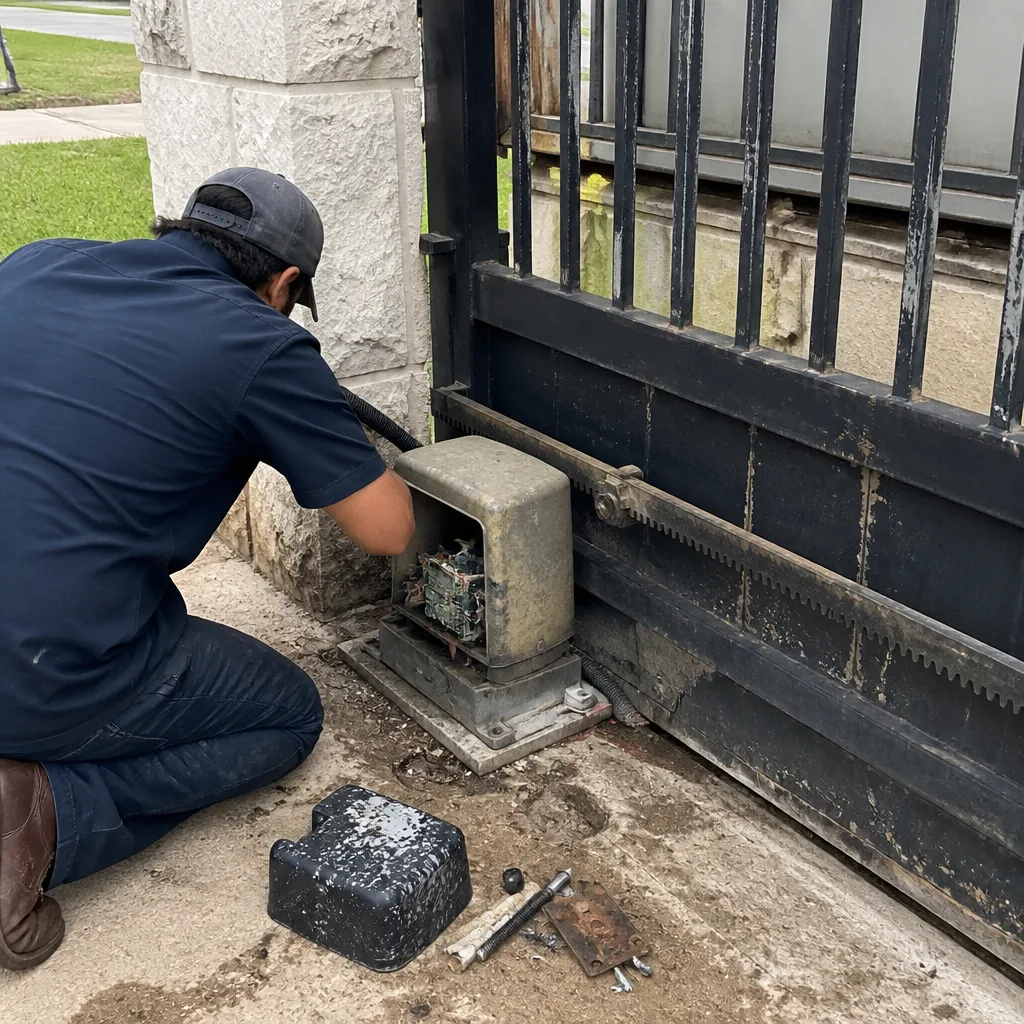 Before
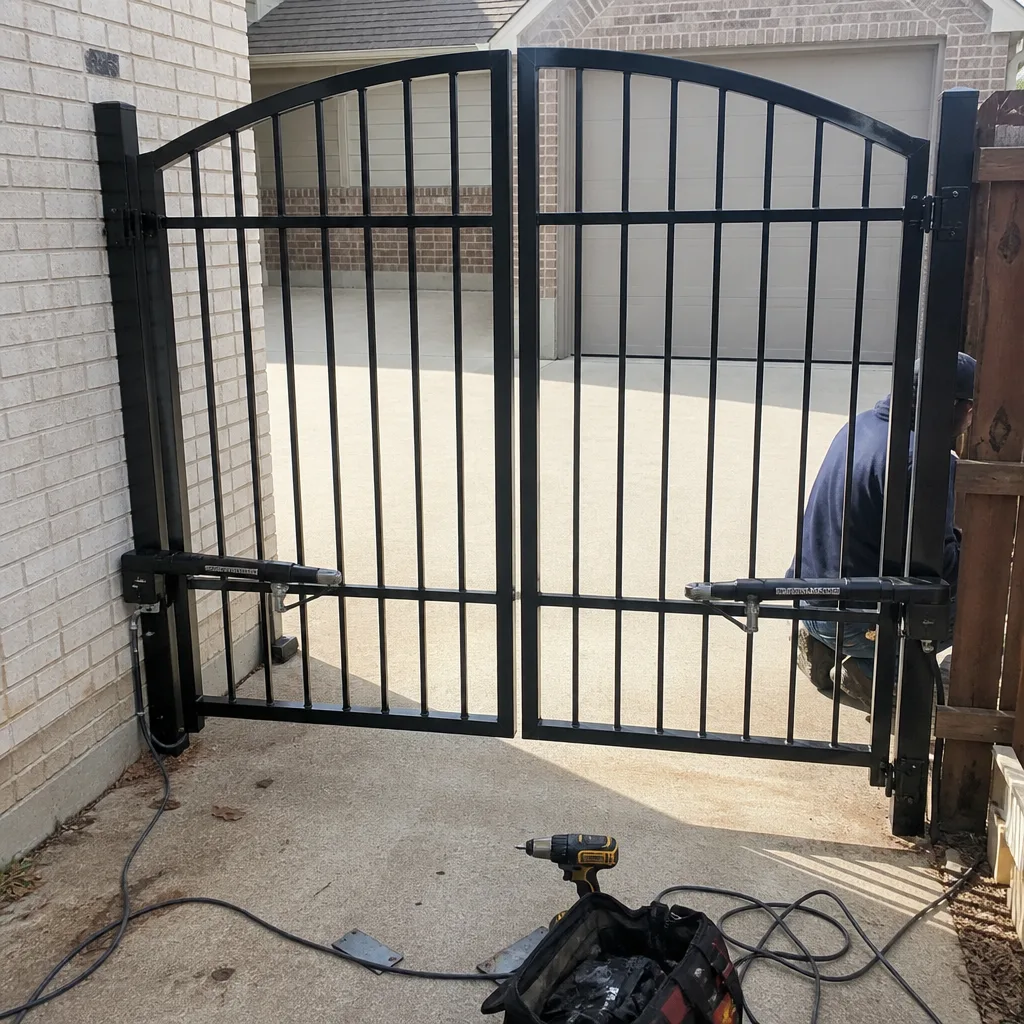 After
After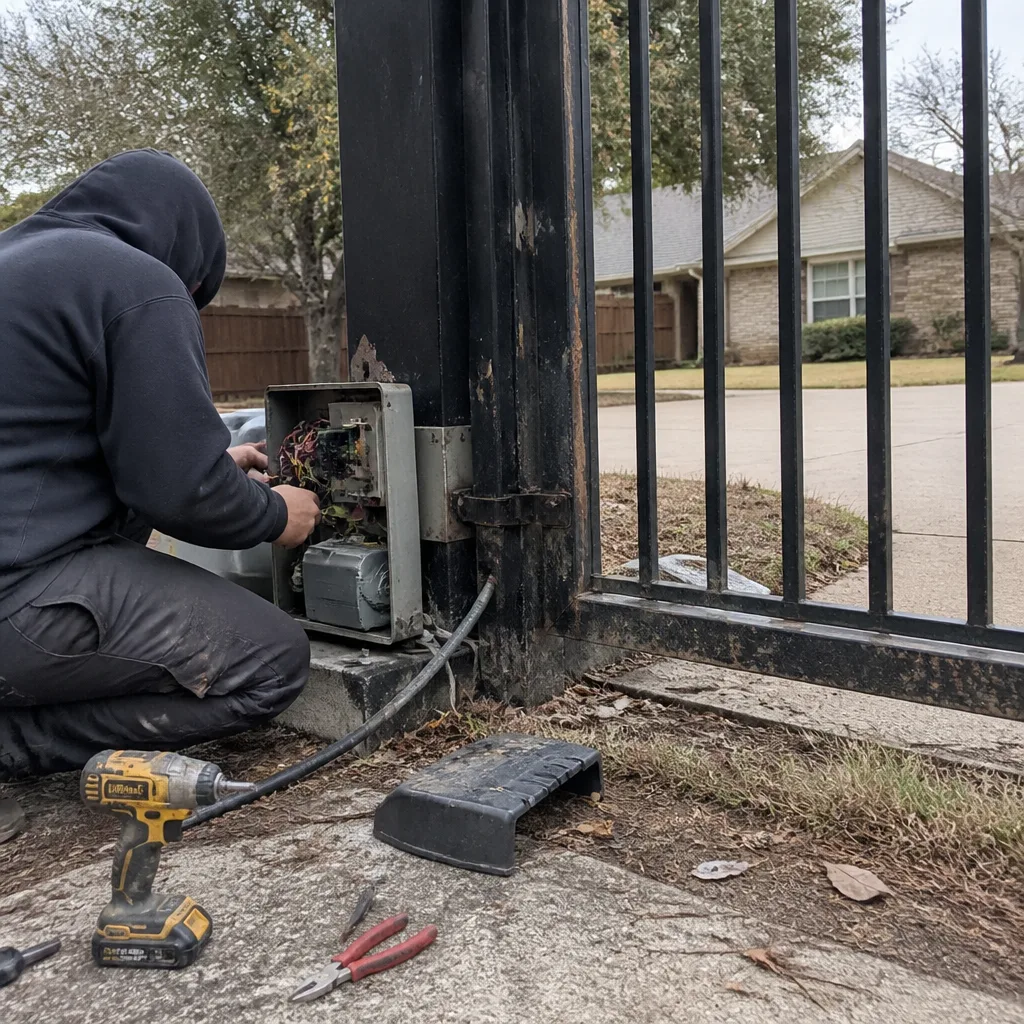 Before
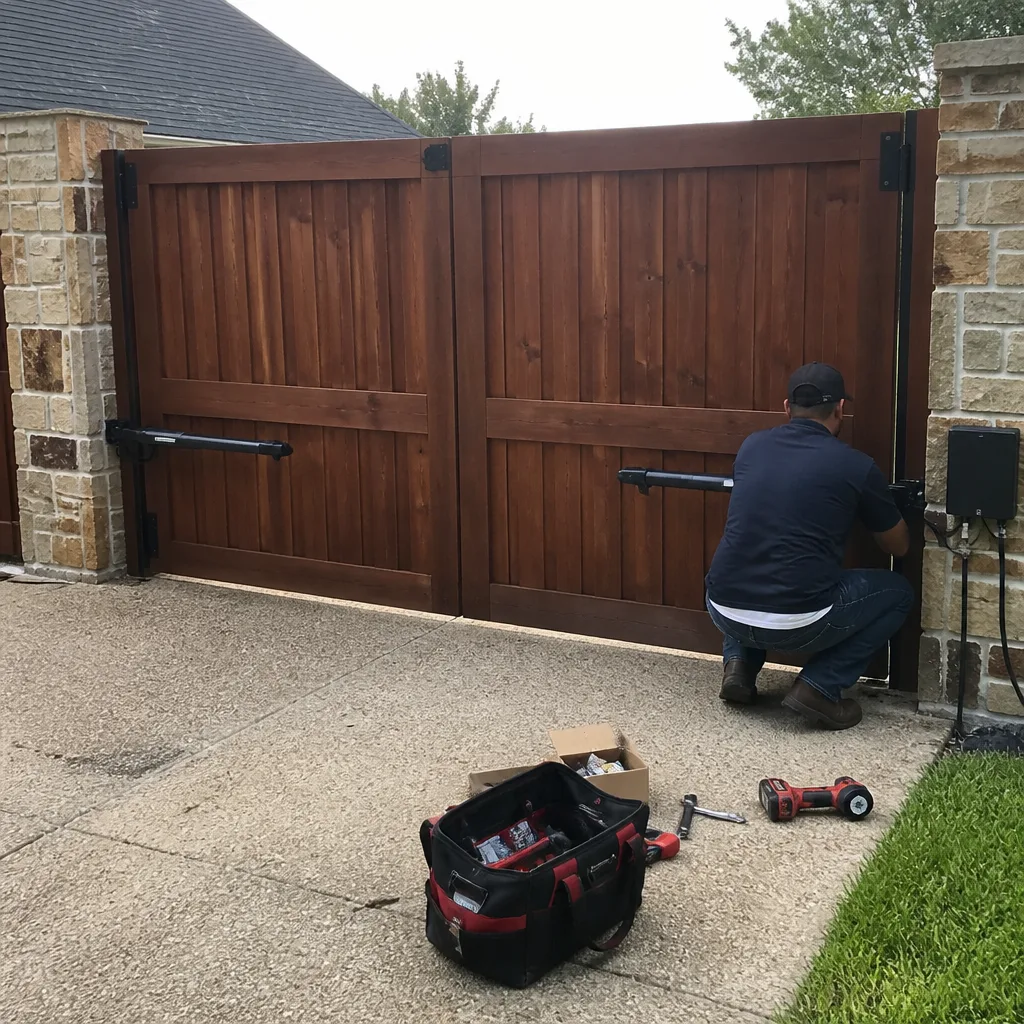 After
AfterGate Repair Maintenance Checklist for Lewisville Homeowners
Most gate maintenance checklists were written for a climate that doesn’t exist in North Texas. Lubricating hinges in August with the wrong grease is worse than skipping it entirely, because the heavy lithium product that works fine in Michigan turns to baked-on grit in a Lewisville summer. A gate that rolls smoothly in April can be scraping its track by July, and the battery that started every morning of a mild winter can fail the first week of a real freeze. This guide converts the generic “inspect your gate twice a year” advice into a month-specific maintenance calendar matched to Lewisville’s actual weather, so you’re doing the right task in the right month instead of discovering a seized hinge or a dead battery the morning you’re already late.
Quick Answer
A Lewisville gate maintenance plan should follow the weather calendar, not a generic spring-fall cycle: check hinges and welds in March after winter contraction, lubricate with a synthetic dry-film product in April before UV season, load-test the backup battery in June before the July heat peak, re-treat wood and reseal electronics in October before November’s freeze prep, and photograph everything so next year’s inspection has a baseline. Homeowners should budget about $40-$80 per year in consumables for a single swing gate and schedule our Gate Repair services if cycle time drifts more than 15% from the documented baseline.
Table of Contents
- Why Lewisville Weather Breaks Gates Differently
- Documenting Your Baseline Readings First
- The Month-by-Month Maintenance Calendar
- Lubricant Types and Temperature Ranges for Lewisville
- How to Check Limit Switch Drift with a Tape Measure
- What to Photograph and Where to Store It
- Common Mistakes to Avoid
- When to Call a Professional
- Frequently Asked Questions
- The Bottom Line
BeforeAfterWhy Lewisville Weather Breaks Gates Differently
A gate in Lewisville lives through a 75-degree temperature swing every single year, and sometimes a 40-degree swing inside a single week. January nights dip into the 20s. August afternoons sit at 105 with the sun hammering a black steel gate until the surface is too hot to touch. That range does specific things to specific materials. Steel expands and contracts; welds that were perfect in April are under tension in December. Polyurethane rollers harden in cold weather and soften in heat. Grease that flows at 80 degrees turns to peanut butter at 25, which is exactly when the motor has to work hardest.
We see this pattern repeatedly in Lewisville neighborhoods like The Colony, Highland Village, and the older streets off Main Street near Old Town: a gate that operates fine all summer fails in the first hard freeze, not because the gate was neglected, but because it was maintained on the wrong calendar. The homeowner lubricated in August (right idea, wrong product), or checked the battery in March (too early to catch the capacity loss that shows up in July). The point of this guide is to match each task to the month when it actually matters here, not somewhere with four predictable seasons.
Documenting Your Baseline Readings First
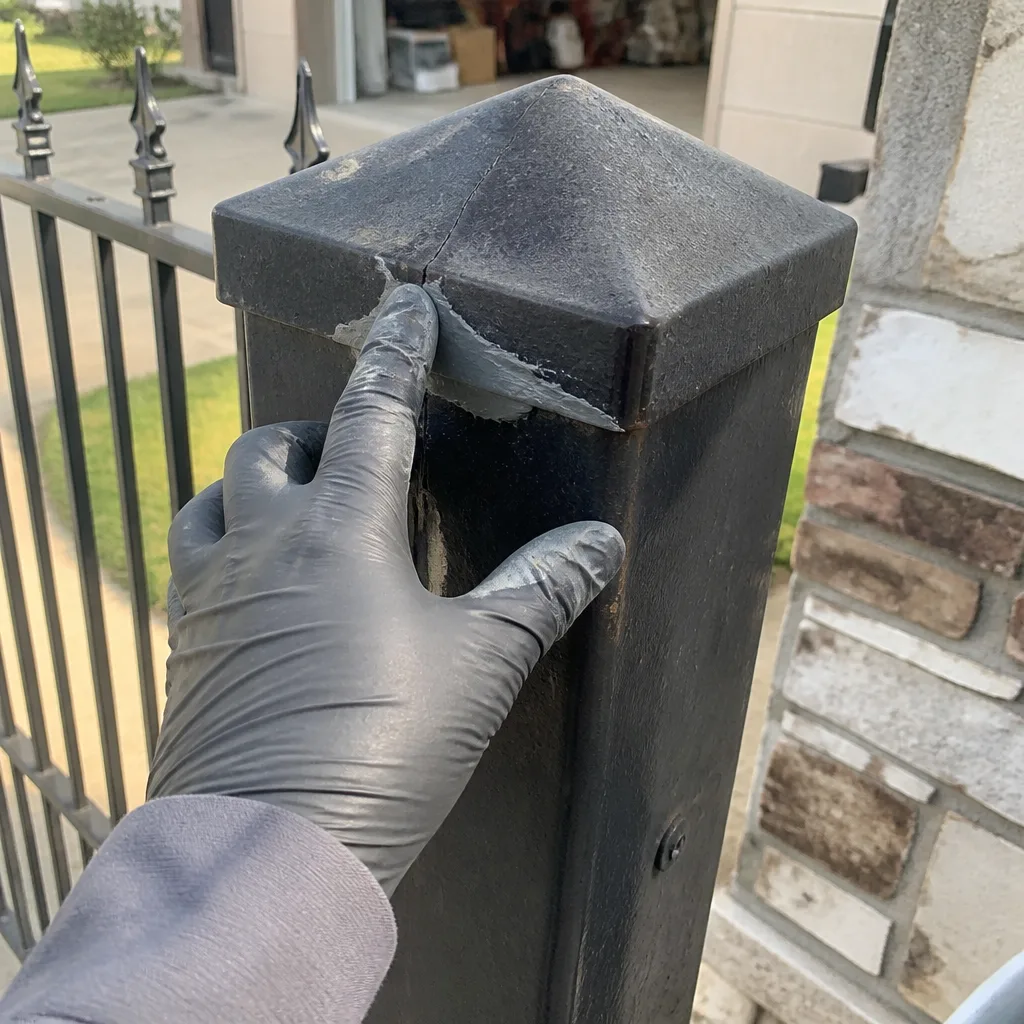
You can’t detect drift if you don’t know where the gate started. Most Lewisville homes with automatic gates have a swing or slide operator that runs on a fixed cycle: the time from full closed to full open should be consistent, within a second or two, every single run. Write those numbers down once, and every future inspection becomes a comparison instead of a guess. This is the same habit that underpins Vance Gate Repair Lewisville’s documentation practice, as detailed in Gate Repair Warning Signs: A Lewisville Homeowner’s Reference Guide: if the baseline is written down, a technician working on the gate five years from now can see what “normal” was, instead of assuming the current behavior is the original behavior.
Here’s the baseline to capture, and it takes about ten minutes with a phone.
- Open cycle time. Stand at the gate, start your phone’s stopwatch when the motor first engages, stop it when the gate reaches its full-open stop. Round to the nearest half second. Repeat three times and use the middle value.
- Close cycle time. Same process, closing direction. If the gate has an auto-close delay, time from the moment motion starts after the delay, not from when the gate reached open.
- Motor amp draw. If you have a clamp meter, read the peak current during the first second of travel. If you don’t own a clamp meter, skip this, but note it as a reading a professional can capture during the next service visit.
- Audible signature. Record ten seconds of audio of the gate operating. A change in pitch, a new grind, or a hesitation that wasn’t there in the baseline recording is diagnostic data.
- Battery voltage (if applicable). If the operator has a DC backup battery, measure the resting voltage at the terminals. A healthy 12V battery sits at 12.6V or higher at rest; a 24V system sits at 25.2V or higher.
Store this information in a note on your phone, or better, in a shared folder with photos. One homeowner in Flower Mound kept her baseline readings on a sticky note on the back of the control box, which worked until the adhesive failed in July. Use a phone note or a cloud folder, not paper.
If you’re not comfortable working around a live electrical panel, this is a good moment to call in gate motor and opener service in Lewisville. The operator enclosure contains line voltage, and a proper baseline reading by a technician includes the safety edge, the photo-eye alignment, and the force settings, not just the cycle time.
The Month-by-Month Maintenance Calendar
Here is the full year of Lewisville gate maintenance, assigned to the months where each task actually matters. Not every gate needs every task. A manual gate with no automation skips everything electrical; a vinyl gate skips the rust and wood items. Use what applies.
January: Cold-Snap Inspection
This is the month to observe, not to fix. When the temperature sits below 35 degrees, the lubricant on your gate is thickest and the motor is working hardest. Watch the gate operate and listen. If the motor labors, hums differently, or stalls on either travel direction, note it. If the gate has operated through a hard freeze and the backup battery functioned, you know the battery passed the real test, not a simulated one. Tighten nothing in January unless something is visibly loose. Cold steel is brittle, and stripping a fastener on a 25-degree morning creates a project that didn’t need to exist.
March: Post-Freeze Structural Walkthrough
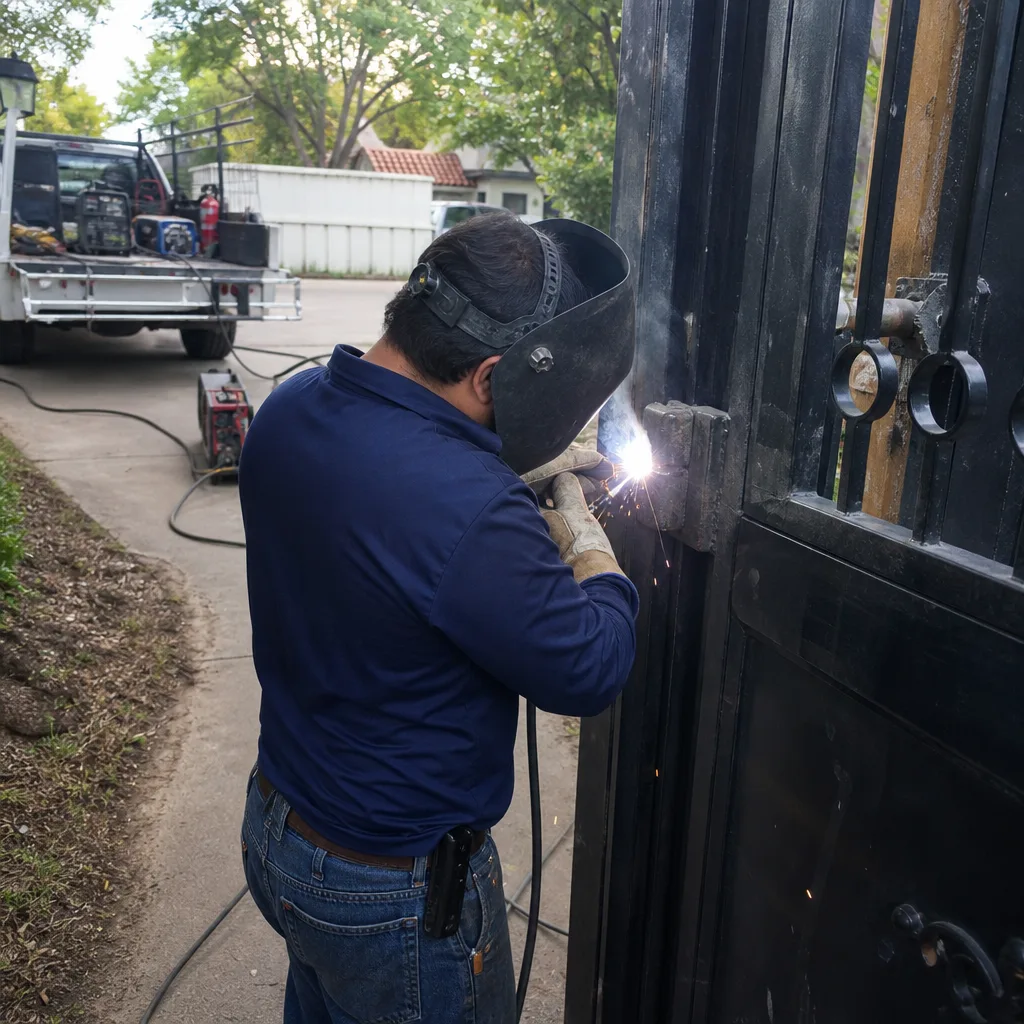
By early March, the ground has thawed and shifted, and any damage from the January-February freeze cycle is visible. Walk the full length of the gate with a flashlight, even if you have excellent daytime light; the flashlight beam at an oblique angle will show hairline cracks that direct sunlight won’t. Inspect every weld joint and every bolt. Look for cracks in the concrete pad around the gate posts; a gate post that shifted out of vertical during a freeze creates strain on the hinges that will get worse every month until it is corrected. If you find a post rocking or a weld with a visible crack, this is the month to repair it, before the summer heat makes the crack expand.
For a full breakdown of what a structural inspection in Lewisville should include, see our Lewisville gate repair page.
April: UV Seal Check and First Lubrication
April is the correct month for lubrication in Lewisville, not January and not August. The risk of a late freeze is past, and the high-UV season hasn’t started yet. The product you use matters more than the act of applying it, because whatever you apply in April is going to cure and bake through a summer of 100-degree days. Use a dry-film synthetic lubricant, often sold as a PTFE or Teflon spray, for hinge pins, roller bearings, and the latch mechanism. Do not use a heavy grease on these parts in this climate; the grease attracts dust, the dust bakes into the grease under a Texas sun, and by August the hinge has a gummy black paste where a bearing used to be. More detail on product selection is below in the lubricant section.
June: Battery Load Test Before the Heat Peak
A battery’s capacity is lowest in the heat, not in the cold, and the month that kills gate batteries in Lewisville is July. Test the backup battery in the second half of June, when the ambient temperature is already high enough to expose a marginal battery. A no-load voltage reading is not a load test. Disconnect the AC power (or turn off the breaker feeding the operator), then run the gate through two full open-close cycles on battery power alone. If the gate completes the cycles at normal speed, the battery is healthy for another season. If the gate slows noticeably on the second cycle, the battery has lost capacity and will likely fail in the next major heat event. Restore AC power and confirm the operator resumes charging. If the battery fails this test, a replacement before July is cheaper than an emergency call during July.
August: Observe, Don’t Lubricate
August is the observation month in the summer. The gate has been through two months of extreme heat, and any movement or wear that heat accelerated is now visible. Do not apply lubricant in August. The surface temperature of a steel gate in direct Lewisville afternoon sun can exceed 140 degrees, and most spray lubricants will flash off before they penetrate. Instead, observe the gate at the hottest part of the day. Listen for new squeaks, watch for hesitation, and check the motor housing temperature with your hand after a full cycle. If the operator housing is too hot to keep your hand on for five seconds, the motor is working harder than it should be, and that excess heat is coming from friction somewhere in the mechanical train. That finding warrants a professional inspection.
October: Wood Treatment and Electronics Reseal
October is the maintenance sweet spot in Lewisville, because you’re fixing things after the summer heat has done its damage and before the winter freeze adds its own. If your gate has wood elements, this is the month to re-seal them. Use a penetrating sealer, not a film-forming one; film-forming sealers crack in the dry heat and peel in the freeze-thaw cycle. For the electronics: visually inspect the operator enclosure for gaps where the housing has warped from summer heat, and replace worn rubber gaskets. Ants, mud daubers, and paper wasps colonize warm enclosures in autumn; clean out any nests carefully (and kill the power before opening the enclosure).
November: Freeze Prep
Do the winterization work in November, not December. The first hard freeze in Denton County can arrive in early December, and if you’re trying to winterize a gate in November you still have pleasant working weather. If you wait until December 10 and the freeze arrives December 12, you’re rushed. The November list: confirm the battery passed the June test or replace it now, verify the safety edges are flexible and crack-free (a stiffened edge that fails in cold weather is a common winter failure), tighten every fastener to spec, and cycle the gate twice manually to confirm there is no binding at cold temperatures. A manual cycle also checks that the release mechanism works, which is the thing you need to know on a freezing morning when the power is out and the car is on the inside.
Lubricant Types and Temperature Ranges for Lewisville
The single most common mistake we see in Lewisville gate maintenance is the wrong lubricant. It’s not a minor mistake, because in this climate the wrong product actively accelerates wear. A lithium grease, the product most often recommended in generic online guides, has an operating range that starts to soften and run at around 250 degrees and hardens to a stiff paste below 30 degrees. Neither number is out of range for a Lewisville year, and both failure modes are common.
Here are the three categories that actually work in a 20-degree-to-105-degree climate, with their proper applications.
- Dry-film PTFE spray (synthetic). Temperature range: -100°F to 500°F. This is the correct product for hinge pins, roller bearings, latch mechanisms, and chain links. It bonds a thin Teflon film to the metal, does not attract dust, and does not change viscosity with temperature. Apply it in April and October. Use a thin coat; more is not better, and excess film flakes and creates debris.
- Silicone spray. Temperature range: -40°F to 400°F. Use for plastic bushings, vinyl gate hardware, and the rubber seals on the operator enclosure. Do not use on metal load-bearing surfaces; it offers minimal pressure lubrication and the metal surfaces will gall under heavy load.
- White lithium grease (sparingly, specific locations only). Temperature range: 0°F to 300°F. There is exactly one place on most residential gates where a grease belongs: inside the gearbox of the operator, where the manufacturer specifies a grease and the enclosure protects it from dust. Some FAAC and BFT operators call for a specific grease in the worm drive; follow the manufacturer’s specification for that one component. Do not use white lithium on hinges, rollers, or chains in Lewisville. It attracts airborne fine dust, and our fine dust is finer than most.
If you have a Linear or Viking operator and aren’t sure which internal lubricant it calls for, the manual is usually available as a PDF from the manufacturer. If the manual is gone, the serial number plus a call to the manufacturer’s technical support line will get you the spec. Or you can have a technician document it during the next service visit; either way, the correct product for the gearbox is not something to guess at.
How to Check Limit Switch Drift with a Tape Measure
A limit switch is the component that tells the operator when the gate has reached the fully open or fully closed position. Most residential gate openers use mechanical or magnetic limit switches, and both drift over time, either because the switch itself moves or because the gate’s geometry shifts slightly. When the limit drifts, the gate stops short of full travel or pushes past it, and the motor runs against a stop it shouldn’t be running against. That overshoot is what burns out motors.
You can do a meaningful drift check with nothing but a tape measure and the stopwatch you already used for the baseline. The test tells you whether a call is warranted, not what to fix.
- With the gate fully closed, measure the gap between the gate edge and the gate stop or post. Write it down, to the nearest 1/16 inch.
- Open the gate fully and measure the gap at the open stop. Write it down.
- Close the gate and remeasure the closed gap. Compare both measurements to the baseline you recorded when the gate was new or recently serviced.
- Run the gate through three full open-close cycles while timing each direction.
- Compare the three cycle times to your baseline. If the cycle time varies by more than one second between runs, or drifts by more than 15% from the baseline, the limit switches or the force settings have drifted, and the operator is working harder than it should.
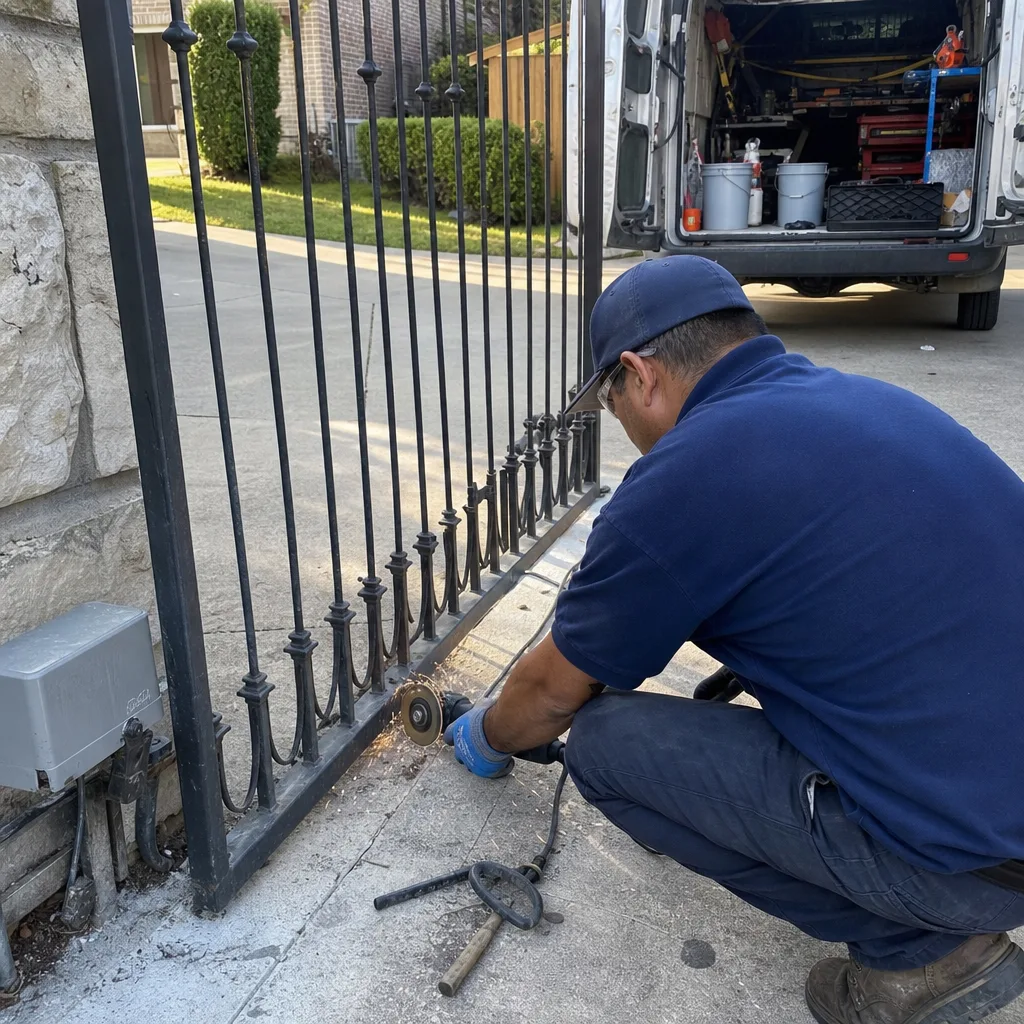
In our experience, a gate that has lost its limit setting in one direction often shows it in the motor sound before it shows it in the measurements. If you hear a change in pitch at the end of travel, that’s the motor loading against a stop. If the measurements confirm a drift, it’s time to schedule a professional limit-switch reset. A wrong attempt at a limit-switch repair is the fastest way to turn a $150 service call into a $650 motor replacement, because a gate that overshoots its stop for a week has already begun destroying the gearbox. This is the same reason we document the limit-switch positions on every gate repair in Lewisville: the next technician needs to know where the switch was set, not where it ended up.
What to Photograph and Where to Store It
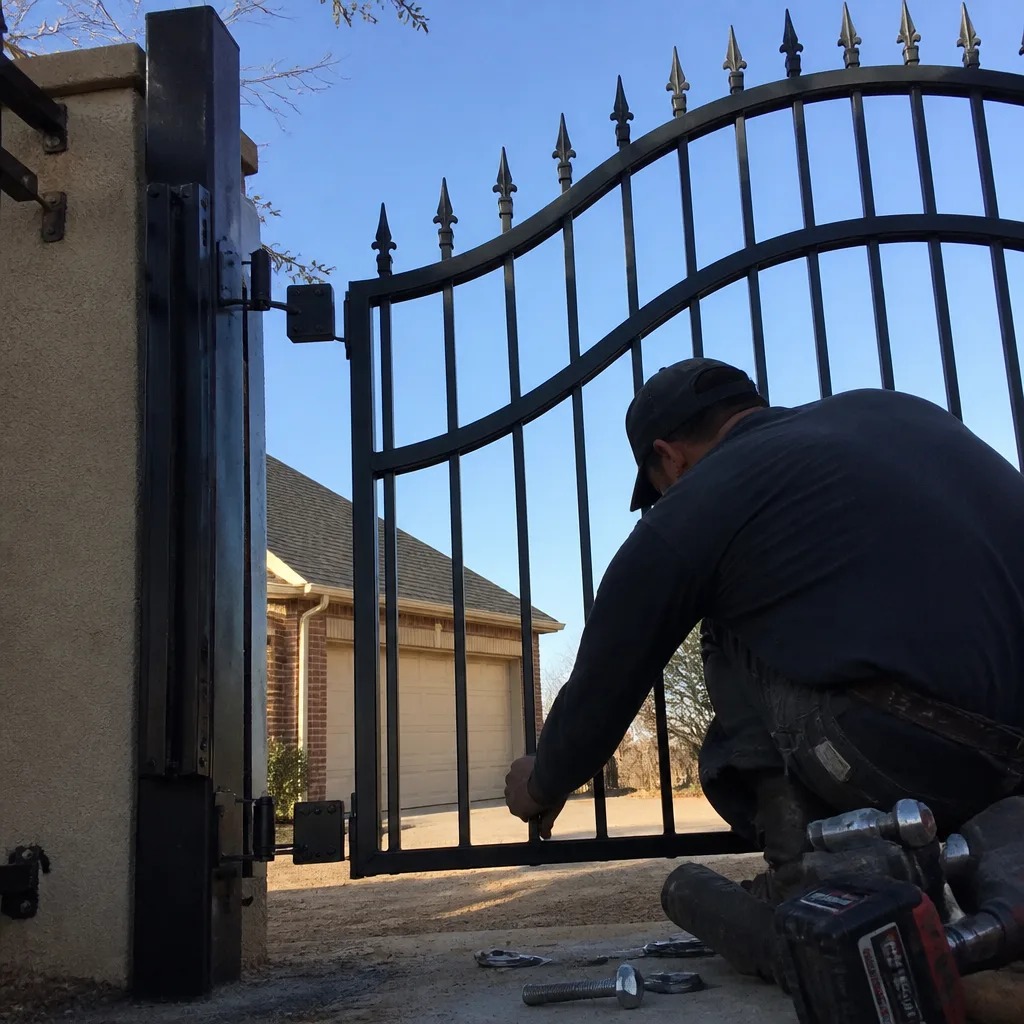
A maintenance record that lives only in your memory is not a record. The point of a photo log is that it survives a technician change, a phone upgrade, or a new homeowner. The day you sell the house, a folder of gate documentation is a small but real selling point. The day you call a new gate company, that folder is what separates a ten-minute diagnosis from a two-hour one. For additional homeowner resources, visit more guides & resources.
At each maintenance session, photograph these items. Use the date in the file name or the album title, and take the same angles every time so the images are comparable side by side.
- The full gate, closed, from the driveway side. This is the master reference shot. Any change in the gate’s resting position or sag shows up here.
- Each hinge, close-up, both top and bottom. Hinge photos document wear patterns. The photo from April and the photo from October should look nearly identical; if you see metal dust or a changed wear line, the hinge is moving.
- The operator enclosure, exterior and interior. Exterior photo documents weather seal condition. Interior photo documents wiring, dust accumulation, insect nests, and any corrosion on the transformer or capacitor.
- The limit switches, close-up. Photograph the position of the mechanism before you touch anything. If a switch is out of position, the photo is evidence of which direction it drifted.
- The battery terminals and voltage reading. Photograph the multimeter display or just the terminals and note the voltage in the caption.
- The ground around each gate post. This documents soil movement and concrete pad cracking over time.
Store the photos in a dedicated album, not your general camera roll. Use a cloud service with a year-and-month naming convention: “2026-04-April-maintenance.” If you ever hire Vance Gate Repair Lewisville, our technicians leave a documented photo record on every visit as standard practice, so your own folder and our folder become the same continuous file.
If you’re starting fresh with a gate that has no maintenance history, this is the right moment to consider professional gate installation standards in Lewisville for comparison. A gate that was installed without documentation has no baseline, and the only way to get one is to start measuring today.
Common Mistakes to Avoid
- Lubricating in August with heavy grease. A black steel gate in a Lewisville August afternoon is hot enough to flash off most spray lubricants and bake grease into a grinding paste. The correct lubrication months here are April and October, with a dry-film product.
- Testing the backup battery in March and calling it good for the year. A battery that reads healthy in mild weather can be junk in July. The load test belongs in late June, when the ambient heat already represents worst-case operating conditions.
- Using white lithium grease on hinges. The product works in cooler wetter climates where dust is heavy and doesn’t stay airborne. North Texas dust is fine and dry, it sticks to grease, and the result is an abrasive slurry on the hinge pin.
- Ignoring a slight change in gate noise because it still opens. A gate that has started to sound different is telling you something mechanical has changed. The time to diagnose it is now, while it’s a $150 repair, not in the winter when the same underlying friction has damaged a $600 gearbox.
- Skipping the manual release test. The manual release is the only way to open the gate when power is out and the battery is dead. If you’ve never tested it, the first time you need it is the wrong time to discover the cable is seized.
- Not documenting the baseline. Without written cycle times and voltage readings, “the gate seems slower” is a feeling, not a diagnostic. With the baseline, the same feeling is a measurable 20% drift and an early warning.
- Treating wood on the summer calendar. A penetrating sealer applied in a Lewisville July cures unevenly in the heat and fails by October. The correct window for wood treatment is October, after the heat stress and before the freeze cycle.
When to Call a Professional
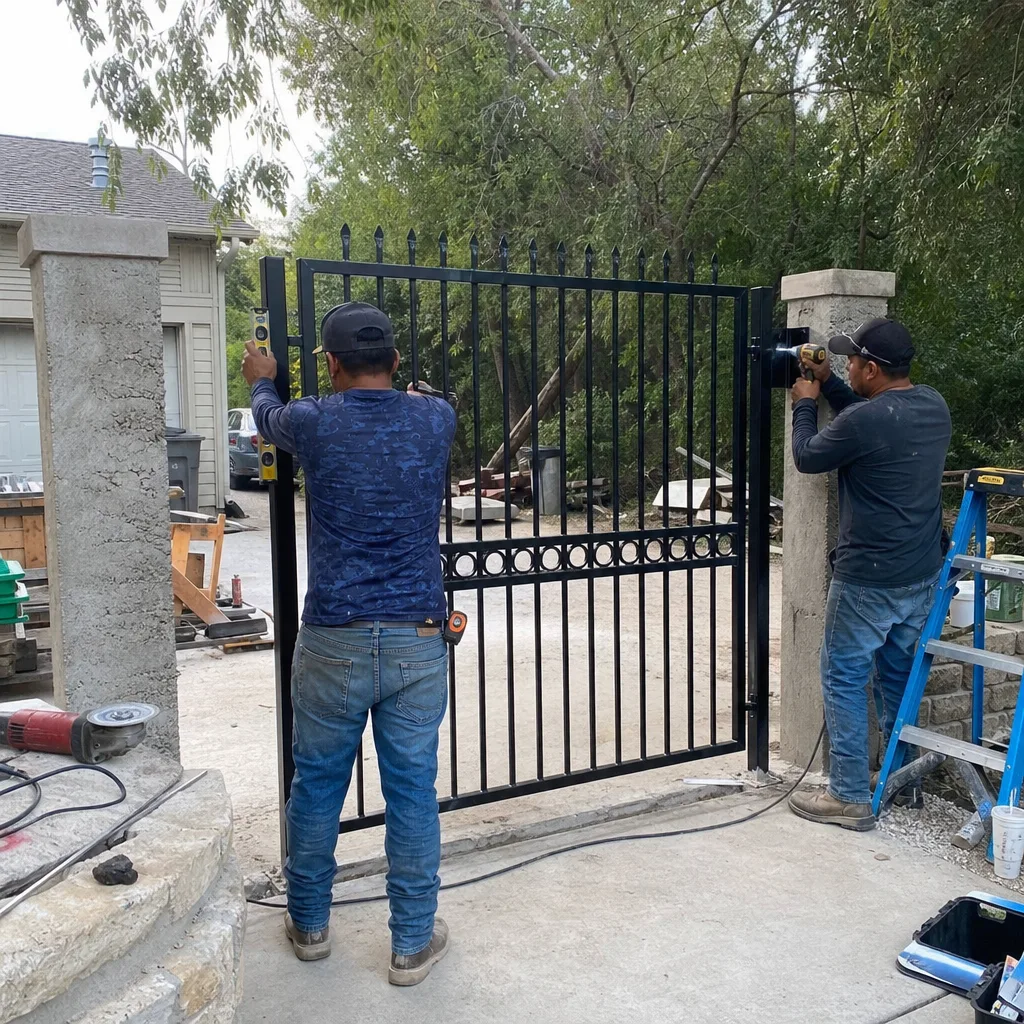
Some maintenance findings are information; some are repair needs that shouldn’t wait. Call a professional when a weld shows a visible crack, when a gate post is moving in its concrete pad, when the motor labors or changes pitch, when the limit switch has drifted past the point where a gentle reset feels safe, or when the backup battery fails its June load test. The common thread is that these are all conditions where continued operation causes compounding damage, and the repair bill gets larger every week you wait. Vance Gate Repair Lewisville offers free estimates in Lewisville, and the written price is given before any work starts. Call (817) 826-9477.
Frequently Asked Questions
Perform a visual inspection every month, a lubrication and seal check in April and October, and a battery load test in late June. The monthly inspection takes five minutes and catches most issues before they become repairs.
A dry-film PTFE spray is the correct product for most gate hardware in Lewisville, because it remains stable from below freezing to above 500 degrees and does not attract the fine dust that turns grease into grinding paste. Silicone spray works for plastic and rubber parts, and grease belongs only inside sealed gearboxes where the manufacturer specifies it.
Heat reduces battery capacity more aggressively than cold, and a battery that has been slowly losing capacity often fails during a July heat wave rather than a January freeze. This is why the battery load test belongs in late June, at the start of the season that actually kills batteries in Lewisville.
Time the gate’s full open and close cycles and compare to a documented baseline. If cycle time varies by more than one second between runs or drifts more than 15% from baseline, the limit switches or force settings have drifted. A tape-measure check of the stop gaps adds confirming evidence. The adjustment itself is a professional task.
The lubrication, inspection, documentation, and battery testing in this guide are all within reach for a careful homeowner. Limit-switch adjustments, motor diagnosis, weld repair, and gearbox lubrication are professional work, both because of the electrical and mechanical risk and because a wrong adjustment can destroy an expensive motor in a week.
Most residential gate service calls in Lewisville run between $95 and $195 for a diagnosis, with repairs ranging from about $185 for a hinge replacement to $650-$1,200 for a swing-gate motor replacement depending on the brand and the condition of the arm bracket. The price is quoted and agreed in writing before any work starts. Call Vance Gate Repair Lewisville at (817) 826-9477 for a free estimate on your specific gate.
The Bottom Line
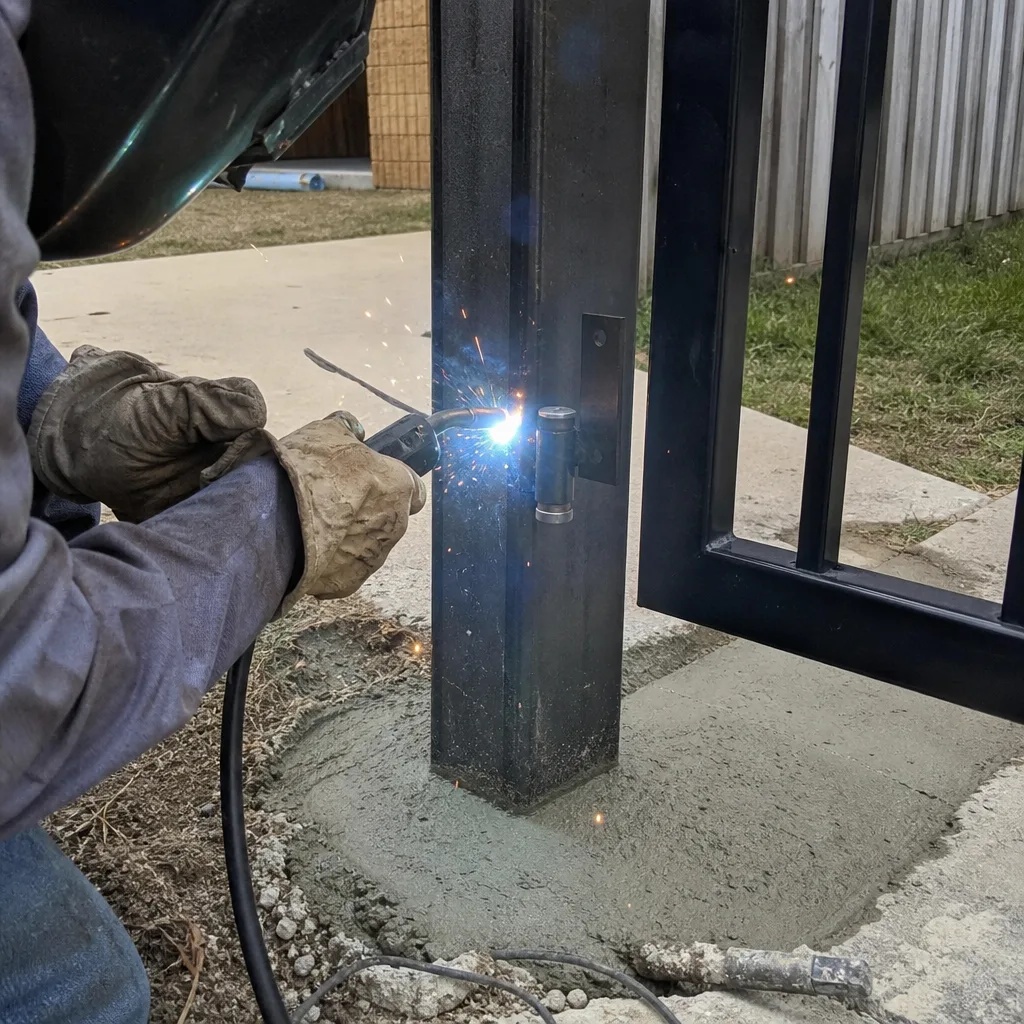
A gate in Lewisville lives through a 75-degree temperature swing every year, and a maintenance calendar that doesn’t respect that swing is a calendar that produces surprises. Lubricate with a dry-film product in April and October, load-test the battery in June before the July heat peak, inspect structure in March after the freeze cycle, winterize in November before the first hard freeze, and document everything. A homeowner who follows this month-by-month calendar will catch most failures as early warnings instead of emergency calls. And when a repair does outgrow the DIY range, the documented baseline means the technician starts from data instead of guesswork.
Written by Adrian Vance, Owner at Vance Gate Repair Lewisville, serving Lewisville since 2014.