
Last updated September 20, 2026
Free on-site gate assessment - hinges, posts, and your LiftMaster or Nice gate operator checked before anything is quoted
The assessment is free and the quote is the invoice.

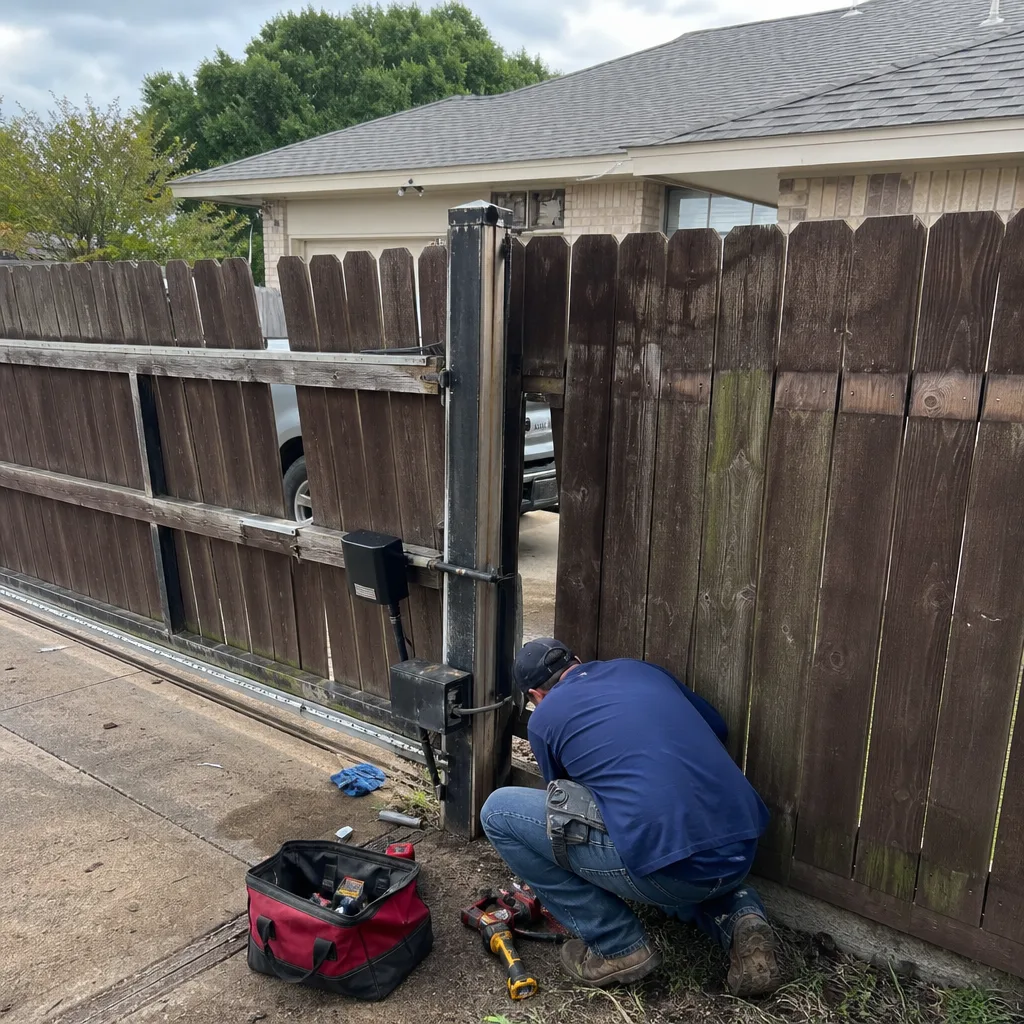 Before
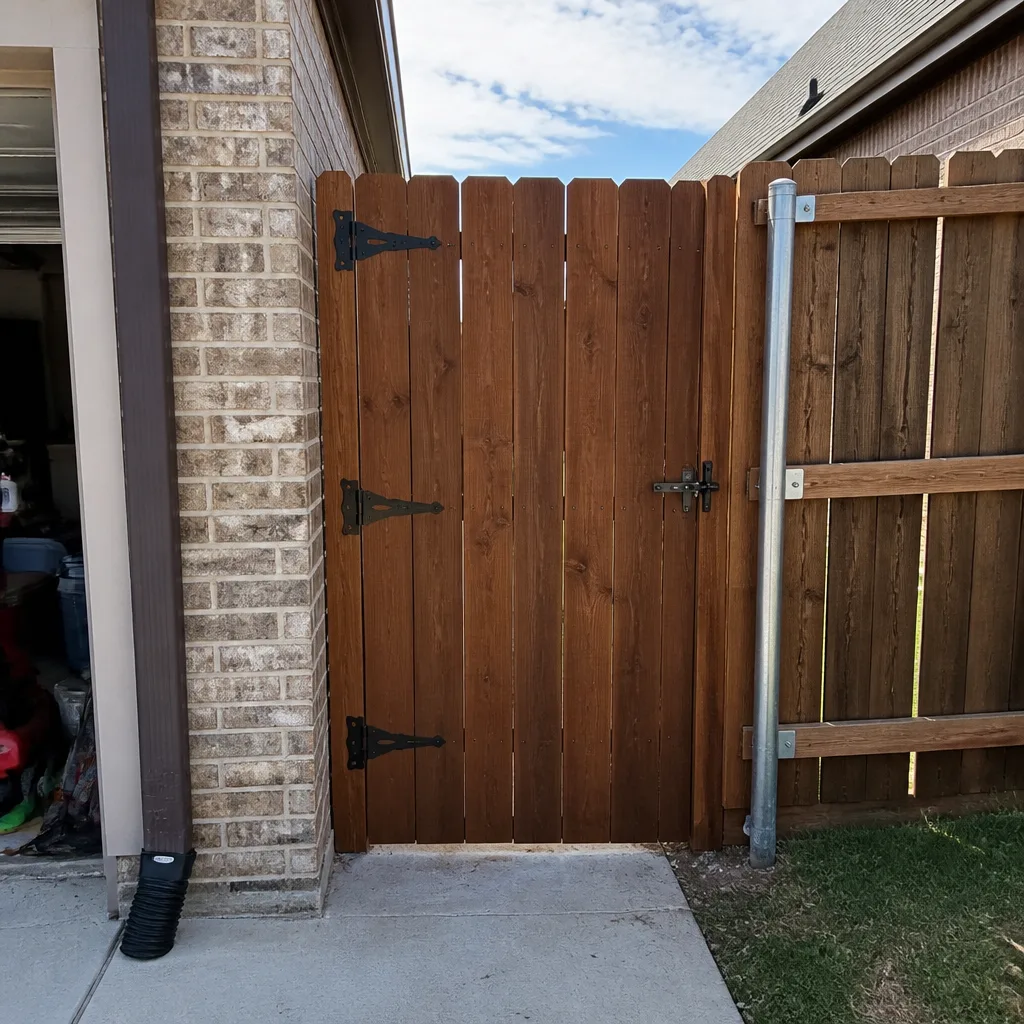 After
After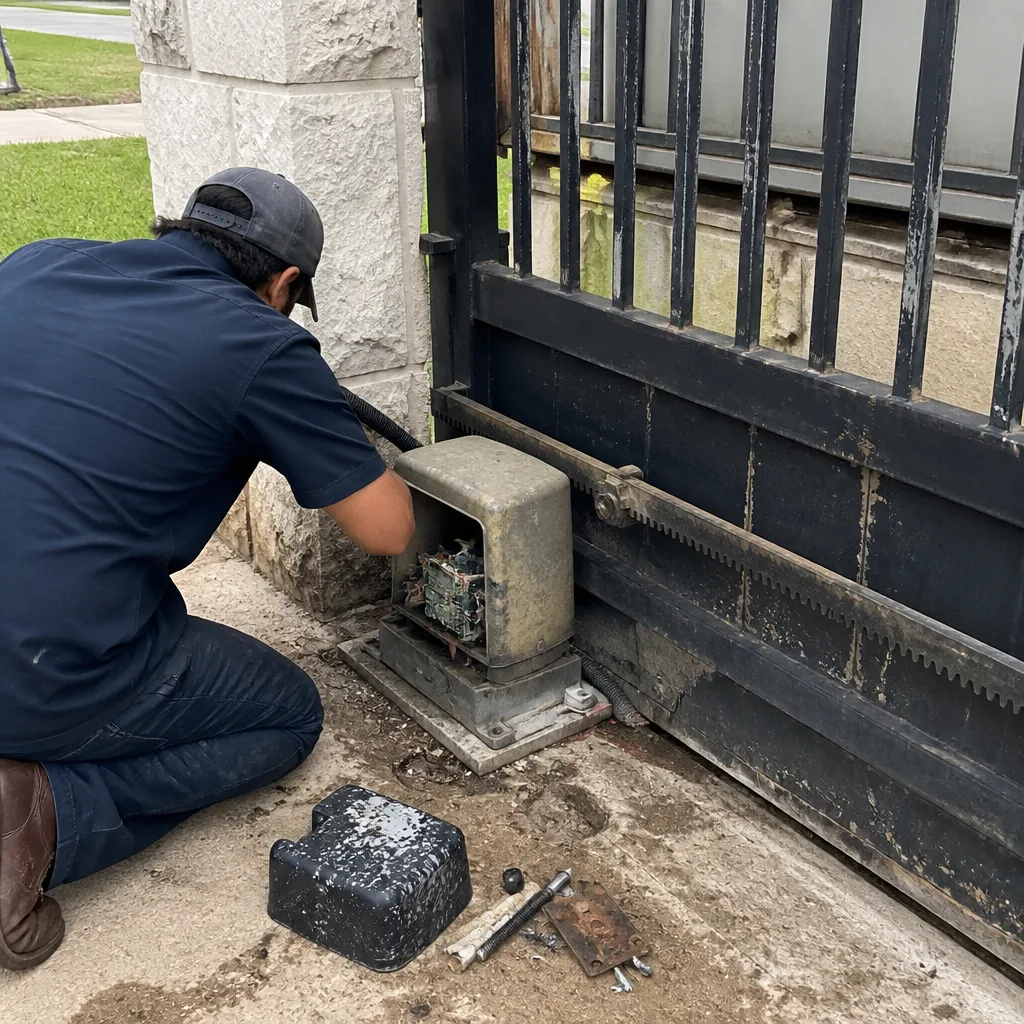 Before
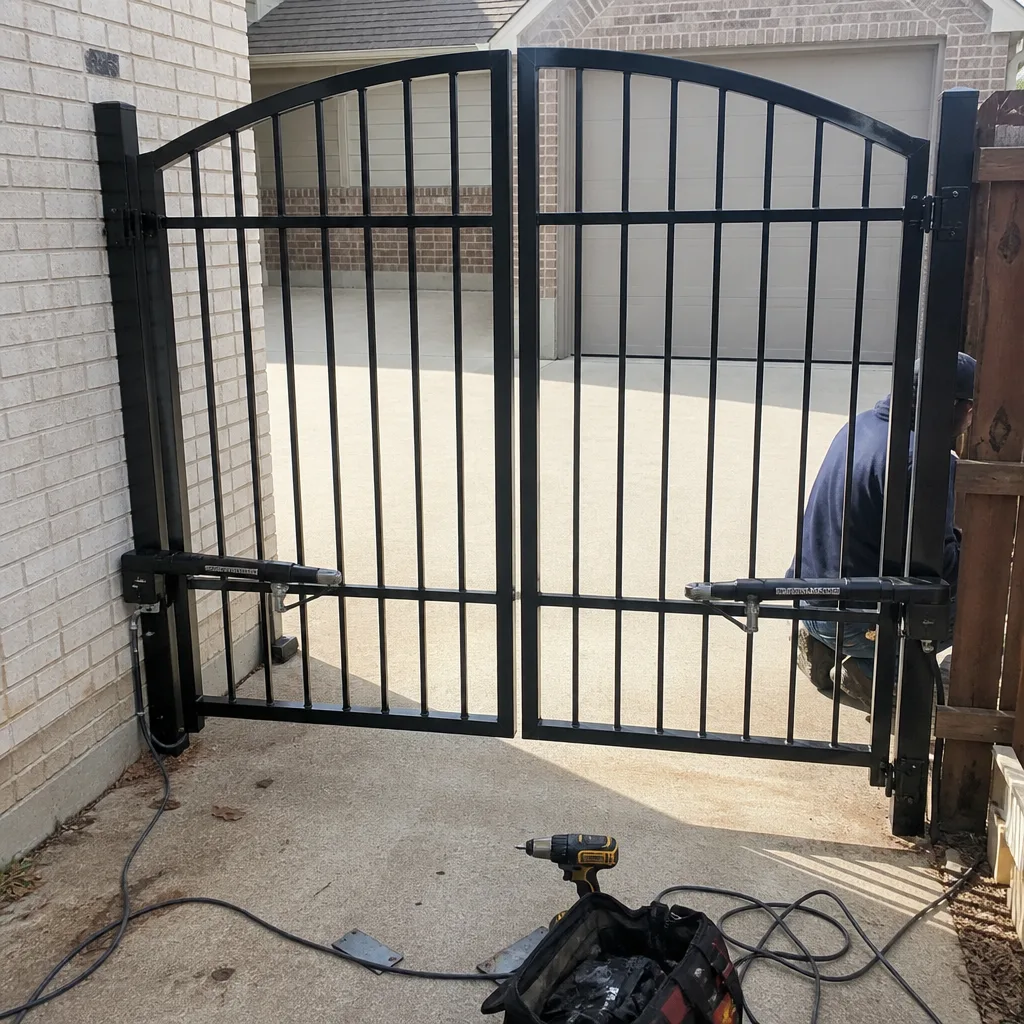 After
After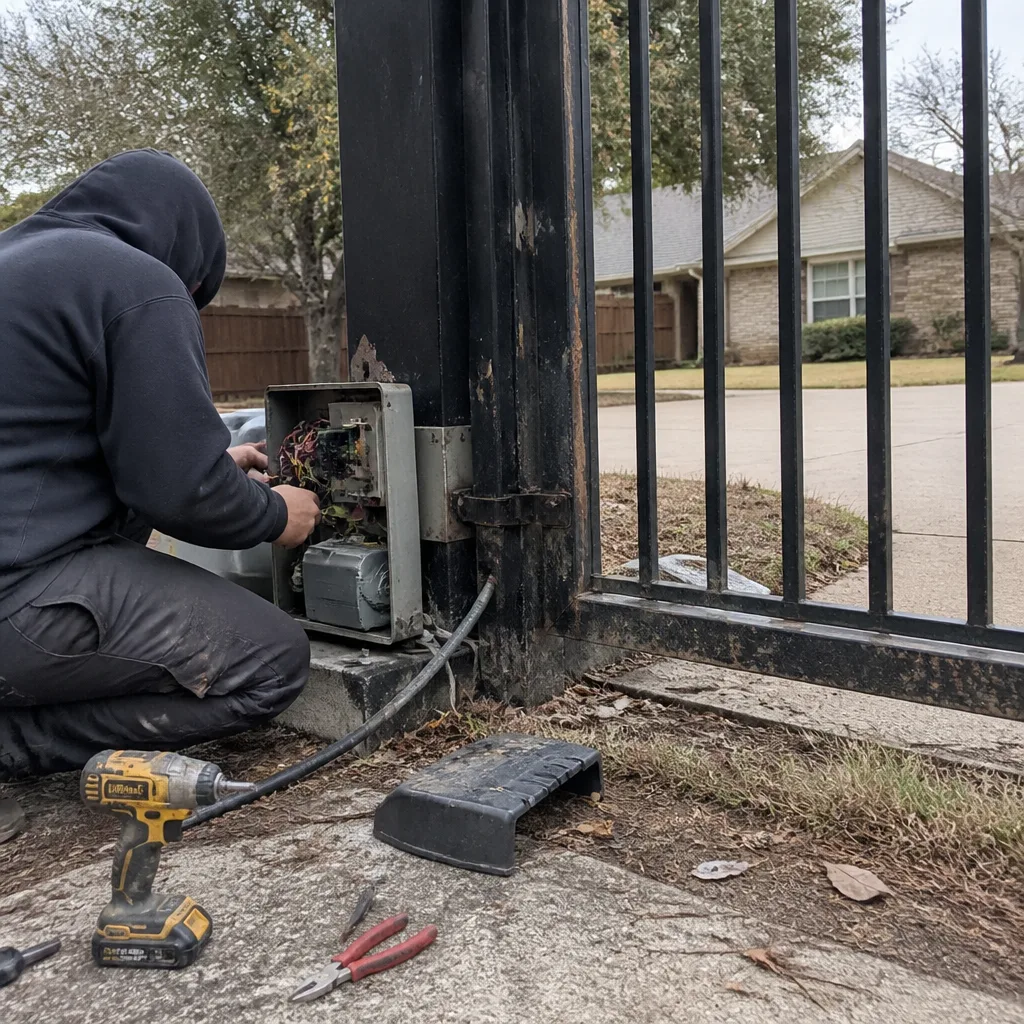 Before
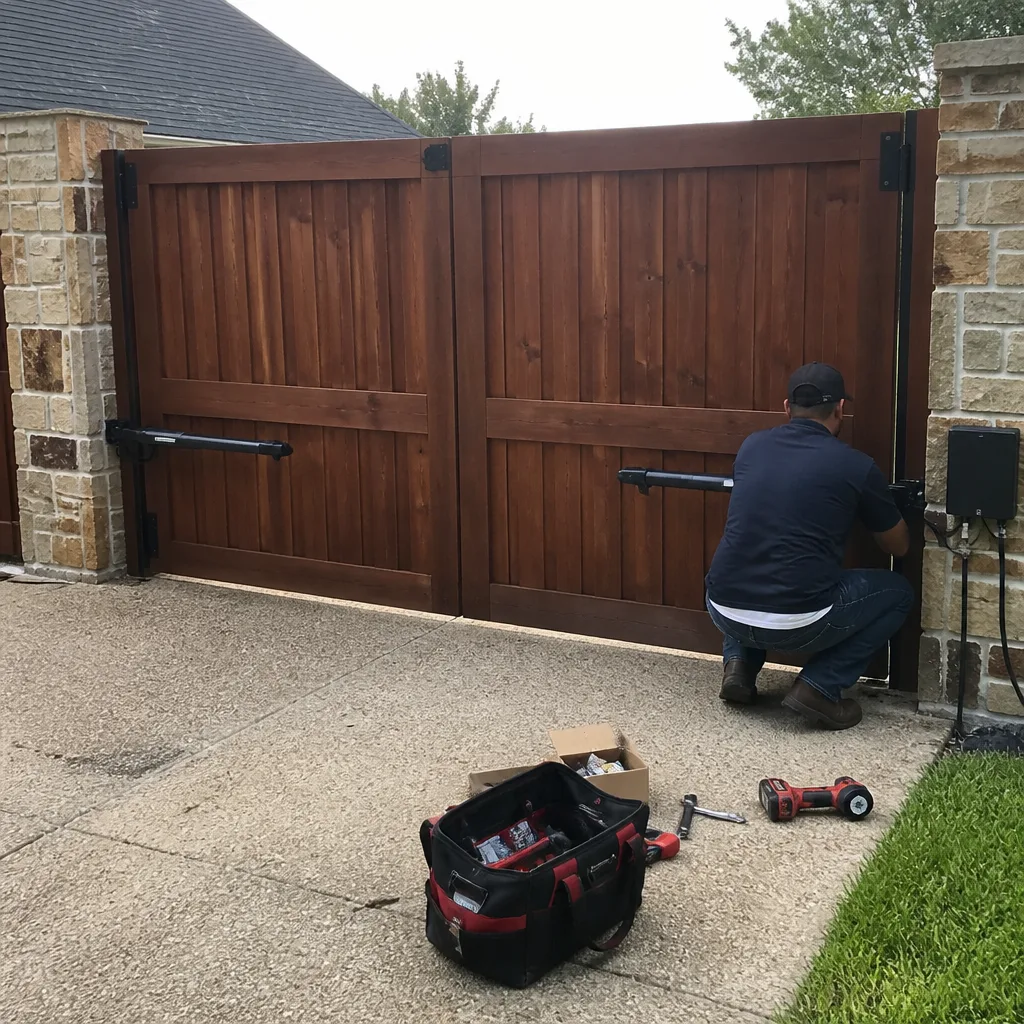 After
AfterGate Repair Permits, Codes & Inspections in TX: What You Need to Know
An unpermitted gate is the kind of problem that hides for years and surfaces on the worst possible day: closing day. In Lewisville, we’ve seen title searches flag driveway gates that were installed without city approval, and the seller gets handed two options: tear it out or negotiate a credit on the spot. What most homeowners don’t realize going in is that Texas gate permitting isn’t one set of rules, it’s three overlapping authorities: the state sets electrical minimums, the municipality controls setbacks and height, and your HOA layers private restrictions on top. By the end of this guide, you’ll know exactly which tasks need a permit in Lewisville, which ones don’t, who to call, and how to keep a gate project from becoming a closing-day surprise.
Quick Answer
In Texas, gate repairs are generally classified as maintenance and don’t require a permit when they involve replacing existing parts like hinges, panels, or an existing operator with the same wiring. However, new gate installations, structural modifications to posts or footings, and any new electrical run to power a gate motor typically trigger a city permit in Lewisville, along with compliance with the state’s low-voltage electrical licensing rules under Texas Occupations Code Chapter 1305.
Table of Contents
- Permit vs. Maintenance: Where the Line Actually Sits in Lewisville
- Lewisville Height and Setback Rules for Residential Gates
- Texas Chapter 1305: Why Your Gate Motor Is an Electrical Project
- HOA vs. City: Which Rules Win When They Conflict
- How to Prepare a Lewisville Gate Permit Application
- Documentation That Helps: What to Bring to Inspection
- What the Lewisville Inspection Process Actually Looks Like
- Common Mistakes to Avoid
- When to Call a Professional
- Frequently Asked Questions
- The Bottom Line
BeforeAfterPermit vs. Maintenance: Where the Line Actually Sits in Lewisville
The single most common question we hear from Lewisville homeowners is some version of “do I really need a permit for this?” And the honest answer is: it depends on whether the work is structural or electrical, not on whether the word “gate” appears in the description. Lewisville follows the adopted International Residential Code with local amendments, which means the trigger points are fairly predictable.
Here’s the practical breakdown we use with customers when they call about gate repair in Lewisville:
Work that typically does NOT require a permit in Lewisville:
- Replacing gate hinges, brackets, or wheels on an existing post
- Replacing gate panels when the existing posts stay in place
- Replacing a gate motor with the same model and wiring (a like-for-like swap)
- Adjusting limit switches, photo-eyes, or safety loops on an existing operator
- Lubricating rollers, tightening bolts, and other routine maintenance
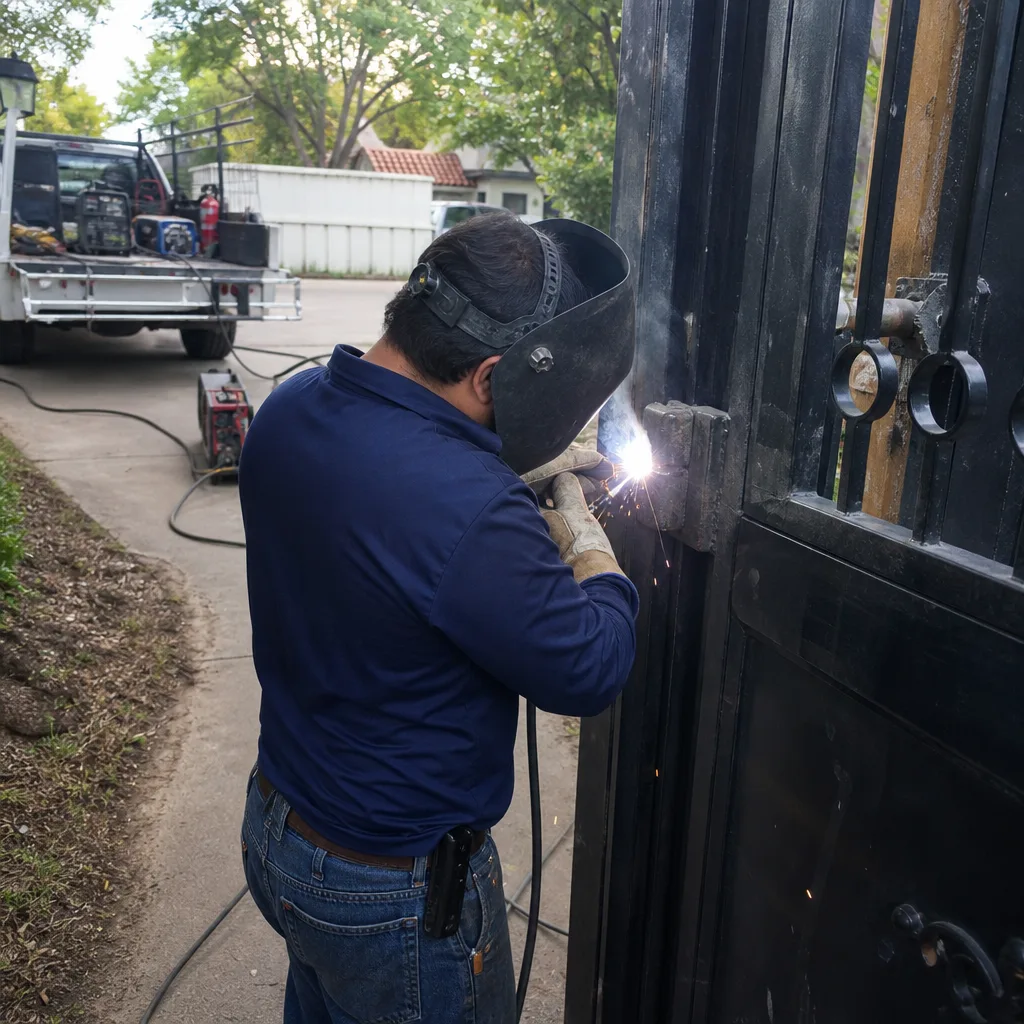
- Welding broken pickets or tabs back onto an existing gate frame
Work that typically DOES require a permit in Lewisville:
- New gate installation involving new posts set in concrete
- Any new electrical circuit run to power a gate motor or keypad
- Changing a gate’s swing direction (which changes the setback calculation)
- Moving or resetting existing gate posts
- Adding a pedestrian gate where a new opening is created
- Installing vehicle detection loops that require cutting into driveway pavement
The distinction is consistent with how the city treats deck repairs versus new deck construction: you can sister a joist, but you can’t pour a new footing without paperwork. The same logic applies to your driveway gate.
Lewisville Height and Setback Rules for Residential Gates
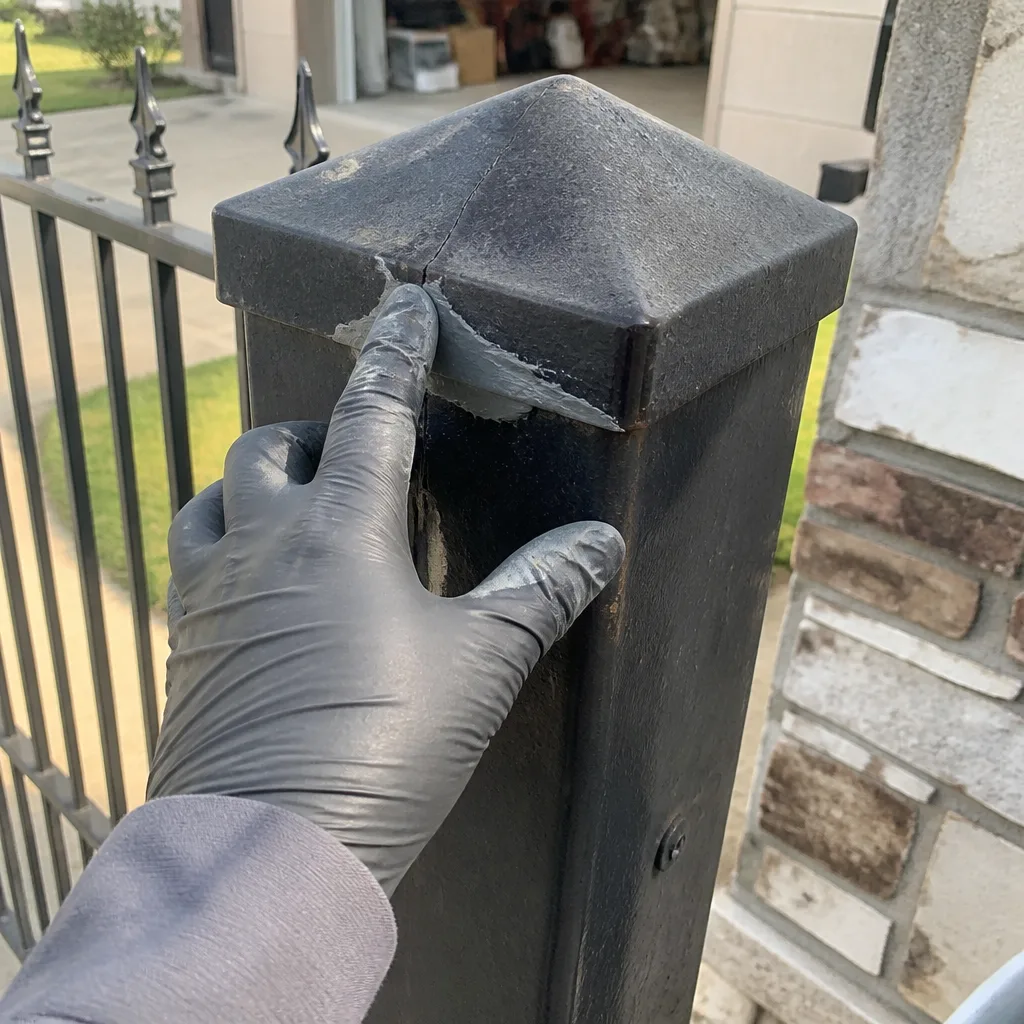
Lewisville has specific ordinance language that governs where a driveway gate can sit and how tall it can be, and these numbers are measured from the property line, not from where you’d like the gate to sit. The rules exist largely for sight-line reasons: a gate that sits too close to the road creates a blind spot for cars turning into traffic, and a gate that swings outward over a sidewalk is a pedestrian hazard. We’ve had to tell more than one Lewisville homeowner that the gorgeous gate they planned would need to move back eight feet to comply.
Here’s what you need to know, in plain terms:
- Setback for a driveway gate: Most Lewisville residential zones require the gate be set back a minimum distance from the front property line so a vehicle can fully clear the right-of-way before stopping. The practical rule we use: your vehicle should sit entirely on your property while waiting for the gate to open. If your bumper hangs over the sidewalk, the gate is too far forward.
- Swing direction: A gate may not swing outward over a public sidewalk or right-of-way. If your driveway slopes toward the street, an outward-swinging gate may be practical, but Lewisville won’t approve it if the arc crosses public property.
- Height limits: In most Lewisville residential districts, front-yard structures including driveway gates are capped in height. The exact number depends on your zoning district and whether the gate is classified as a fence or a structure, which is why a quick call to the building department before you order materials is worth more than a guess.
- Setback for the operator: The motor, control box, and any keypad pedestal need to sit within your property line with reasonable clearance. A pedestal mounted inside the right-of-way is an automatic flag.
For new gate installation in Lewisville, we always pull the zoning sheet and confirm setbacks before we quote. A gate that violates setback rules is not something a permit will fix: the city will require relocation, and that means new footings, new wiring, and paying for the same job twice.
Texas Chapter 1305: Why Your Gate Motor Is an Electrical Project
Here’s a part of Texas law most homeowners have never heard of, and it matters more than the city permit. Texas Occupations Code Chapter 1305 governs who can legally perform electrical work in the state, and it explicitly includes low-voltage work like the wiring that powers gate operators, keypads, photo-eyes, and vehicle loops. The law sets licensing requirements for electrical contractors and electricians working on these systems, even though they’re low voltage.
What does this mean for your gate? Three things:
- The person wiring your gate operator needs the appropriate license. A handyman replacing a gate motor and running new wire is potentially doing unlicensed electrical work in Texas. This is exactly the kind of thing the state periodically enforces.
- Low-voltage does not mean no-rules. Chapter 1305 applies to gate operator installation and service because the work involves connecting to line voltage (the 120V supply) and managing safety circuits like entrapment protection.
- The UL 325 standard travels with the code. Gate operators in Texas are expected to comply with UL 325, which mandates specific entrapment protection: photo-eyes, reversing edges, or both. An operator wired without these protections is a liability, not a savings.
When you’re hiring someone for gate motor or opener work in Lewisville, the licensing question is worth asking directly: “Does your technician hold the state license to perform this electrical work?” A legitimate operator will answer without hesitating. The alternative can leave you with a gate that works fine for a year and then fails inspection when you try to sell.
HOA vs. City: Which Rules Win When They Conflict
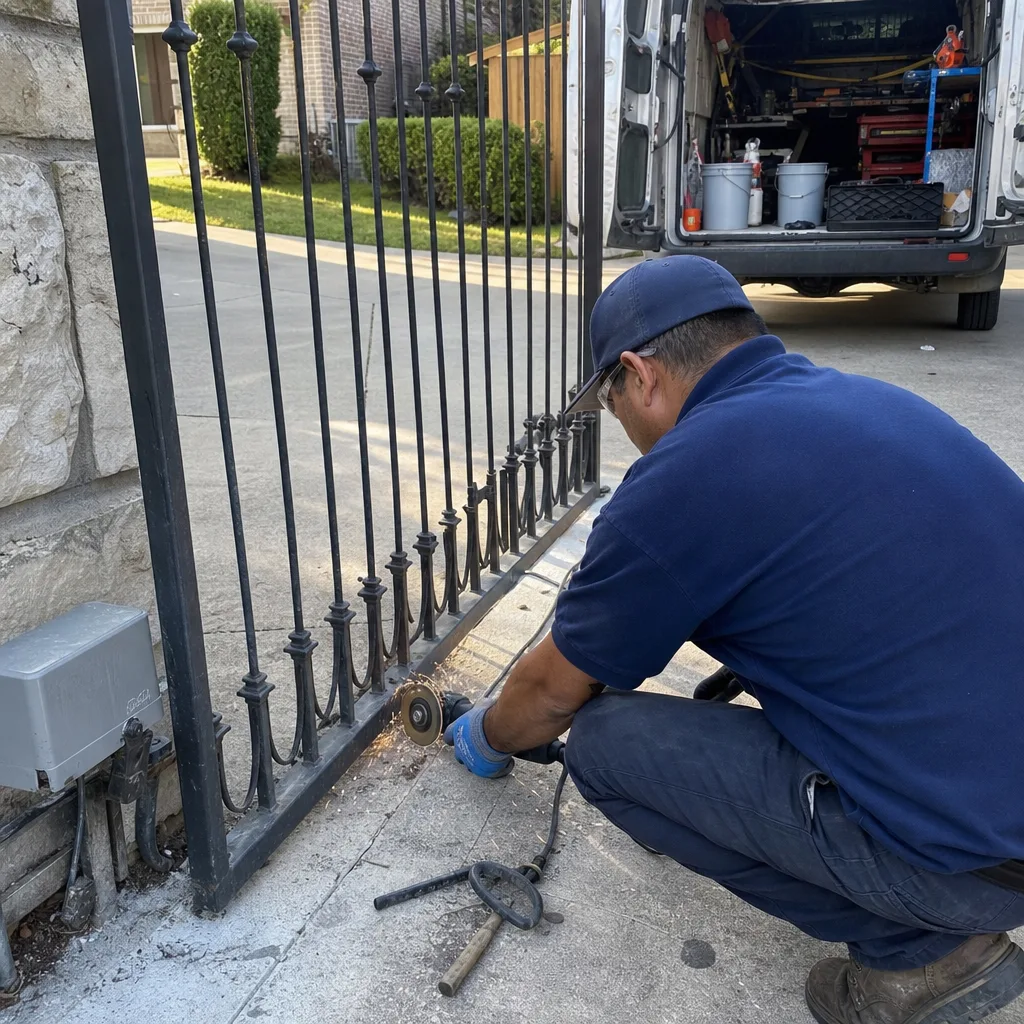
This is the section most homeowners actually need, because it’s where the confusion lives. Your HOA can set rules stricter than the city’s, but it cannot set rules looser than the city’s. That means the city sets the floor: minimum setbacks, maximum heights, permit triggers. The HOA sets the ceiling: height caps lower than the city’s, required gate materials, color palettes, and architectural review processes that have nothing to do with building safety.
Here’s the hierarchy in practice:
- The city ordinance is the baseline. You cannot build below code, period. If Lewisville requires a permit, the HOA’s opinion doesn’t waive it.
- HOA covenants sit on top. If the city allows a six-foot gate and your HOA caps gates at four feet, your HOA rule wins for your specific property, because you signed those covenants when you bought the house.
- State law governs the electrical side regardless of both. Neither your city nor your HOA can permit unlicensed electrical work. Chapter 1305 preempts local rules on that point.
The practical advice: before you commit to any gate project, get written confirmation from both authorities. From the city, that’s a permit or a written determination that no permit is required. From the HOA, that’s an architectural review approval or a written waiver. We’ve watched enough Lewisville homeowners lose deposits on gates their HOA rejected to say this plainly: get it in writing, from both parties, before the concrete goes in.
How to Prepare a Lewisville Gate Permit Application
If you’ve determined your project needs a permit, the application is the part that slows people down, usually because they submit drawings that don’t answer the reviewer’s questions. The city of Lewisville is actually reasonable to work with when the application is complete, which means the burden is on preparation. Here’s the step-by-step process we walk through with customers before submitting anything.
Step 1: Confirm your zoning district.
Lewisville’s building department can tell you your zoning classification, which determines your height limit and setback minimums. You can’t complete the application without it.
Step 2: Draw a site plan showing the gate location.
This doesn’t need to be architectural-grade. The city wants to see where the gate sits relative to your property lines, the driveway, the sidewalk, and the street. Mark the swing arc explicitly. If the gate swings inward, show that. If it slides, show the track path.
Step 3: List the equipment being installed.
Include the gate operator brand and model. For brands we work with daily, like Linear, Viking, Ghost Controls, and DoorKing, having the model number makes the electrical review faster because the reviewer can verify compliance remotely.
Step 4: Note the electrical plan.
Show where the power source is, where the operator connects, and what safety devices are included (photo-eyes, edges, loops). This is where the Chapter 1305 licensing question usually comes in, so be prepared to list who will wire it.
Step 5: Submit and wait for plan review.
Residential gate permits in Lewisville typically go through plan review and then inspection after installation. The review time varies, but incomplete applications always take longer than complete ones.
A note from experience: we always photograph the existing site before submitting. A photo dated before work starts has resolved more than one dispute about pre-existing conditions. That habit, which comes from commercial access-control work, is one of the reasons Adrian Vance built Vance Gate Repair Lewisville around documentation.
Documentation That Helps: What to Bring to Inspection
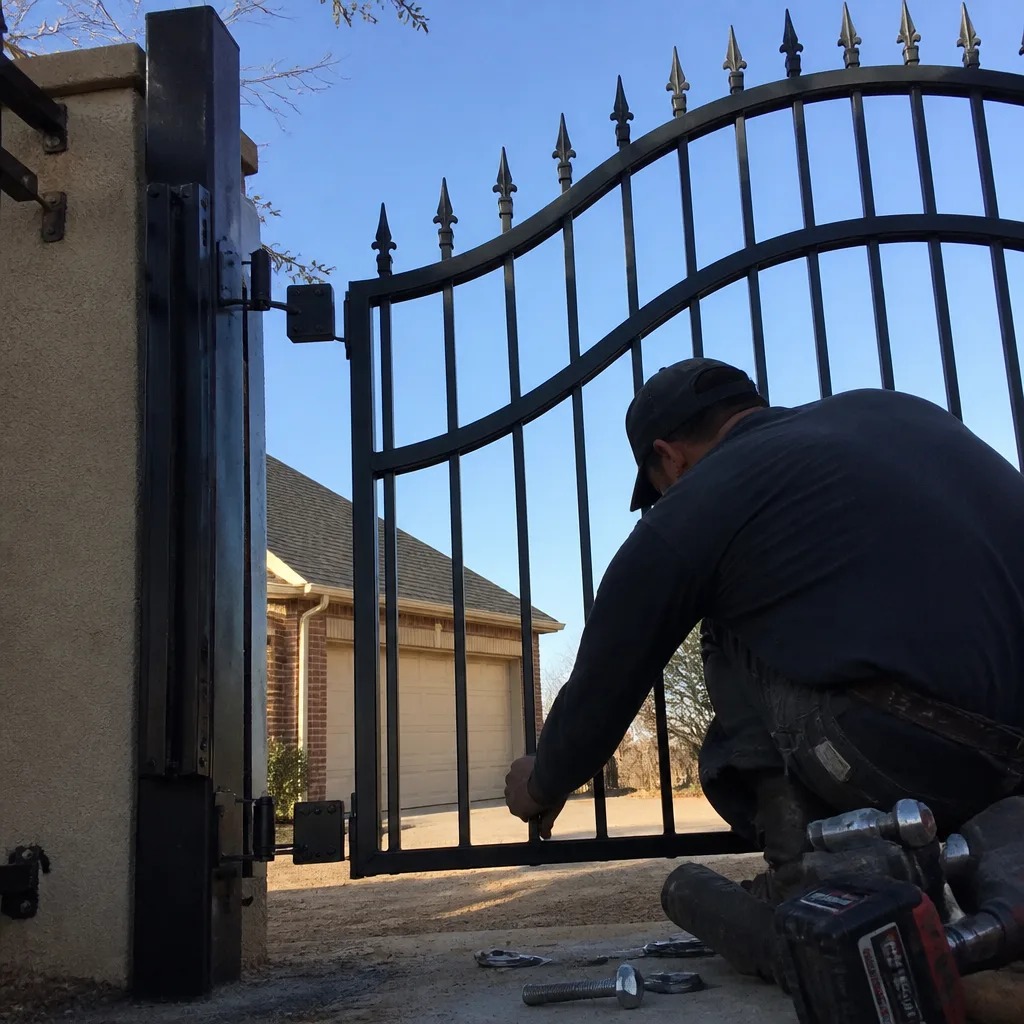
Here’s a trade secret about inspections: the inspector wants to approve your gate. Their job is to protect life safety, not to nitpick. Most failed inspections happen because the homeowner or contractor can’t answer the inspector’s questions, not because the installation is actually wrong. Documentation answers those questions before they get asked.
What we’ve found genuinely useful at inspections in Lewisville:
- Wiring diagrams for the operator: showing how the line voltage connects, where the low-voltage runs go, and which safety device lands on which terminal
- Photo of the footings before concrete pour: this proves the post depth and footing diameter met the approved plan, which inspectors cannot verify after the fact
- Photo of the safety devices in final position: showing the photo-eye alignment and the reversing edge placement
- Limit switch settings documented: a note showing the open and close limits as set, which demonstrates the gate stops before it hits a hard obstruction
- Brand and model numbers serial-numbered: especially for operators from Viking, Linear, Ghost Controls, or DoorKing, so the inspector can verify UL listing
This is what we mean by a documented record. Every Vance Gate Repair visit includes a photo log of what was found, what was set, and what was installed, which is why we also publish Gate Repair Warning Signs: A Lewisville Homeowner’s Reference Guide. It’s not busywork; it’s the evidence file that makes an inspection go smoothly, and it’s part of The Haven Standard applied to every job we touch in Lewisville.
What the Lewisville Inspection Process Actually Looks Like
The inspection is the final step in the permit cycle, and it’s the part most homeowners imagine as more intimidating than it is. In Lewisville, a residential gate inspection is typically a single visit by a city inspector who verifies the installation matches the approved plan and the safety requirements are met. It’s not an adversarial process. The inspector looks at specific things, in a specific order.
Here’s the sequence:
- Plan review match: The inspector checks the installed gate position against the site plan you submitted. If the gate is six feet from where the plan shows it, you’ll have a conversation.
- Structural check: Posts are verified at the correct depth and diameter. If the footing pour wasn’t photographed, the inspector may ask about the concrete volume and reinforcement.
- Electrical check: The operator is verified for proper installation, proper grounding, and proper safety device presence. The inspector will test entrapment protection by blocking the gate’s path during operation.
- Safety function test: Photo-eyes are tested by interrupting the beam. Reversing edges are tested by simulating contact. The gate’s reversing speed and force are observed.
- Final sign-off: If everything passes, you get a signed inspection card. Keep it with your closing documents. If something fails, the inspector will list the corrections, and you’ll schedule a re-inspection after remediation.
We’ve stood through enough of these to say confidently: the difference between a pass and a fail usually comes down to whether the safety devices were tested before the inspector arrived. An installer who doesn’t test the photo-eye alignment before inspection is gambling with your afternoon.
Common Mistakes to Avoid
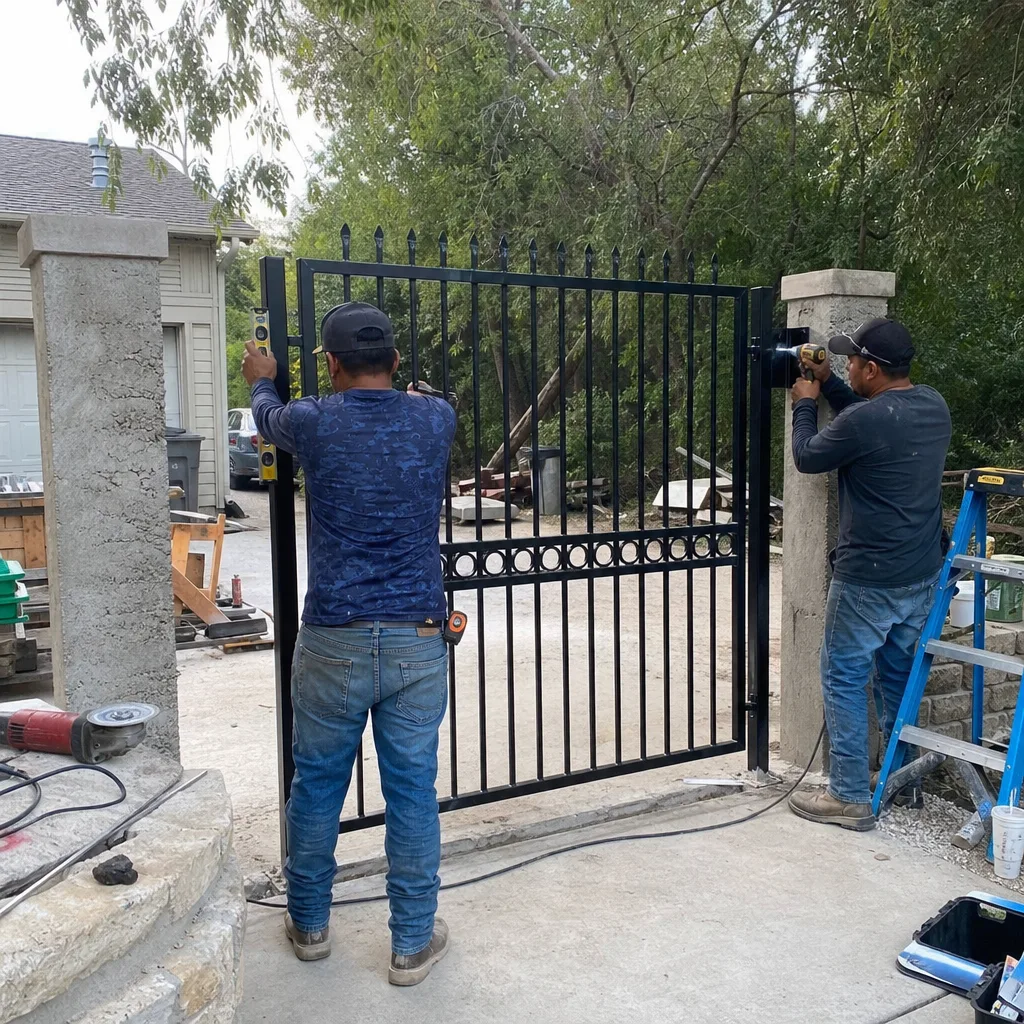
- Pulling no permit and hoping it never gets noticed. In Lewisville, unpermitted gates surface at resale when title searches run. The cost to retroactively permit is higher than the original permit would have been, assuming retroactive approval is even possible.
- Assuming low-voltage work doesn’t need licensing. Texas Chapter 1305 covers gate operators. A handyman wiring a motor without the proper license is doing unlicensed electrical work in the state’s eyes.
- Ignoring the HOA until after the gate is installed. The HOA can force removal or modification even if the city approved the permit. Get the architectural review done before the concrete pour.
- Making the gate swing outward over a sidewalk. Lewisville won’t approve it, and if it’s installed without a permit, it’s a safety hazard that will be flagged eventually.
- Skipping the photo documentation. Without a photo of the footing depth before the pour, you can’t prove the structure meets code. That evidence gap can cause a fail even when the work was done correctly.
- Hiring the cheapest quote without verifying licensing. The savings on labor evaporates when the work fails inspection and you pay someone else to fix it.
- Forgetting about UL 325 entrapment protection. A gate operator installed without photo-eyes or reversing edges in 2026 is not just non-compliant, it’s a known injury hazard. Texas code and good judgment both require it.
When to Call a Professional
Some gate work is genuinely DIY-friendly: greasing hinges, tightening bolts, even replacing a keypad that already exists on its original mounting plate. But the line is crossed when the work involves new electrical, structural changes, or safety-critical adjustments to an operator. A high-tension spring on a swing gate, a sliding gate’s rack alignment, a motor’s force settings: these are the places where a mistake becomes a hospital visit or a gate that crushes a car bumper, or worse, a person.
We’re direct about this because we’ve repaired the aftermath. If your gate needs new posts, new electrical, or safety device calibration, call a licensed professional. The permit process alone is a reason to bring in someone who’s filed these applications before. Vance Gate Repair Lewisville offers free estimates in Lewisville, and we’ll tell you honestly whether your project needs a permit, regardless of whether you hire us. Call (817) 826-9477.
Frequently Asked Questions
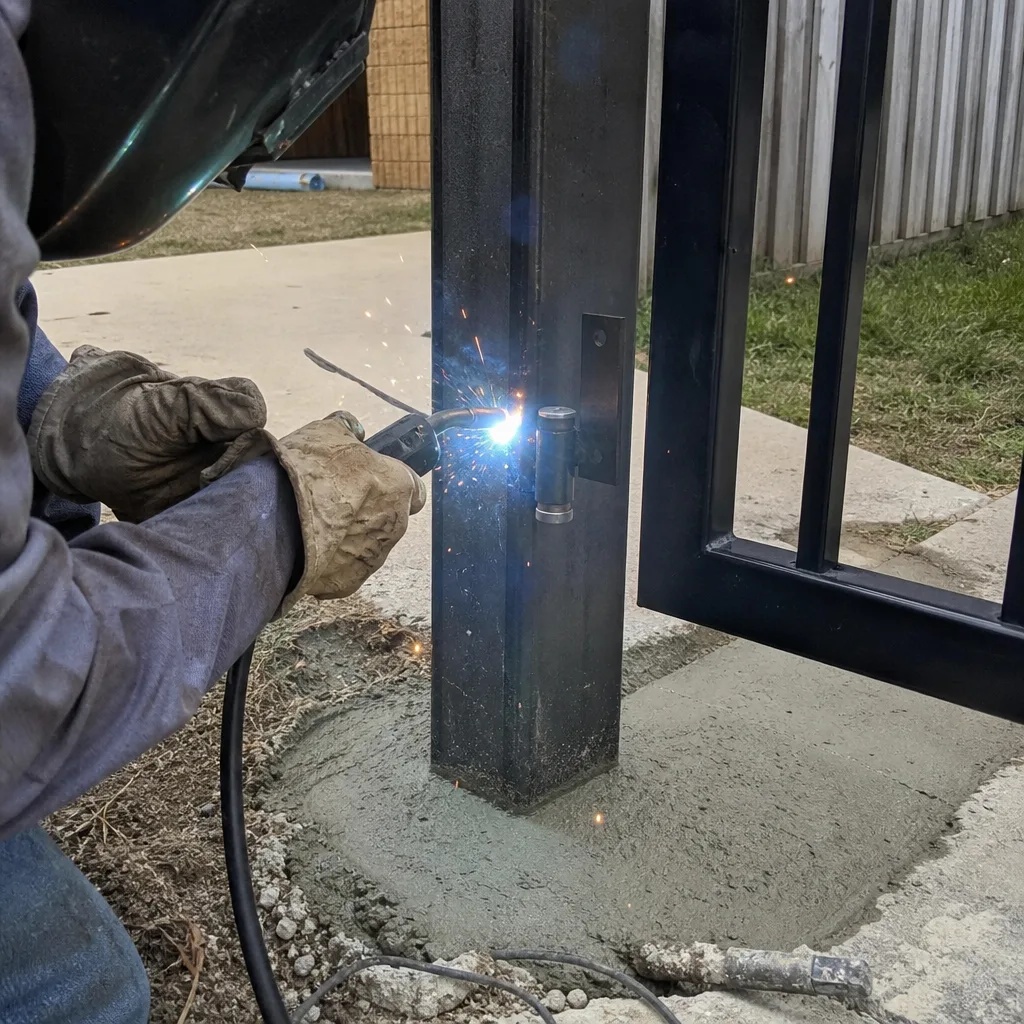
No, not if the repair involves replacing existing parts like hinges, panels, or a like-for-like operator without new wiring or structural changes. Permits are triggered by new installations, new electrical runs, or structural modification to posts and footings. Call (817) 826-9477 for a free assessment of your specific situation.
Permit fees in Lewisville are based on the valuation of the work, and a typical residential gate permit is a few hundred dollars, though the exact amount depends on the scope. The permit fee is small compared to the cost of retroactive permitting or correcting an unpermitted installation at resale.
Your HOA can set stricter rules than the city but cannot loosen city requirements. If the city allows a six-foot gate and your HOA caps it at four feet, the four-foot limit applies to your property. City permits don’t override HOA covenants, and HOA approval doesn’t waive city permits.
Yes. Texas Occupations Code Chapter 1305 covers low-voltage electrical work including gate operators, keypads, and photo-eyes. The person wiring your gate operator is performing electrical work and should hold the appropriate state license, which matters for both safety and liability.
Title searches and pre-sale inspections can flag unpermitted structures, and you may be forced to remove the gate or negotiate a price credit at closing. The cost of pulling a permit upfront is a fraction of what an unpermitted gate can cost at sale time.
Yes, we handle the permit application and inspection support for gate installations and permitted repairs in Lewisville. Every project includes a written price before work starts, under Haven Standard Clause 1, and a documented photo record at completion. Call (817) 826-9477 for details.
The Bottom Line
Texas gate permitting comes down to three authorities: the city of Lewisville controlling setbacks and height, the state of Texas controlling the electrical side through Chapter 1305, and your HOA layering private rules on top of both. Knowing which rules apply to your project, before you pour concrete, is the difference between a clean installation and a closing-day catastrophe. Maintenance is one thing; structural and electrical work is another. If there’s one lesson from this guide, let it be this: for more guides & resources, get it in writing, pull the permit when it’s required, and document the work as it’s done. That’s how you protect the gate, the property value, and the person who opens it every day.
Written by Adrian Vance, Owner at Vance Gate Repair Lewisville, serving Lewisville since 2014.