
Last updated September 20, 2026
Free on-site gate assessment - hinges, posts, and your LiftMaster or Nice gate operator checked before anything is quoted
The assessment is free and the quote is the invoice.

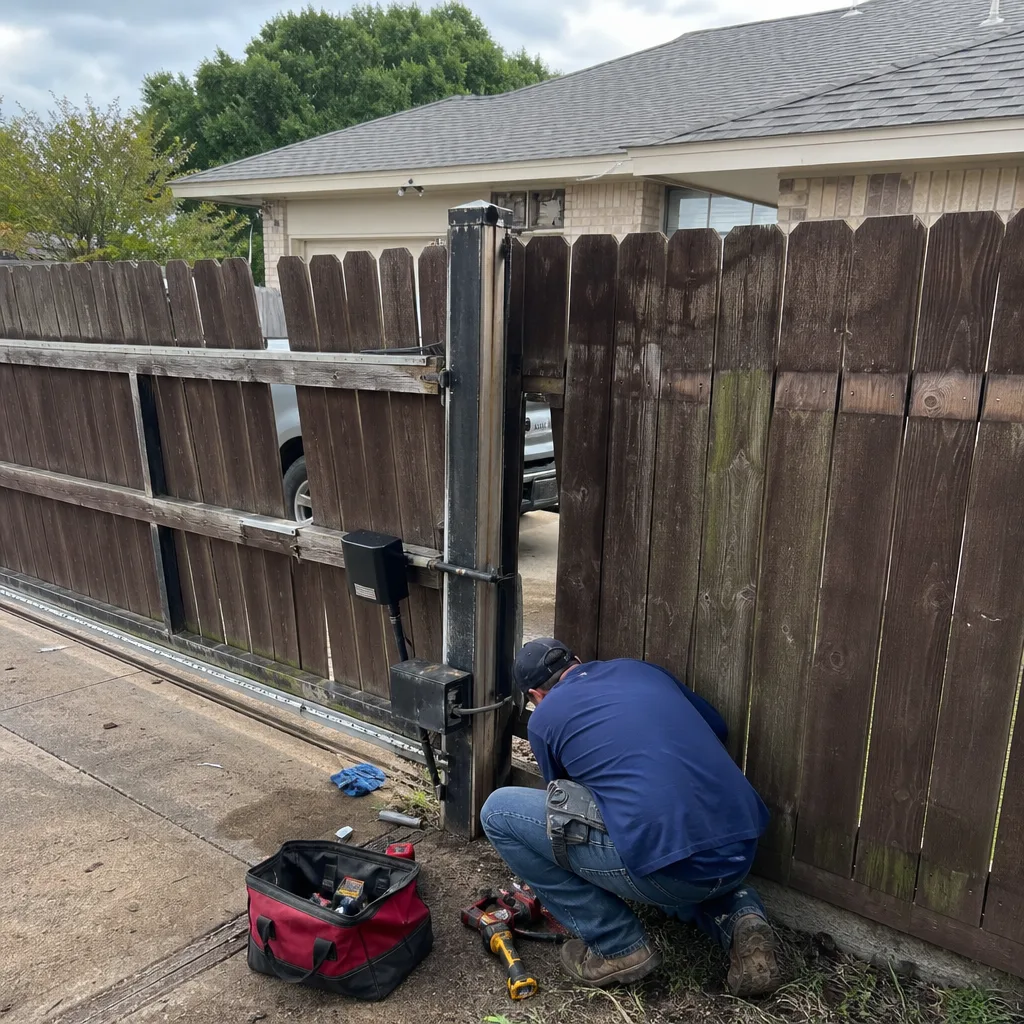 Before
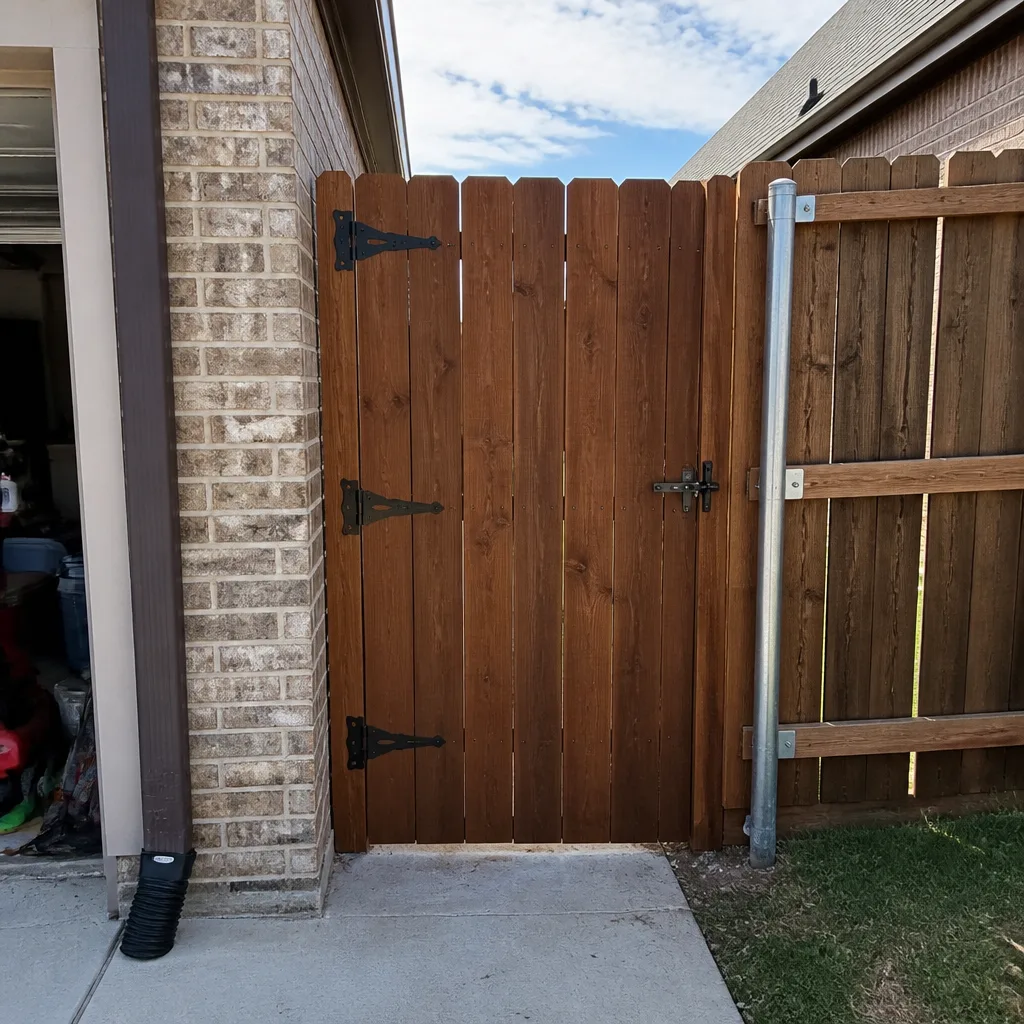 After
After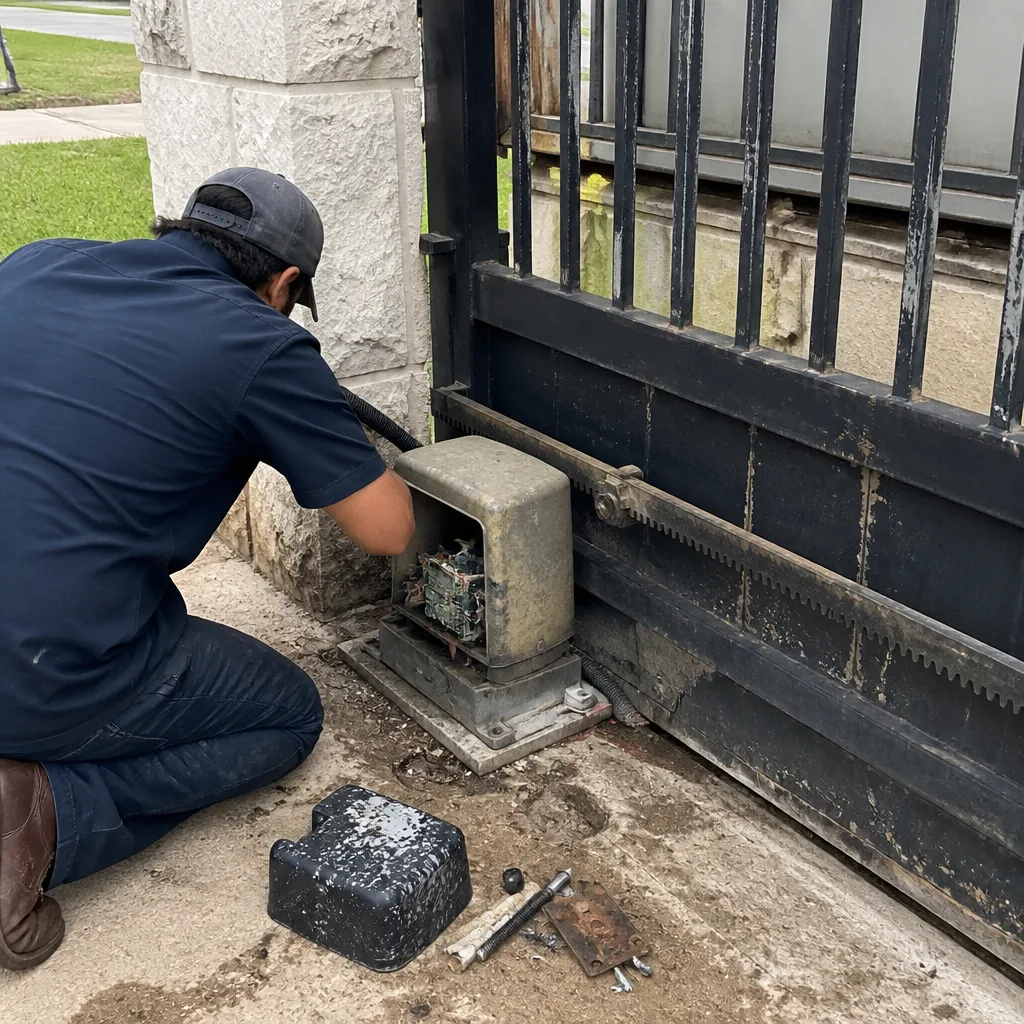 Before
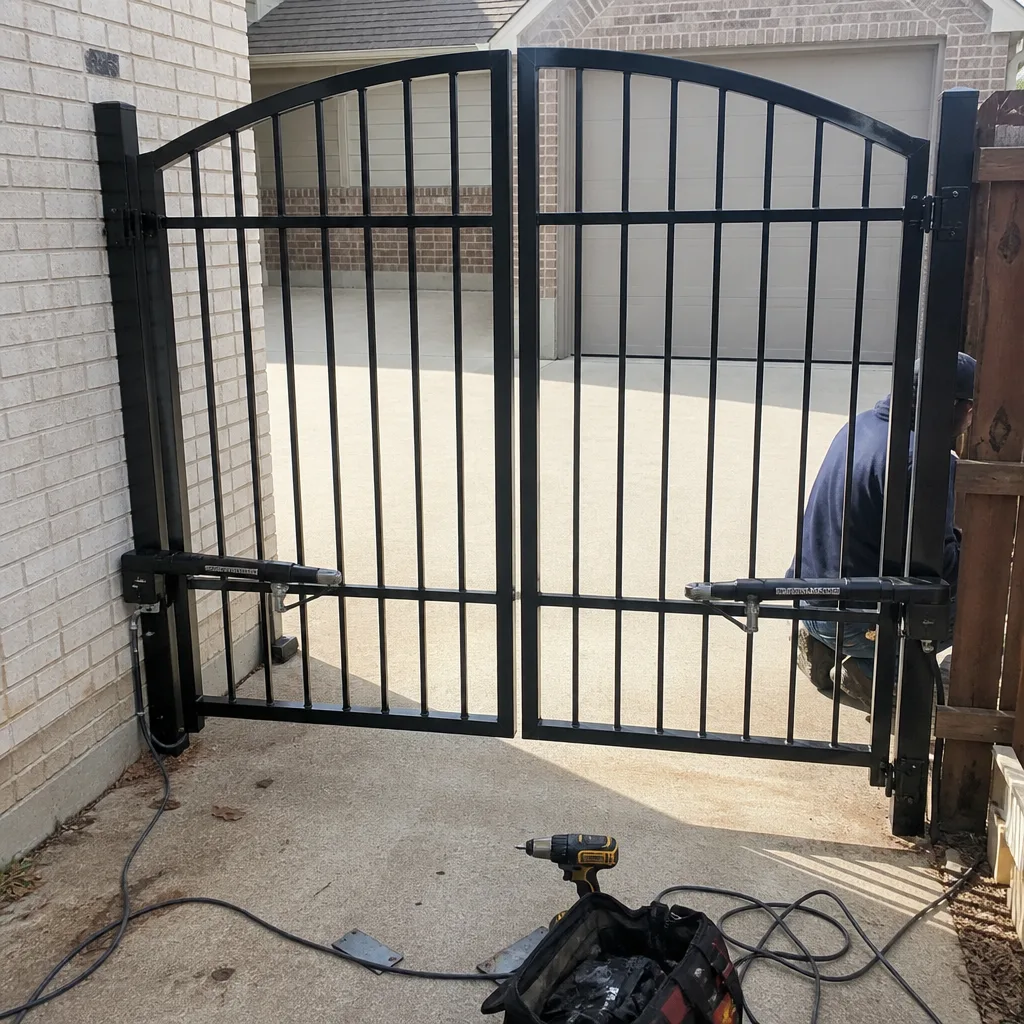 After
After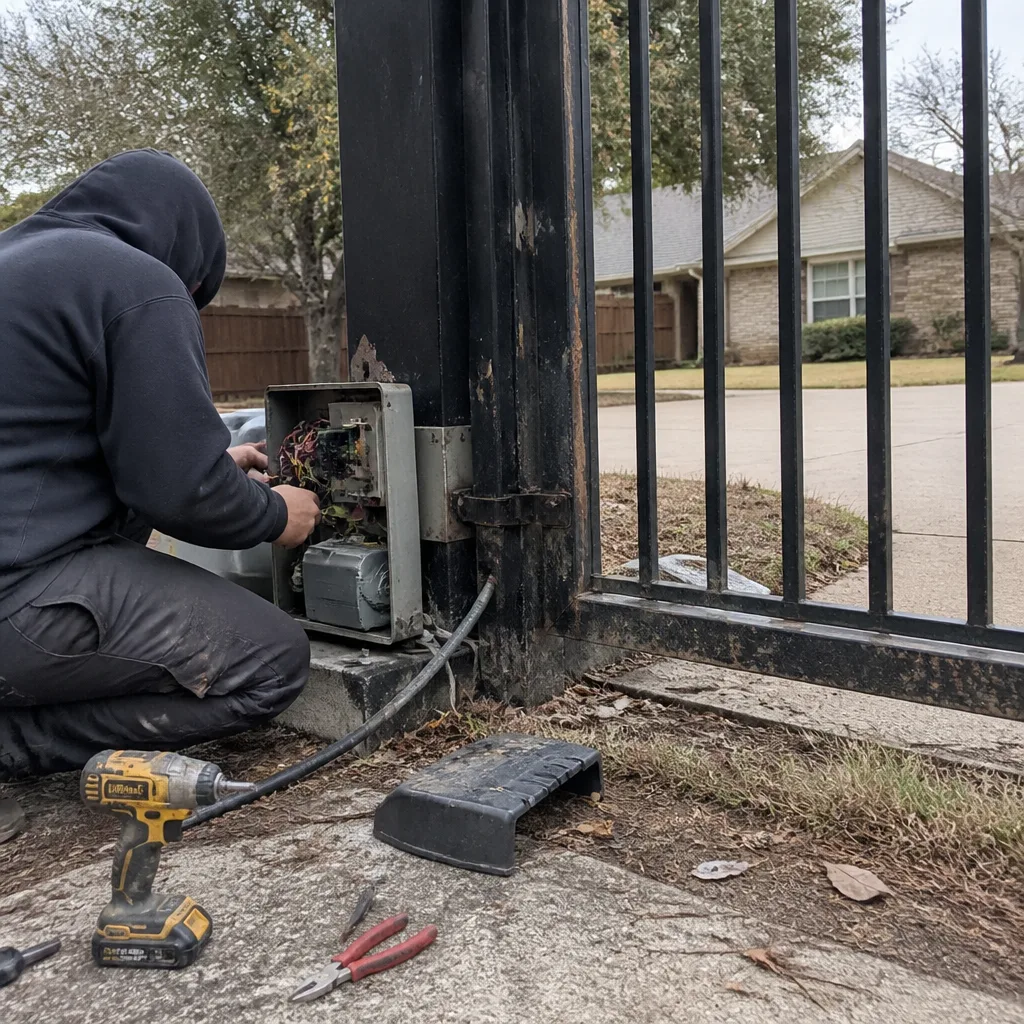 Before
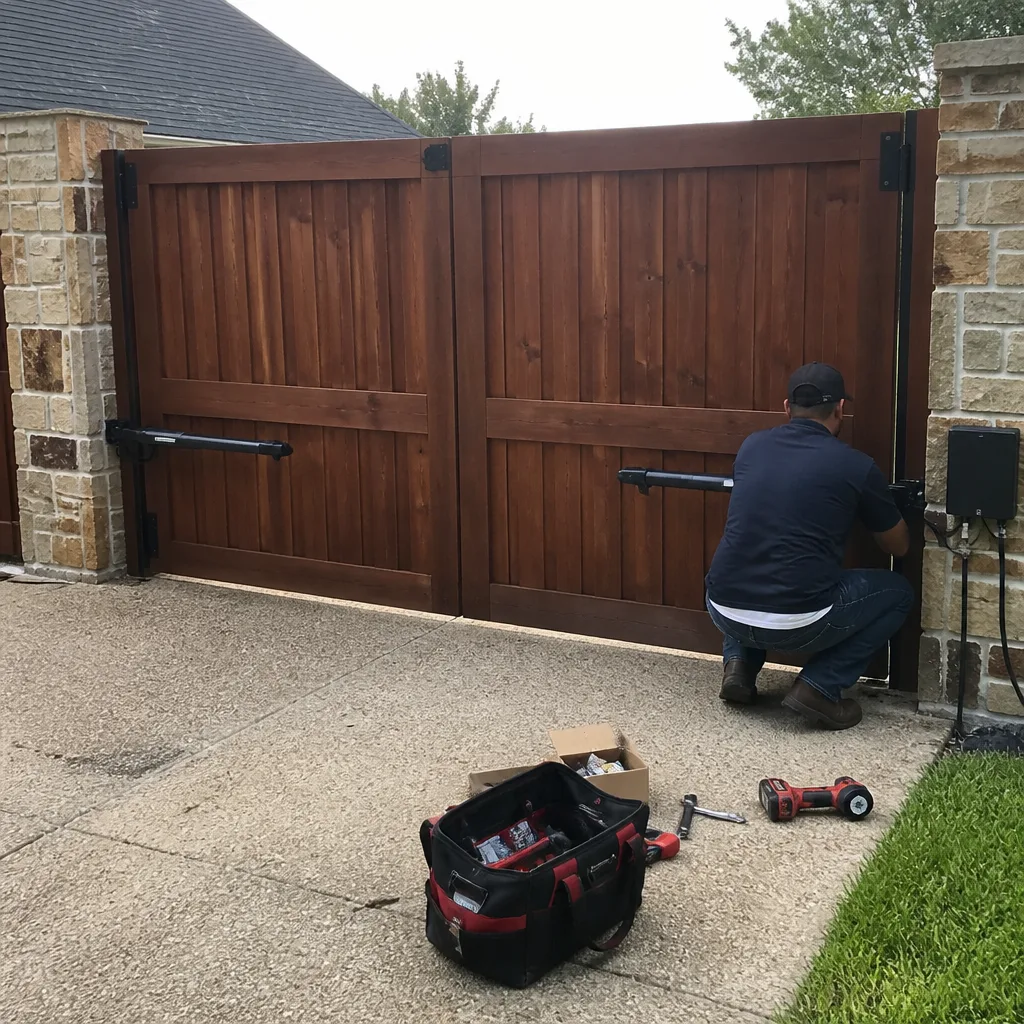 After
AfterGate Repair Warning Signs: A Lewisville Homeowner’s Reference Guide
A gate that hesitates two seconds longer than it did last month is already telling you something. The homeowners who catch it at two seconds spend $180. The ones who catch it when it stops mid-swing spend $900. This guide exists because most Lewisville homeowners don’t know what a normal gate looks like at its baselines, so they can’t tell a harmless creak from a hinge about to pull out of the post. For how to hire a gate repair contractor in Lewisville, see our step-by-step guide. By the time you finish reading, you’ll have a concrete reference system: what to measure, what to listen for, what to photograph, and exactly when a warning sign crosses from “keep an eye on it” to “call someone today.”
Quick Answer
Gate repair warning signs in Lewisville fall into four categories: changes in cycle time (the gate moves slower, hesitates, or stops mid-swing), changes in sound (new grinding, scraping, or clicking), visible physical shifts (post lean, gap asymmetry, rust at stress points), and electrical quirks (missed remote commands, one-direction sluggishness, intermittent response). Most of these signs appear weeks before a full failure, and catching them early typically means a $150-$400 adjustment or component replacement instead of a $900+ motor or hinge rebuild. Write down your gate’s baseline numbers today, then check against them monthly.
Table of Contents
- Establishing Your Gate’s Baselines: What Normal Actually Looks Like
- Lewisville Clay Soil and What It Does to Gate Posts
- Electrical Warning Signs That Don’t Look Electrical
- The Sound Test: Lubrication Grind vs. Bearing Failure
- Printable Reference Table: Symptom, Component, DIY Check, Call Point
- Seasonal Warning Patterns in Lewisville
- Common Mistakes to Avoid
- When to Call a Professional
- Frequently Asked Questions
- The Bottom Line
BeforeAfterEstablishing Your Gate’s Baselines: What Normal Actually Looks Like
Most homeowners never think about their gate until it stops working. That’s the entire problem. A gate has a baseline, the same way a car idles at a certain RPM or a furnace kicks on with a familiar sound. If you don’t know the baseline, you can’t detect drift. And drift is what we’re looking for. In Lewisville, where summer heat expands steel and winter rain swells clay soil, gate baselines shift seasonally. The trick is knowing which shifts are normal and which signal wear.
Here’s what to record. It takes five minutes, and we tell every Lewisville customer this at the end of a repair or installation.
- Open/close cycle time. Use your phone’s stopwatch. Time the gate from fully closed to fully open, then back. Write it down. For most residential swing gates, that’s 14-18 seconds per direction. A slide gate typically runs 12-16 seconds. If you’re at 22 seconds next month, something changed.
- Audible profile. Stand near the gate and close your eyes. A healthy gate has a consistent hum from the motor, with maybe a faint click at the limit switch. Note any new sound: a scrape that wasn’t there, a rhythmic knock, a metallic ping when the gate stops.
- Gap measurements. Measure the gap at the top, middle, and bottom between the gate leaf and the post when closed. Photograph it. For swing gates, measure the gap between the two leaves at all three heights. Lewisville’s clay soil heaves enough to change these gaps by a quarter inch between wet and dry seasons, which is normal. What isn’t normal is a gap that grows in one direction and stays there.
- Remote response distance. Walk away from the gate with your remote and note where it reliably opens. If that distance shrinks by 10 feet, something in the receiver, antenna, or board is degrading.
Write these down and date the entry. Memory is unreliable; a photo log with measurements is not. We’ve had customers who heard their gate “kind of sounded different for a while” but couldn’t tell us when it started. The ones who wrote it down knew exactly when the drift began, and that precision matters for diagnosis. When our technicians from Gate Repair in Lewisville arrive, a baseline record helps us isolate the issue faster and often saves you money on diagnostic time.
Lewisville Clay Soil and What It Does to Gate Posts
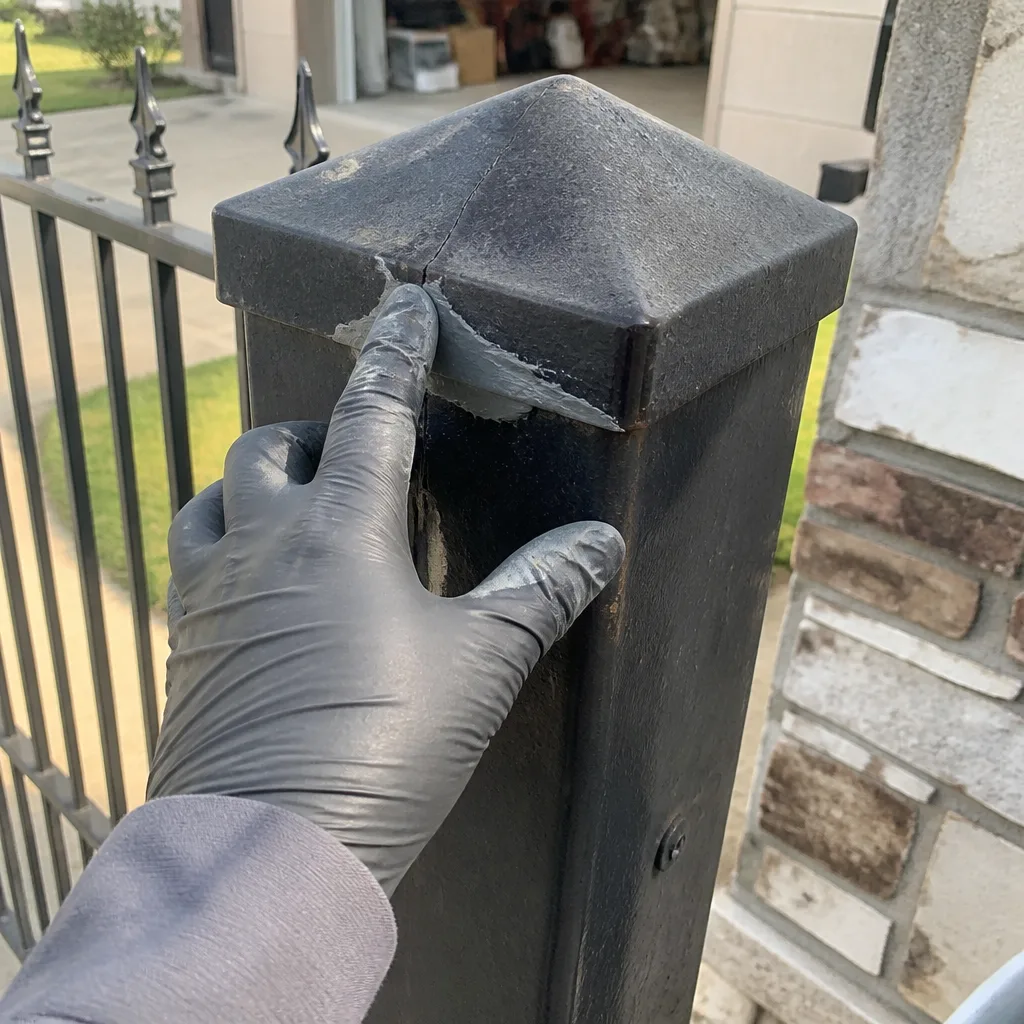
Lewisville sits on expansive clay soil, the same stuff that cracks foundations and shifts fence lines across Denton County. Clay swells when wet and shrinks when dry. Concrete footings poured without proper depth or rebar will move with it. And when a gate post moves, the gate doesn’t just lean; it drags, binds, and stresses every hinge and latch point. The gate failure that looks sudden is usually a post that’s been moving for months, finally creeping far enough to jam the leaf or snap a weld.
Here’s what to look for, specifically on a Lewisville property:
- Post lean measurement. Put a 4-foot level vertically against the post. A quarter inch of lean at the top of a 6-foot post is a warning. A half inch is a problem. A full inch means the footing has already failed or the post has broken internally.
- Gap asymmetry. If the gap between the gate leaf and the post is wider at the top than the bottom by more than a quarter inch, the post has rotated. Photograph it, then call someone before the hinge plate starts pulling.
- Hinge plate stress marks. Look for hairline cracks in the metal around the hinge bolts, paint flaking in a circular pattern around a bolt head, or rust weeping from the bolt holes. These indicate the hinge is carrying weight it wasn’t designed for.
- Concrete base cracks. If the concrete collar around the post is cracked in a half-moon arc, the footing is working against the clay. This is common in Lewisville neighborhoods with mature trees drawing moisture unevenly from the soil.
We’ve replaced posts in Highland Village and Castle Hills where the original footing was only 24 inches deep, poured straight into clay with no rebar cage. That post will eventually lean. A properly installed post in this soil goes 36-42 inches deep, is set in a reinforced footing, and the soil around it is managed for drainage. You can’t fix a moving post with shims and you can’t weld a broken hinge plate and expect it to hold. The permanent fix is digging out the old footing, pouring a new one, and re-hanging the gate. If you’re seeing multiple post warning signs, the work may be more than a hinge swap, and it’s worth having a documented assessment before the gate tears itself apart.
Electrical Warning Signs That Don’t Look Electrical
Most homeowners assume electrical problems announce themselves with a dead gate. In reality, the electrical system sends signals weeks in advance. The issue is that those signals mimic mechanical problems, and if you misread them, you’ll lubricate a hinge when the real issue is a limit switch drifting or a capacitor losing its ability to hold a charge. Here’s what we see across Lewisville driveways:
- Intermittent response. The remote works, then doesn’t, then works again from the same distance. Homeowners blame the battery. It’s usually not the battery. A weak capacitor, a corroded receiver connection, or a board that’s heat-cycling in the Lewisville sun will produce exactly this pattern. If a new remote battery doesn’t fix it in a day, the problem is in the control circuit.
- Missed remote commands. You press the button, the gate does nothing, you press it again, it works. This maps to a receiving antenna that’s drifted out of position, a receiver relay that’s arcing, or interference from a neighbor’s new device. One or two misses a month is noise. Three a day is data.
- One-direction sluggishness. A gate that opens at normal speed but closes slowly, or vice versa, is rarely a mechanical issue. It’s typically the limit switch on one side set too far past travel, causing the motor to labor against the stop. On a LiftMaster or Elite opener, this is an adjustment, not a replacement. Left alone, though, it burns out the motor over months.
- The gate restarts mid-cycle. A gate that stops halfway, then re-engages a second later, is telling you the safety circuit is tripping. Photo-eyes, the infrared beams that stop the gate if something crosses the path, get misaligned by heat warping a bracket or a hedge growing into the beam path. In our experience across Lewisville, we’ve found photo-eyes misaligned by as little as two inches, which is enough to shut the gate down on every cycle.
When we service a gate with any of these symptoms, the fix often involves tracing the circuit, resetting limit switches, and documenting the new positions with photos so the next technician doesn’t have to rediscover the adjustment. That record is part of what we leave on every job, no matter how small. For homeowners wanting to understand their opener’s behavior better, our Gate Motor & Opener in Lewisville guide walks through what each component does and what its failure looks like in real time.
The Sound Test: Lubrication Grind vs. Bearing Failure
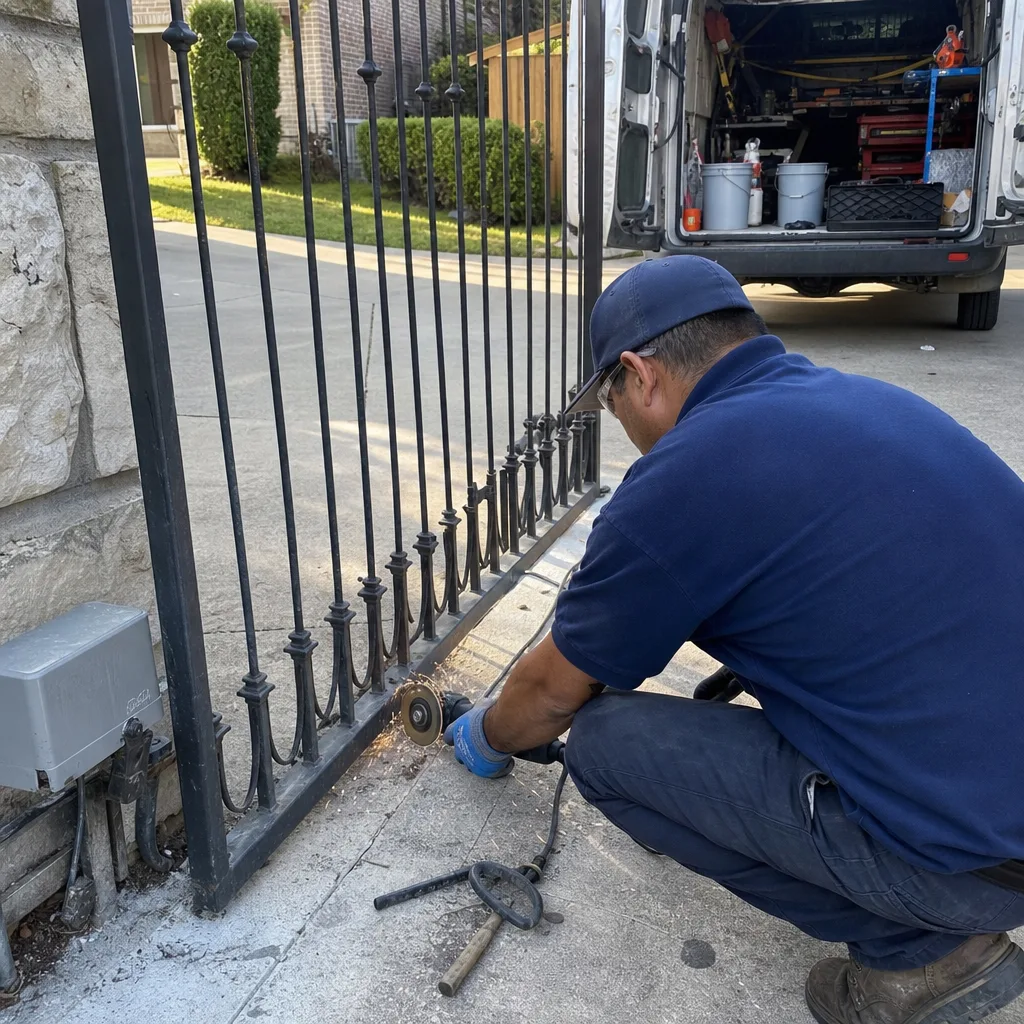
A grinding gate is the most common complaint we hear in Lewisville, and it splits into two very different problems. One is a $40 fix. The other is a $700 fix. Telling them apart by sound alone is possible, and this is the skill that saves homeowners real money.
Lubrication grind. This is a broad, metallic rasp, like sandpaper on steel. It’s present throughout the gate’s travel and doesn’t change pitch much. You’ll hear it on the hinge side, where metal rides on metal without enough grease. The fix is cleaning the hinge pins and applying a proper white lithium grease, not WD-40. WD-40 is a solvent that strips existing lubricant and accelerates wear. In Lewisville’s dusty summers, grease attracts grit, so hinges need cleaning before lubrication, not just a spray-down.
Bearing failure. This has a different texture. It’s a rhythmic knock or a gritty rumble that pulses with each revolution of the wheel. On a slide gate, it sounds like a shopping cart with a flat-spotted wheel, and it changes volume as the gate passes different track sections. On a swing gate with roller bearings in the hinge, you’ll hear a clicking that speeds up and slows down with the gate’s movement. A bearing failure does not respond to lubrication. Lubricating a failed bearing masks the sound for two days and teaches the homeowner to ignore it.
Here’s the five-minute diagnostic we teach Lewisville homeowners:
- Open the gate manually (pull the release lever on the operator) and move it by hand through its full travel. A lubrication issue will often feel gritty but even. A bearing failure will feel like a distinct bump or catch at the same spot every cycle.
- Listen at each hinge or wheel. Get your ear close. A failed bearing centers its noise at one point; a dry hinge spreads noise across the entire joint.
- Put a hand on the gate leaf while it moves. A bearing failure often produces a vibration you can feel, not just hear.
If your test points to bearing replacement, don’t wait. A wheel bearing that seizes on a slide gate will drag the gate sideways and can derail it. A seized roller in a swing hinge transfers all its stress to the hinge plate, and that’s how hinge plates rip off posts. On a Mighty Mule or DoorKing residential operator, a slowed gate increases amp draw, and the board sees that overload as a signal to shut down. The gate stops one Tuesday, and you’re suddenly in the market for a motor instead of a bearing set.
Printable Reference Table: Symptom, Component, DIY Check, Call Point
This is the table to save. Print it, tape it inside the garage door track or on the inside of the gate control box. When something changes, check the symptom against this table and decide in one minute whether you’re watching or calling. No ambiguous middle ground.
| Symptom | Likely Component | DIY Check | When to Call |
|---|---|---|---|
| Gate hesitates 2+ seconds before moving | Capacitor, limit switch, or motor brushes | Note if it happens consistently or only after rain | If hesitation grows or gate stalls mid-cycle |
| New grinding or scraping sound | Hinge lubrication or roller bearing | Manual open test from the sound section above | If the sound is rhythmic or centered at one point |
| Gate stops mid-swing and reverses | Photo-eye alignment, force setting, obstruction | Clear the path, check for leaned plants or loose brackets | If it recurs after clearing the path |
| Gap between gate and post changing | Post footing, hinge plate, gate frame | Measure and photograph gaps monthly | If a gap grows a quarter inch or more and stays |
| Remote works intermittently | Receiver, capacitor, power supply | Replace remote battery, try from same spot | If new battery doesn’t resolve within one day |
| Post visibly leaning | Footing, post integrity | Level check at top and mid-post | Any lean over a quarter inch on a 6-foot post |
| Gate opens fine, closes slowly (or vice versa) | Limit switch, travel setting | Observe if the motor labors at the end of travel | If pattern is consistent, not a one-off |
This table is written with Lewisville’s specific environment in mind. Heat and clay both accelerate drift, so the call thresholds account for the fact that posts here move seasonally and boards here run hot. A gate in Pennsylvania might have ten years of grace on a hinge. A gate on a Lewisville lot with unmanaged drainage might have three. If you’re unsure whether a symptom crosses the line, a five-minute phone call with specific observations beats two weeks of “I’ll keep an eye on it.” The worst failure is the one you watched happen.
Seasonal Warning Patterns in Lewisville
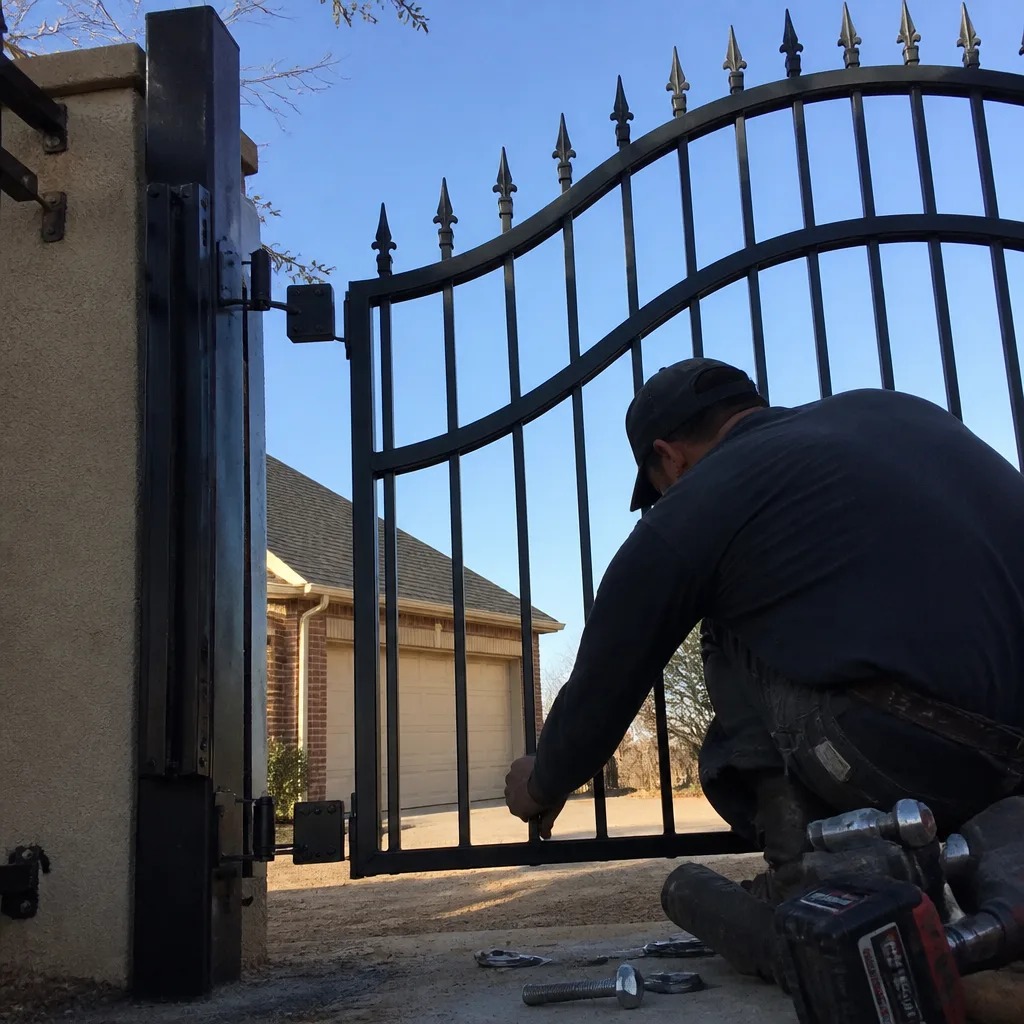
Gate problems in Lewisville cluster by season. If you know the pattern, you can preempt the failure. For deeper maintenance timing, see our seasonal gate repair care for Lewisville guide. Here’s what we see year after year:
Summer (June-August). Heat expands steel, and gates that were marginally aligned in spring start binding in July. The biggest summer warning sign is a gate that slows down noticeably in the late afternoon, after hours of direct sun. That’s thermal expansion pushing the leaf against the stop. A limit switch that was set correctly in mild weather is now 1-2 degrees into the stop. The fix is a limit adjustment, but ignored through August, it burns motor brushes. Lewisville summer heat also kills capacitors, which fail silently until the gate won’t start at all.
Fall (September-November). The first heavy rain after a dry summer swells the clay suddenly. Posts that were stable all summer shift in a week. The fall warning sign is a gate that starts dragging on the latch side or a gap that changes between Monday and Friday. If you notice a new lean right after the first big rain, that’s the soil, not the hardware.
Winter (December-February). Cold contracts everything, and gates that were tight in summer loosen. Hinge bolts back out a half turn, brackets flex, and boards behave erratically in the cold-damp cycle. Winter is when we see the most intermittent electrical gremlins that turn out to be corroded connections finally getting wet enough to matter.
Spring (March-May). This is the best season for proactive maintenance in Lewisville. Soil moisture is stabilizing, temperatures are moderate, and the gate is at its least stressed. If you’re going to establish baselines, do it in spring. If you’re going to have adjustments made, a March visit beats a July emergency. We recommend an annual inspection in the spring, and this is also a good time to review our Gate Installation in Lewisville guide if your existing gate is approaching the point where repairs are no longer the honest recommendation.
Common Mistakes to Avoid
- Oiling a failing bearing. Grease on a bearing that’s already spalling masks the sound for 48 hours and gives you false confidence. Then it seizes at 7 a.m. on a Monday. If the sound is rhythmic, the bearing is done; lubrication won’t resurrect it.
- Using WD-40 on hinges. WD-40 is a solvent and water displacer, not a durable hinge lubricant. It strips existing grease and leaves the joint dry in Lewisville’s summer dust. Use a white lithium grease or a dedicated hinge lubricant, and clean before you apply.
- Adjusting limit switches without marking the original position. Homeowners who watch one YouTube video and start turning limit screws without documenting where they started are the reason half our diagnostic calls in Lewisville involve a gate that was mechanical before the adjustment and electrical after. Mark it, photograph it, or don’t touch it.
- Ignoring a “slow for a while” gate. A gate that has gotten slower over three months is a gate that’s been telling you something every single day. Motor replacement is $500-$900. The limit adjustment or hinge kit that would have fixed it was $150-$300. Time is literally money on a declining gate.
- Assuming post lean is “just the soil.” Yes, Lewisville clay moves posts. But a post that’s leaning isn’t going to straighten itself when the ground dries. It will keep moving, and the hinge will keep pulling, until something breaks. Soil explains the cause; it doesn’t excuse ignoring it.
- Replacing the whole operator when the problem is a $40 capacitor. We see this constantly: a homeowner gets told by a less scrupulous company that the “motor’s shot” when a capacitor test would have shown the real fault. In our experience, a genuinely failed capacitor is one of the most common operator failures, and it’s a component-level fix, not a replacement. If a company won’t show you the failed part or explain the test, get a second opinion.
- Not documenting the gate before calling anyone. A baseline photo and measurement record saves diagnostic time and prevents the “he said, she said” about what the gate looked like before work started. Documentation is the cheapest insurance on any home system.
When to Call a Professional
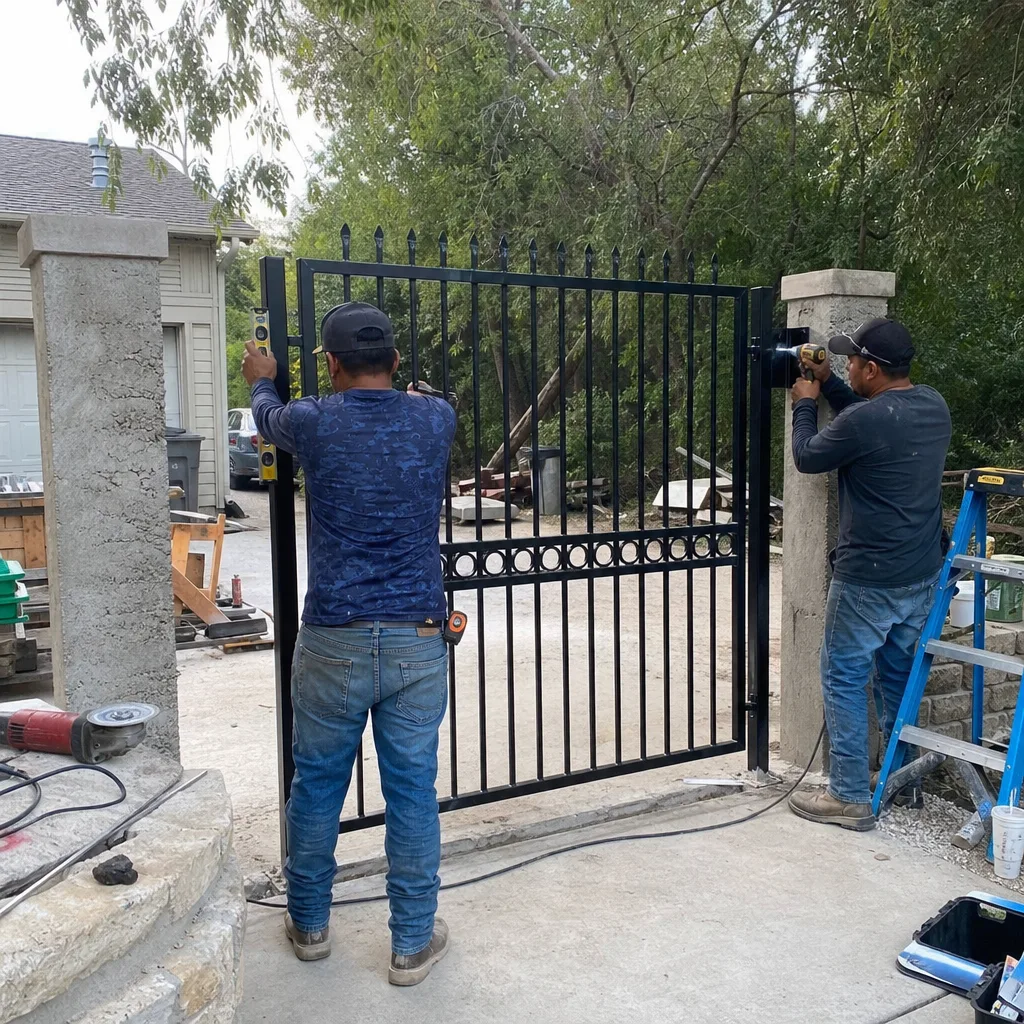
Some gate issues are safe to observe and document. Others need a professional immediately. Call when you see post lean over a quarter inch, hear a rhythmic knock or bearing rumble, find a gap that’s grown and stayed, or experience repeated electrical interruptions after a fresh remote battery. If your gate has stopped mid-cycle and won’t reset, don’t force it manually, high-tension springs and a stalled motor can release stored energy suddenly. A trained technician has the tools and the procedure for that situation. Vance Gate Repair Lewisville offers gate repair services with free estimates in Lewisville. Call (817) 826-9477 and describe what you’re seeing; we’ll tell you whether it’s a watch item or a dispatch item, and we’ll put the recommendation in writing before any work starts.
Frequently Asked Questions
Most gate repairs in Lewisville run between $150 and $450 when they’re caught at the warning-sign stage: limit switch adjustments, hinge lubrication and tightening, photo-eye realignment, capacitor replacement. Full motor replacement runs $500-$900 depending on brand (LiftMaster, Elite, DoorKing, Mighty Mule, and others) and whether the arm bracket and wiring are reusable. Hinge or post rebuilds start around $400 and go up from there based on footing work. At Vance Gate Repair Lewisville, the price is quoted in writing before work begins, so there’s no surprise invoice at the end. Call (817) 826-9477 for an exact quote; estimates are free.
Yes. Vance Gate Repair Lewisville maintains same-day and emergency availability for stuck gates and safety hazards, and a live person answers the phone 24/7 at (817) 826-9477. For non-emergency adjustments, we’ll schedule the next available slot and give you a written price before the technician arrives.
A full gate installation in Lewisville includes demolition and removal of the old gate (if present), post footings dug to the depth required for our clay soil, the gate frame and leaf fabrication, hinge and latch hardware, the operator and control board, safety devices like photo-eyes, and a complete system test. You receive a written scope, a written price before work starts, and a documented photo record when the job is done. For a deeper look, see our Gate Installation in Lewisville guide.
Yes. We run power from your panel to the operator, install and wire the photo-eyes and safety edges, and set the force and travel with torque measurements documented in the record we leave. The safety circuit is tested under load, not just at the bench, and the settings are photographed so future adjustments start from a known baseline.
Do the sound test in this guide: a lubrication grind is a broad, even rasp across the gate’s travel, while a bearing failure is rhythmic, centered on one hinge, and often produces a vibration you can feel. If the hinge is dry, cleaning and greasing will quiet it immediately. If the sound persists or returns in days, the bearing or hinge pin is wearing. When in doubt, call and describe the sound; a technician can often identify it over the phone.
Lewisville sits on expansive clay that swells when wet. The first heavy rain after a dry period shifts post footings slightly, and a gate that was aligned before the rain starts dragging or binding after it. If the gate returns to normal after a week of dry weather and the post level checks out, the soil is the likely culprit. If the drag persists or the post has moved, the footing needs assessment before the hinge or motor takes permanent damage. Call (817) 826-9477 and we’ll help you determine which situation you’re in.
The Bottom Line
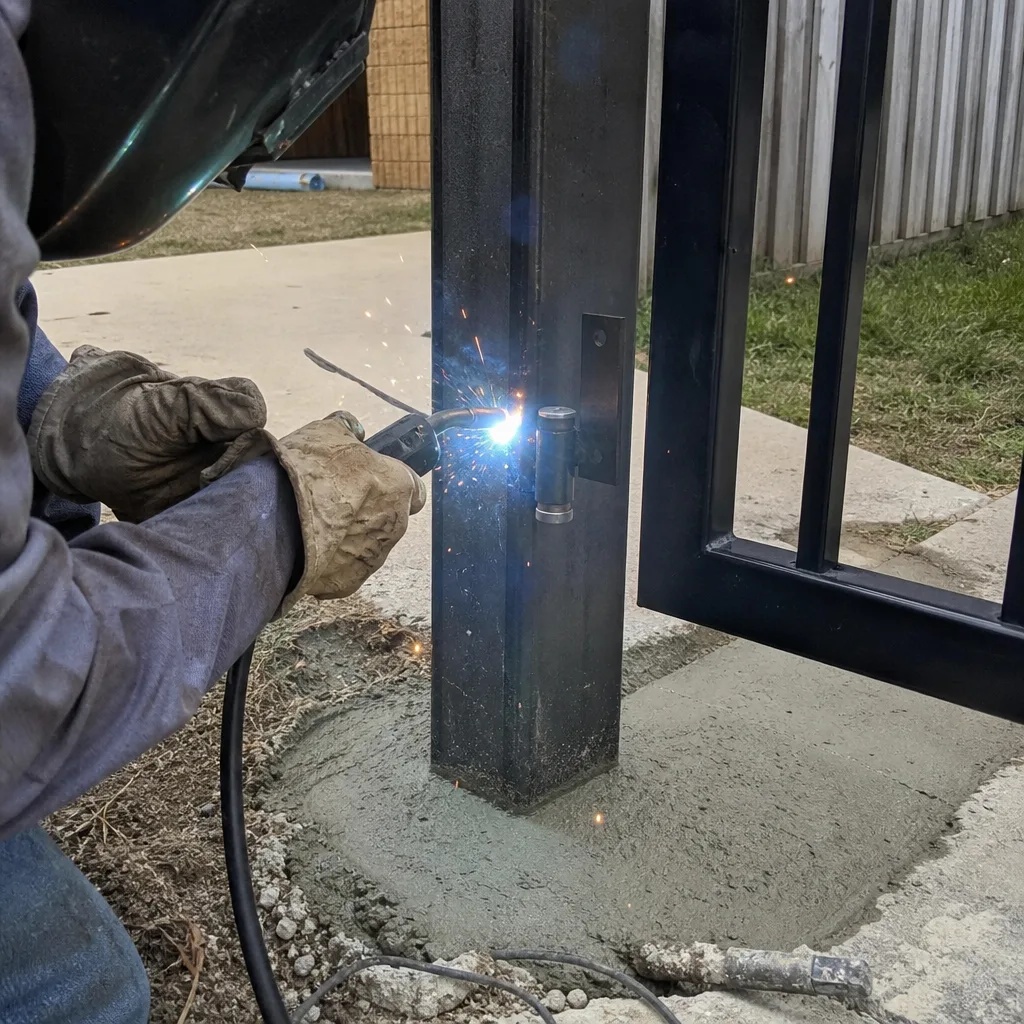
A gate doesn’t fail suddenly. It fails in slow motion, and the warning signs are there for anyone who knows what to look for. Establish your baselines: cycle time, sound, gaps, remote range. Check them monthly. Know the difference between a lubrication grind and a bearing failure, between soil movement and post failure, between an intermittent remote and a dying capacitor. When a symptom crosses the threshold in the reference table, call someone who will document what they found, set the price in writing, and leave a record of what was done. For Lewisville homeowners, that’s the difference between a $200 adjustment and a $900 rebuild. Vance Gate Repair Lewisville is at Vance Gate Repair Lewisville home when you need us, and the phone is (817) 826-9477.
Written by Adrian Vance, Owner at Vance Gate Repair Lewisville, serving Lewisville since 2014. Browse our more guides & resources for homeowners.