
Last updated September 20, 2026
Free on-site gate assessment - hinges, posts, and your LiftMaster or Nice gate operator checked before anything is quoted
The assessment is free and the quote is the invoice.

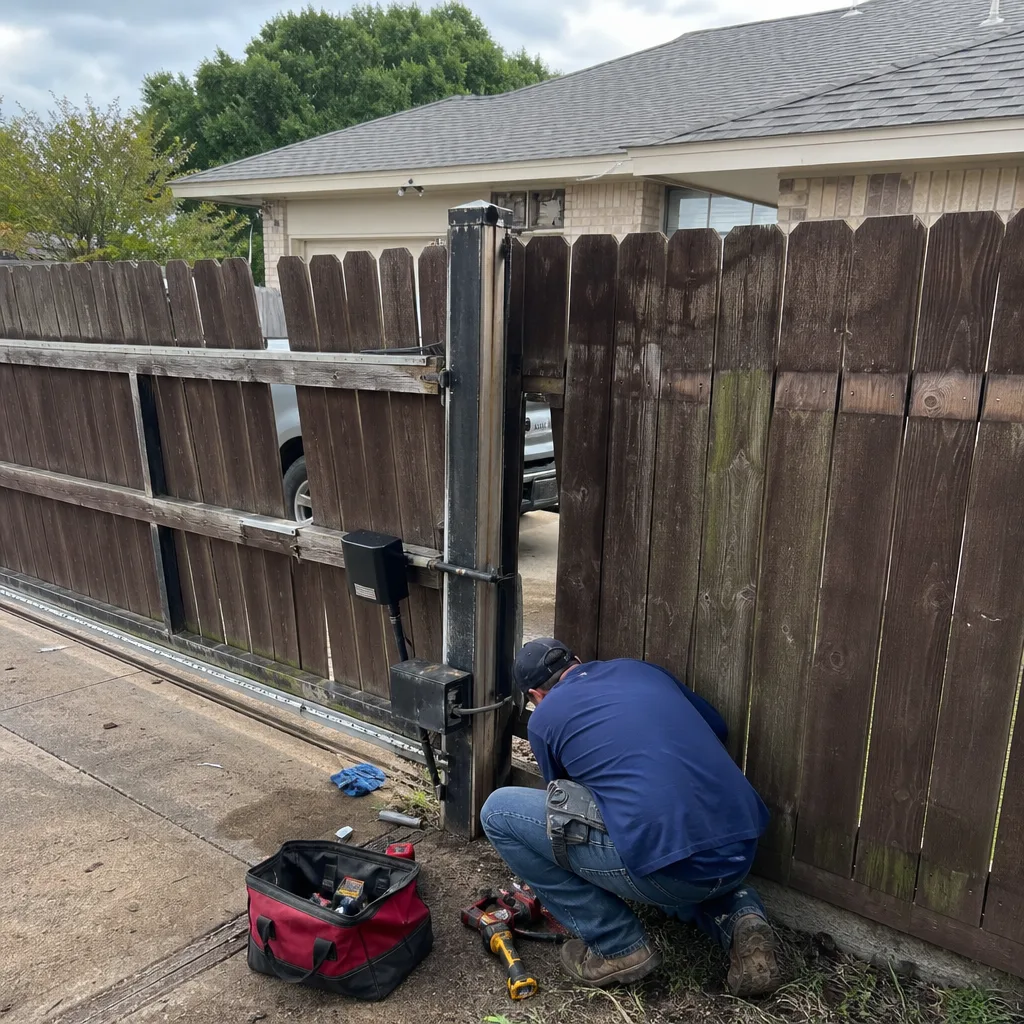 Before
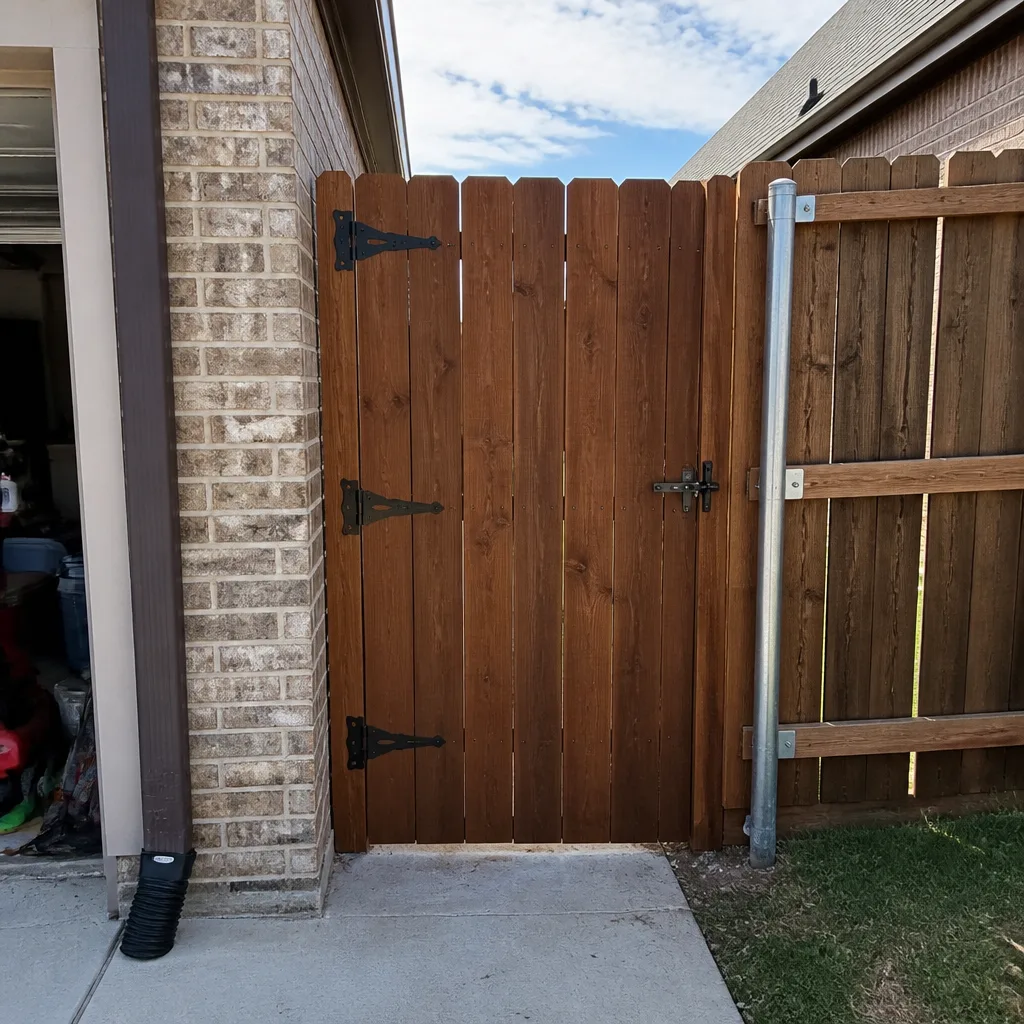 After
After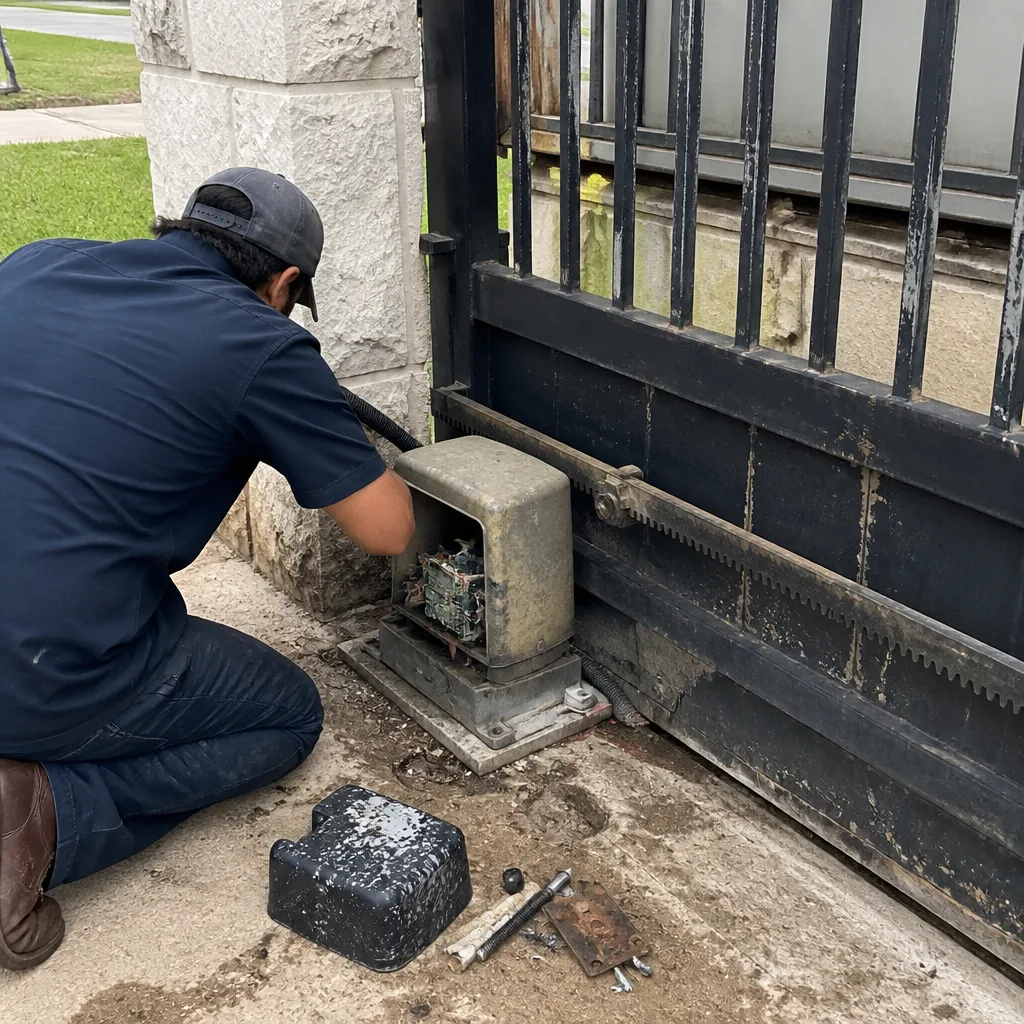 Before
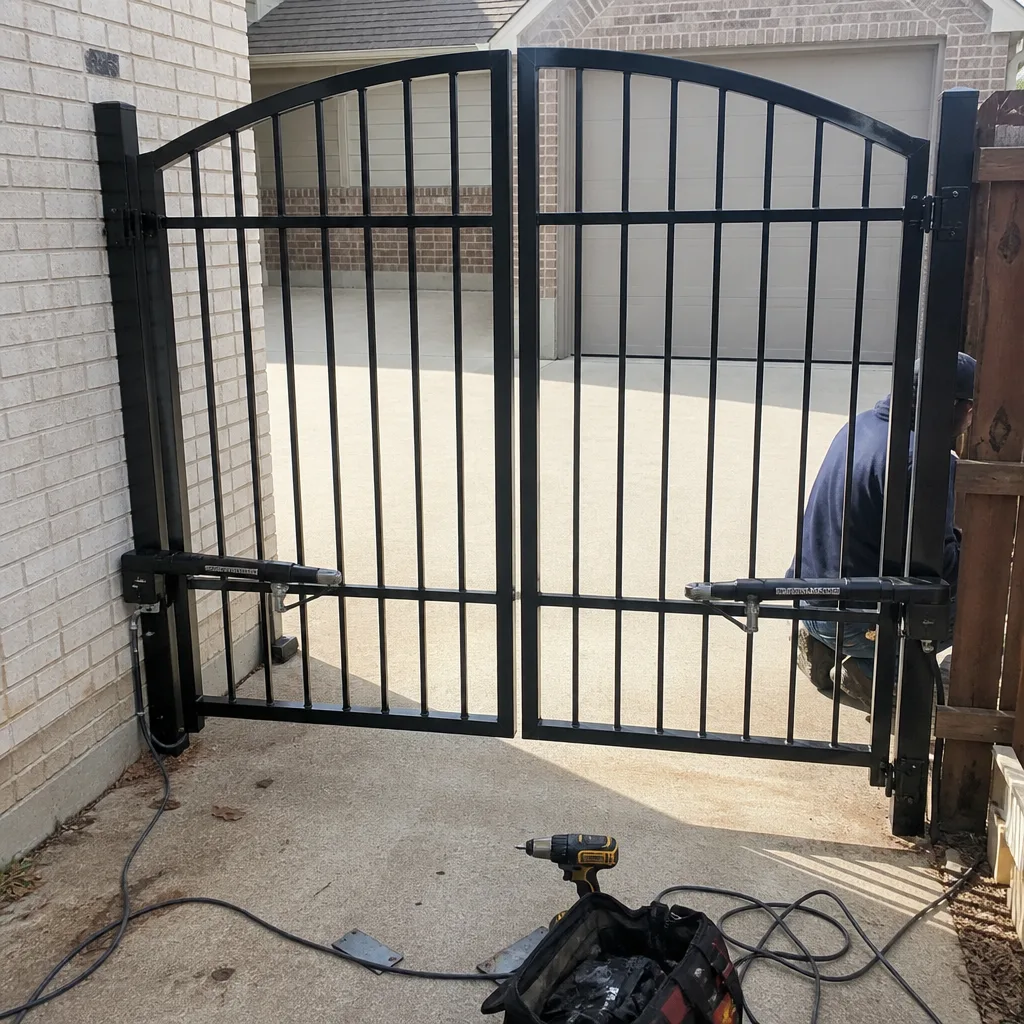 After
After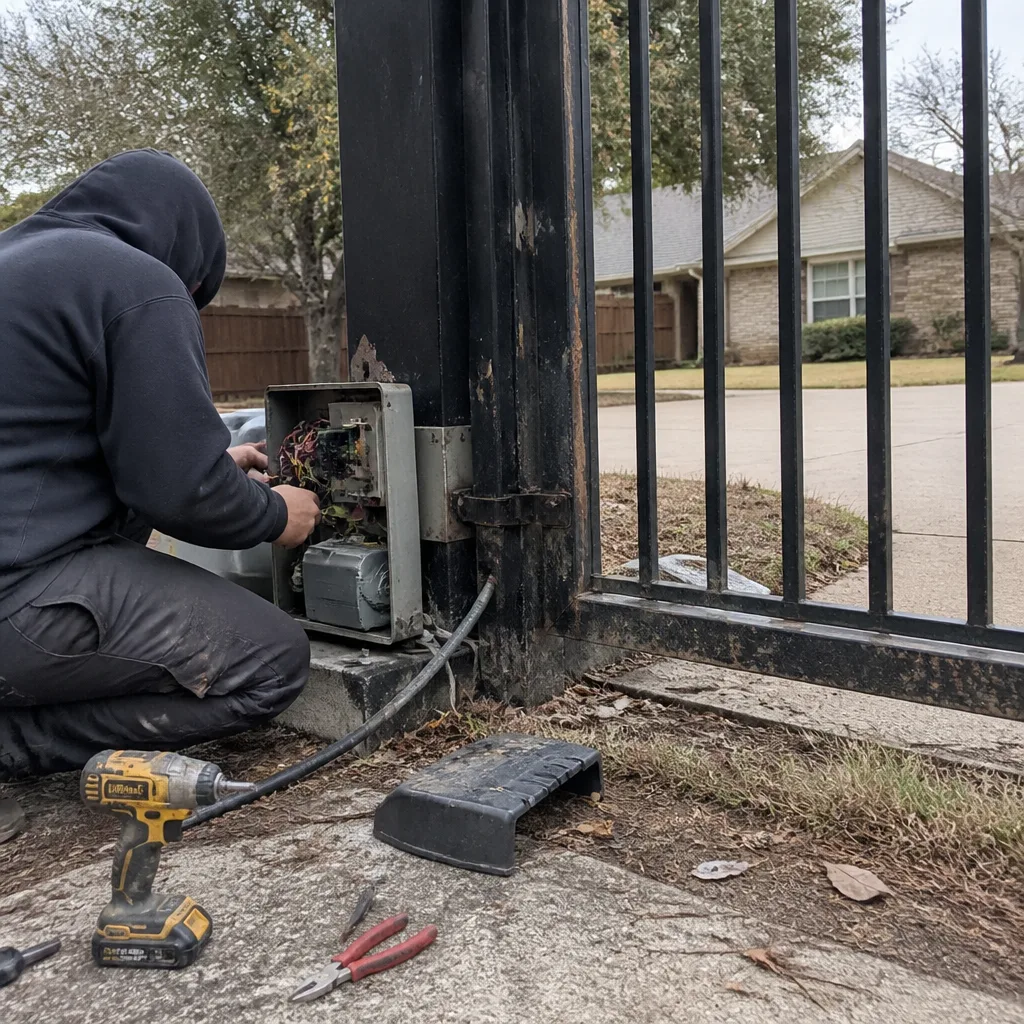 Before
 After
AfterSeasonal Gate Repair Care for Lewisville: Year-Round Homeowner’s Guide
The gate board that fails in August usually started its decline in May, when afternoon temperatures inside an unvented control box hit 140°F for the first time that year. Lewisville homeowners tend to think of gate maintenance as a once-a-year chore, but the damage pattern here says otherwise. Our climate splits its punishment into two distinct halves: summer heat that cooks electronics and breaks down seals, and winter freeze-thaw cycles that shift concrete and crack welds. A single spring inspection misses the entire window when most component stress accumulates. This guide and our Complete Guide to Gate Repair in Lewisville assign specific inspections to specific seasons so you catch the slow failures before they become emergency repairs. We’ve structured it around what we actually document on site in Lewisville, from summer control-box temperatures to winter keypad behavior, so you know exactly what to check and when.
Quick Answer
Seasonal gate care in Lewisville means checking different components at different times of year, not running the same checklist every season. Summer demands attention to control box ventilation, battery float voltage, and seal condition because sustained 95°F-plus days push electronics past their design limits. Winter requires checking hydraulic fluid viscosity, battery cold-cranking amps, and keypad membrane flexibility before the first hard freeze, because failures below 28°F happen fast and without warning.
Table of Contents
- Summer Heat: The Season That Kills Gate Electronics in Lewisville
- Fall Inspection: Reading Hinge Wear Before the First Freeze
- Winter Failures: The Three Components That Quit Below 28°F
- Spring Recovery: Post-Freeze Soil Inspection and Post Lean
- How to Build a One-Page Seasonal Gate Log
- Seal and Weatherstripping Care by Season
- Common Mistakes to Avoid
- When to Call a Professional
- Frequently Asked Questions
- The Bottom Line
BeforeAfterSummer Heat: The Season That Kills Gate Electronics in Lewisville
Lewisville summers routinely push ambient temperatures past 100°F, but the temperature inside a gate control box tells a different story. We’ve measured unvented boxes at 140°F on afternoons when the air temperature was 96°F. That gap matters because most control boards are rated for continuous operation at 140°F, and the margin disappears entirely when direct sunlight hits a dark metal enclosure facing west.
The component most vulnerable to heat in a gate system is not the motor. It’s the control board, followed closely by the battery in systems that use one. Heat accelerates the chemical degradation of sealed lead-acid batteries, and every 15°F above 77°F roughly halves their expected service life. A battery that would last five years in a shaded, ventilated box can fail in two years inside a sealed, unvented enclosure in Lewisville.
Here’s what we check and document during summer months, in order of priority:
- Control box ventilation. Look for vent holes that are painted over, blocked by shrubs, or missing entirely. The box should have airflow high and low. If the manufacturer provided a sun shield, confirm it’s still installed and not resting against the box itself.
- Battery float voltage. With the gate idle and the charger active, a healthy 12V battery should read between 13.2 and 13.8 volts at the terminals. Anything below 13.0 means the charger is not maintaining the battery, and summer heat is accelerating the decline. Write the reading down.
- Capacitor bulge or discoloration. Motor start capacitors swell and leak when overheated. We photograph any capacitor that looks domed rather than flat on top.
- Limit switch drift. Thermal expansion pushes mechanical limit switches slightly out of position. A gate that stops one inch short in June may over-travel two inches by August. Mark the current position with a paint pen so you can see drift later.
- Seal condition. UV light in North Texas is relentless. Rubber edge seals turn brittle and crack. A cracked seal lets dust into the track or the motor housing, and dust is abrasive in a way that shortens component life silently.
For summer, ventilation and battery voltage beat every other maintenance task. The gate that runs fine on a 95°F evening is one thing. The gate that has to work at 105°F after three consecutive weeks of that, with no airflow and a battery that’s been slowly cooking since May, is how we end up doing board replacements in August. If you’re unsure where your control box sits on this scale, our gate repair service in Lewisville includes a documented summer thermal check.
Fall Inspection: Reading Hinge Wear Before the First Freeze
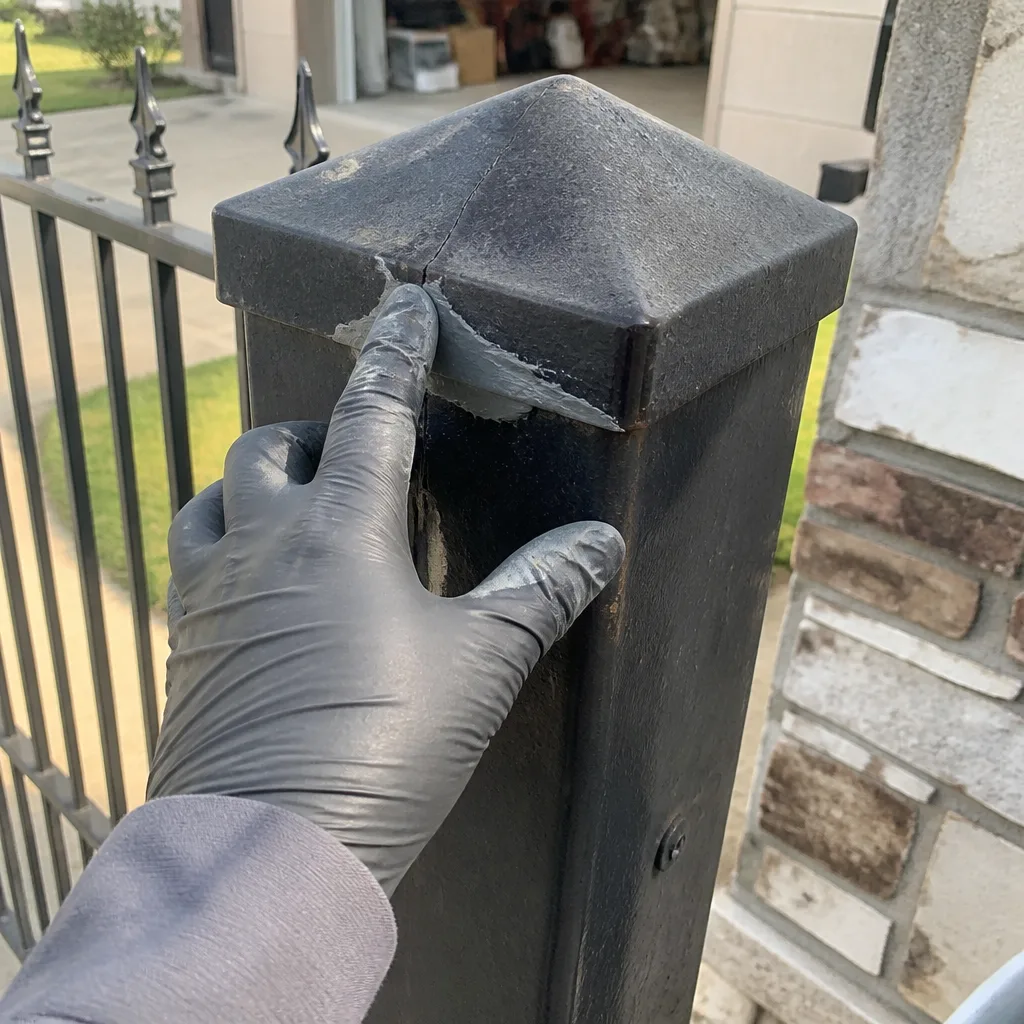
Fall is the season when hinge problems become visible if you know what to look for. A gate that’s been slowly settling all summer will show it at the latch side first. The gap between the gate leaf and the post changes, and that change becomes permanent when the first freeze locks everything in place overnight.
Here’s the process we follow in October and early November, before the first hard freeze reaches Lewisville:
- Measure the gap at the latch. Use a tape measure, not your eye. The gap between the gate edge and the latch post, measured at the top and bottom, should be within a quarter inch from top to bottom. If the top gap is noticeably wider than the bottom, the gate leaf is sagging, which means hinge wear is already underway.
- Lift test. With the gate closed, grab the latch-side edge and lift straight up. Movement beyond an eighth of an inch indicates worn hinge bushings. On a swinging gate, this is the standard test. On a sliding gate, push the gate laterally from the latch side and watch for play at the trucks.
- Listen to the hinges. A hinge that clicks or pops during movement is not the same as one that squeaks. Squeaking is lubrication. Clicking is metal-to-metal wear, and it will not fix itself with grease.
- Check the hinge fasteners. Bolts that have loosened even one full turn let the gate shift under load. Tighten to spec now. Once a freeze arrives, the thermal contraction of the metal makes it harder to remove and re-tighten properly.
- Photograph the wear points. A photo taken in October with a tape measure in frame gives you a baseline. The same photo in March tells you exactly how much movement occurred over winter.
The reason fall hinge inspection matters more in Lewisville than in, say, a coastal city is the soil. North Texas clay expands when wet and contracts when dry. That cycle moves gate posts by fractions of an inch every year. The hinge is where that movement concentrates. A hinge with worn bushings is what turns a six-inch post shift into a gate that won’t latch, and the first morning it won’t latch is usually in the twenties.
We also recommend fall as the time to lubricate properly. Not WD-40. A lithium-based grease on the hinge pins, applied after cleaning the pins with a rag, will survive the winter better than a spray lubricant that washes out with the first rain. This is the kind of detail that shows up in our photo logs because we document what we applied, not just that we applied something.
Winter Failures: The Three Components That Quit Below 28°F
Lewisville winters are mild by northern standards, but the threshold that matters for gate components is 28°F, and the city crosses it dozens of times each season. What makes North Texas winter hard on gates is not the depth of the cold but the oscillation. A gate system that swings between 65°F and 25°F over 48 hours cycles through thermal expansion and contraction repeatedly, and that repetition finds the weakest component.
Three components fail most often below 28°F, and none of them give much warning:
- Hydraulic fluid viscosity. Gate operators that use hydraulic pumps, common on heavier swing gates, move fluid through narrow passages. Cold fluid thickens, and the pump has to work harder to produce the same movement. Below about 28°F, some fluids are thick enough that the pump cavitates or the pressure relief trips. The symptom is a gate that starts, stalls, and beeps an overload code. A fluid change to a lower-viscosity specification before winter prevents this.
- Battery cold-cranking amps. Backup batteries lose significant cranking capacity in the cold. A battery rated at 7 amp-hours at 77°F might deliver half that at 20°F. If the gate relies on battery power during a winter power outage, that’s when a marginal battery reveals itself. We test cold-cranking performance in fall, not during the first freeze when the gate won’t move.
- Keypad membrane cracks. Silicone keypad overlays, the rubber face that covers the buttons, stiffen and crack in the cold. A crack lets moisture in, and moisture on the keypad’s internal contacts causes phantom inputs or complete failure. The crack usually forms during a freeze but the root cause is UV exposure from the previous summer. The two seasons work together against the same component.
The winter check we perform focuses on these three, in that order of likelihood. A homeowner can spot a cracked keypad membrane visually. Viscosity and cranking amps require a meter and a bit of knowledge, which is why we include both in our gate repair seasonal service. For Lewisville specifically, we also check the gate track for ice accumulation on north-facing installations. The tracks freeze after a sleet event, and the gate tears up its own wheels trying to move over the ice. A de-icing product applied sparingly is fine, but nothing with rock salt, which corrodes aluminum and steel track fasteners.
Spring Recovery: Post-Freeze Soil Inspection and Post Lean
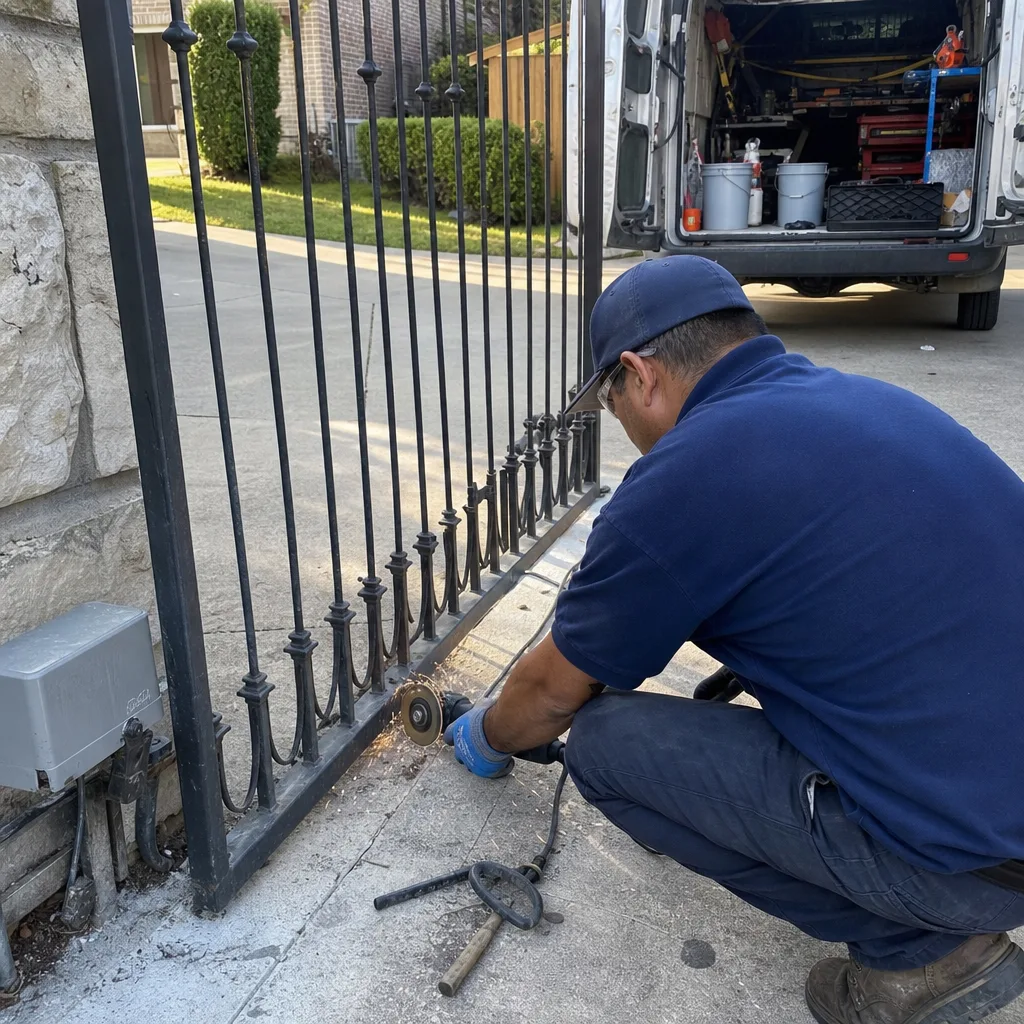
Spring in Lewisville is when the full cost of winter shows up in the geometry of the gate. The clay soil contracts and expands through every freeze-thaw cycle, and the post that was plumb in November may be visibly leaning by March. The question is how much lean is acceptable, and the answer is less than most homeowners assume.
Here’s the measurement we use, and you can do it with a four-foot level and a tape measure:
- Check post plumb. Place the level vertically against the gate post, on the hinge side first. A post that’s out of plumb by more than a quarter inch over four feet needs attention. That’s a small number, but it translates to significant gate sag at the latch when the gate leaf is nine or ten feet long.
- Measure the gate-to-ground clearance. A swing gate that had three inches of ground clearance in September and has two inches in March has moved. Either the post has shifted, the hinges have worn, or the gate leaf itself has deformed. Document the number.
- Inspect the concrete collar. Look for a gap between the concrete footing and the surrounding soil. A visible gap means the footing has moved, not just the post. This is more serious and usually requires resetting the post or adding a larger footing.
- Check the hinge plates. Post lean concentrates stress at the hinge plate, the flat steel bracket bolted to the post. Look for cracks radiating from the bolt holes. A cracked hinge plate is a fatigue failure, and it means the gate has been fighting the post for months.
- Photograph everything with a tape measure in frame. These photos become the baseline for next spring. Drift measured over two years tells you more than any single inspection.
The spring check is not just a repeat of fall. Fall is about preventing freeze damage. Spring is about measuring what the freeze actually did. In our experience, the Lewisville gates that fail catastrophically in summer, the ones where a hinge plate shears or a post drops, are always gates that showed measurable drift in spring and got ignored, as we detail in our DIY vs Professional Gate Repair guide. A quarter inch becomes a half inch becomes a failure, and the whole sequence was visible to anyone who measured it.
For a deeper look at what a full replacement involves when post lean has gone too far, our Lewisville gate installation page covers the process from footing to final adjustment.
How to Build a One-Page Seasonal Gate Log
Documentation is the difference between a gate that gets maintained and a gate that gets replaced. A one-page log, kept with the gate manual, gives any technician a complete picture in minutes. Here’s the specific format we recommend for Lewisville homeowners:
For each seasonal entry, record five things:
- Date and weather conditions. Include the temperature at inspection time and the highest or lowest temperature since the last entry. “March 12, 42°F, last freeze Feb 28 at 23°F” is exactly the context a technician needs.
- Measurements. Gate gap at latch top and bottom, post plumb reading, battery float voltage, and any control box internal temperature if you measured it. Write the actual numbers. “Top gap 3/8 in, bottom gap 1/4 in” is useful. “Looks okay” is not.
- Observations. New noises, rust spots, cracks in seals, condensation inside the control box, anything that changed since the last entry.
- Actions taken. Grease applied, bolts tightened, battery replaced, seal replaced. Include the brand and part number if you have it.
- Photos. Three minimum: hinge plates, control board, and the full gate from the latch side. Store them in a labeled folder, not scattered in a phone camera roll.
The reason we push this hard is that we’ve diagnosed gates in twenty minutes that other companies quoted for replacement because the previous technician left no record. A log showing that the battery was replaced in March and the voltage has been dropping steadily since September points directly at the charger, not the battery. Without the log, that diagnosis takes a lot longer and costs more because the technician has to redo the investigation from zero.
We follow this same discipline on every visit through the Vance Gate Repair Lewisville documentation standard. The homeowner gets a photo log and a written record of every adjustment, reading, and part number. That record lives with the gate, not in a filing cabinet somewhere, because the gate is what matters.
Seal and Weatherstripping Care by Season
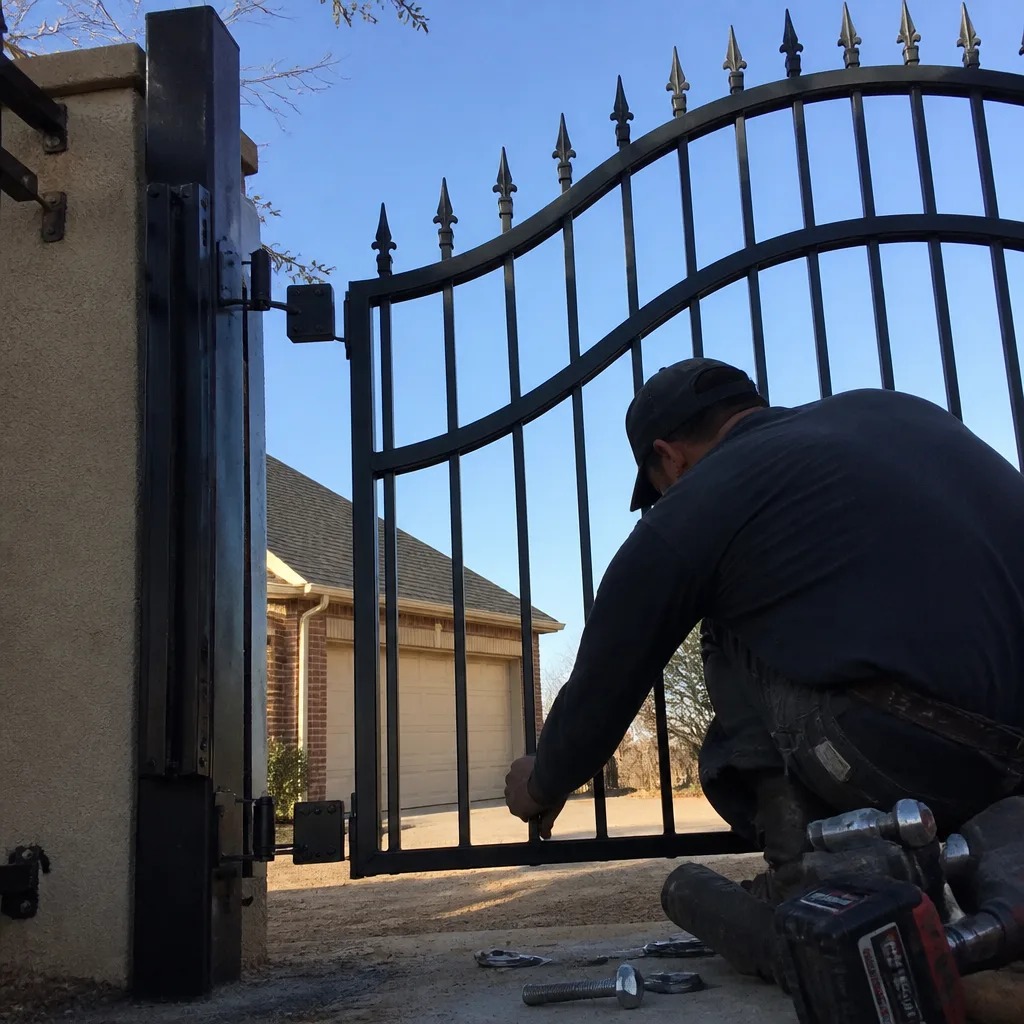
Gate seals are boring until they fail, and then they’re expensive. The rubber edge seals, bottom sweeps, and control box gaskets on a gate in Lewisville face UV exposure that most manufacturer specs don’t account for. The same seal that lasts eight years on a shaded gate in the Pacific Northwest lasts three to four years on a west-facing gate in Lewisville.
Summer: Inspect all rubber and silicone components for brittleness. Press on the seal with your thumbnail. If it leaves a permanent mark and the material doesn’t spring back, UV degradation has started. Replace before the fall rains. A brittle seal cracks instead of flexing, and a cracked seal lets water into the motor housing or track.
Fall: Check the bottom sweep on sliding gates. Leaves and debris collect in the track, and a missing or damaged sweep lets that material get pulled into the gate mechanism. The sweep is a wear item, cheap to replace, expensive to ignore.
Winter: Check the control box gasket. A compressed gasket that’s lost its flexibility lets condensation form inside the box when warm air meets cold metal. That condensation drips onto the control board and causes corrosion you won’t see until spring. Desiccant packs inside the box help, but they only mask a failed gasket.
Spring: After the last freeze, check every seal for freeze damage. Rubber that froze while compressed may have taken a set and won’t seal even after it warms. If you see light through a closed seal gap, replace it.
Seals are cheap. The components they protect are not. The seasonal rhythm here is simple: UV kills them in summer, water exploits them in winter, and frost finishes the job in spring.
Common Mistakes to Avoid
- Running the same checklist every season. A spring inspection focused on hinges does nothing for a control board that’s about to cook in July. Match the inspection to the season’s specific threat.
- Ignoring a gate that still works. The most common failure we see in Lewisville is a gate that gave months of warning signs, all of which were ignored because it kept opening and closing. Noise, vibration, and visible sag are data. Record them.
- Lubricating without cleaning first. Grease applied over dirt and metal shavings creates a grinding paste. Wipe the hinge pins and track rollers clean before adding lubricant.
- Using the wrong lubricant. WD-40 is a penetrant and water displacer, not a lasting hinge lubricant. Use lithium grease on hinge pins and a dry silicone spray on track guides.
- Wait-and-see on post lean. A quarter inch of post lean this spring is a half inch next spring and a hinge plate failure the year after. The fix is cheapest at the first measurement.
- No photo record. Without a dated photo, every future inspection starts from zero. A phone camera and a small tape measure are the cheapest gate maintenance tools you own.
- Replacing the operator without checking the gate itself. A gate that’s binding, sagging, or fighting its own track will destroy a new motor the same way it destroyed the old one. The motor is usually the symptom, not the cause.
When to Call a Professional
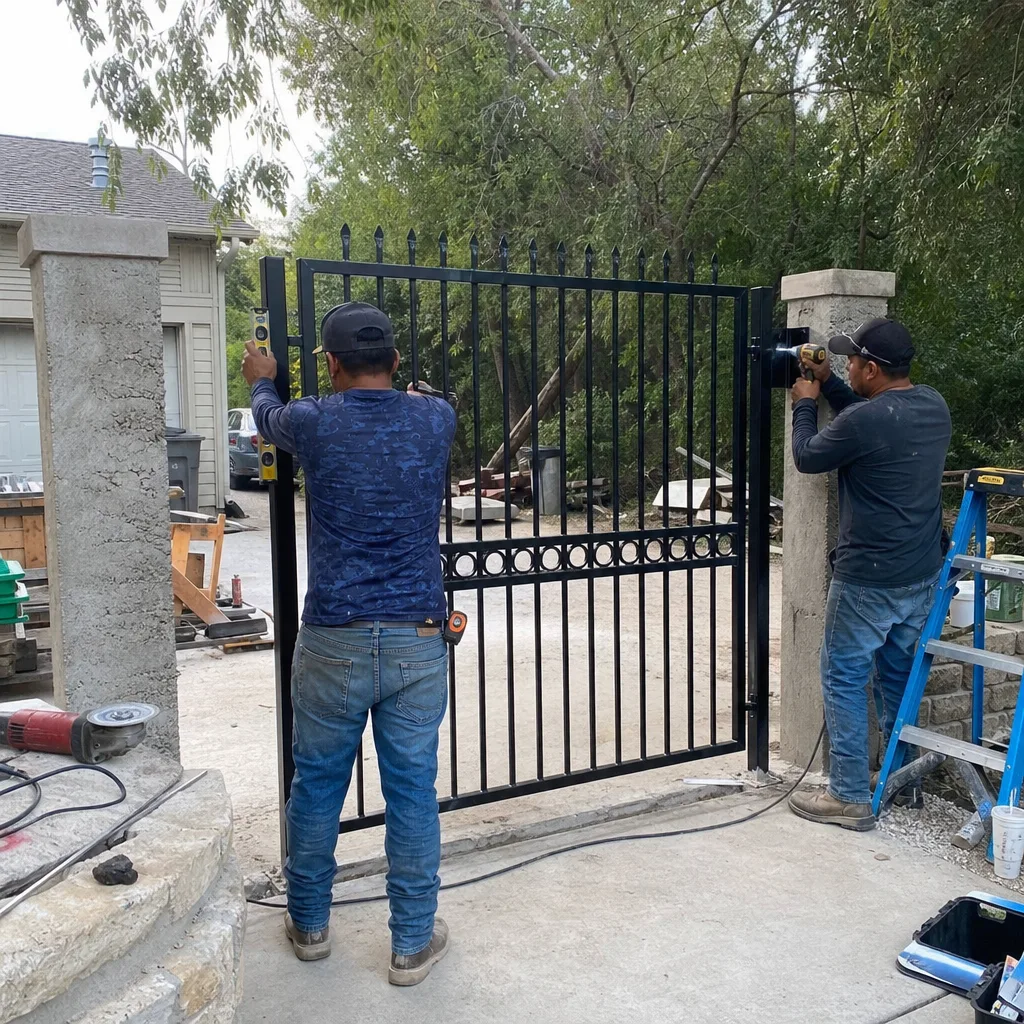
Some seasonal tasks fit a homeowner’s skillset. Measuring gaps, photographing hinge plates, checking seals, and documenting what you find are all within reach. Other tasks are not, and the edge cases are where a trained eye matters. Call a professional when you see post lean beyond a quarter inch, when the control board shows signs of heat discoloration or corrosion, when the gate trips an overload code more than once, or when a hinge plate shows any crack at all. These are structural and electrical issues that get worse with partial fixes. Vance Gate Repair Lewisville offers free estimates in Lewisville, and we document what we find with a written price before any work starts. Call (817) 826-9477 and we’ll come out and look.
Frequently Asked Questions
Twice a year minimum, once in spring and once in fall, with additional attention to the control box in mid-summer if the gate sits in direct afternoon sun. A ten-year-old gate in Lewisville with unshaded electronics may need a third check in July specifically for board temperature and battery voltage. The service interval should match the gate’s exposure, not a generic calendar.
Most gate control boards are rated for continuous operation at 140°F, and an unvented control box in direct Lewisville sun reaches that threshold on afternoons when the air temperature is only 96°F. Sustained operation at the rating limit is what shortens board life. Ventilation, a sun shield, and a box that’s not painted black are the cheap mitigations.
Three causes dominate in Lewisville. Hydraulic fluid thickens and the pump struggles or trips its overload. Battery capacity drops with temperature, so a battery that’s fine at 70°F can be too weak at 25°F. And keypad membranes stiffen and crack, letting moisture onto the contacts. Each has a different fix, so identifying which one applies to your gate is the first diagnostic step.
You can, but only if you match the specification exactly and check the charger voltage before and after. A new battery on a failing charger will die in months, and now you’ve spent money without fixing the problem. We test the charger output as part of any battery replacement because the battery is often the symptom. For help with a gate motor or battery in Lewisville, our gate motor and opener service page covers the full diagnostic process.
Seasonal inspection and adjustment visits in the Lewisville market typically run between $95 and $175 depending on the gate type and whether any parts need replacement. The exact price is written and handed over before any work starts, which is how Vance Gate Repair Lewisville home service has handled every job since 2014. Call (817) 826-9477 for an exact quote, estimates are free.
We service Ghost Controls, DoorKing, Elite, Mighty Mule, and five other major gate automation brands, so the motor already on the property is almost certainly one we can diagnose and repair. We don’t steer anyone toward a replacement brand when a repair is the right fix. The brand on the gate matters less than the documentation behind the service.
Measure your gate gaps, photograph the hinge plates, test the backup battery, and replace any rubber seal that’s brittle from summer sun. Then write all of it down. The Gate Repair in Lewisville calls we get in January are almost always gates that skipped the October measurements and the November seal replacement. Call (817) 826-9477 if you want the fall check done with a documented record.
The Bottom Line
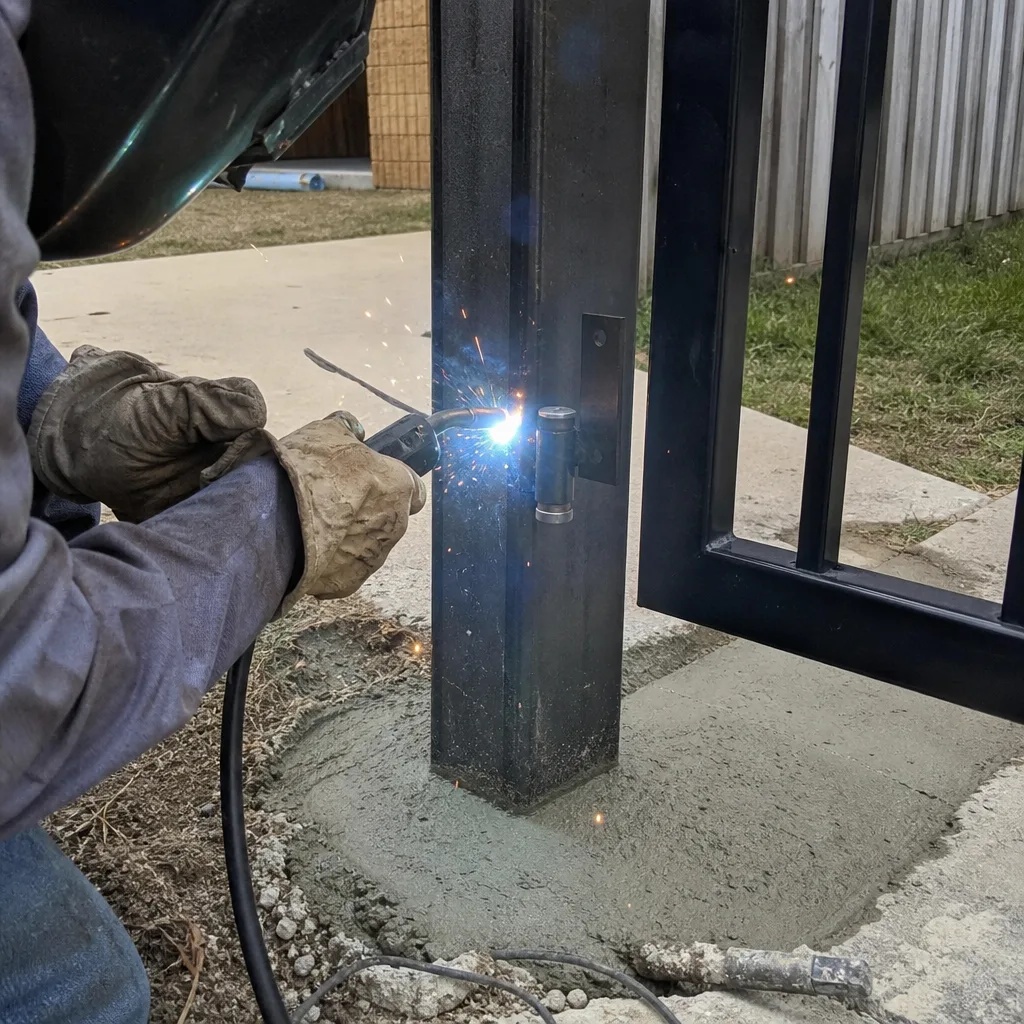
Lewisville’s seasons don’t stress a gate evenly, so the maintenance schedule shouldn’t be even either. Summer kills electronics through heat and UV. Winter kills batteries, fluid, and keypads through cold and moisture. Fall is for measuring hinge wear, and spring is for measuring the damage winter left behind. The single highest-value habit is the written log: five data points per season, three photos, one page. It turns the next repair call from an investigation into a confirmation. We’ve built our entire service model in Lewisville on this idea: a written price before work starts, a documented record when the technician leaves, and a 365-day promise that the repair is right. When you’re ready, call (817) 826-9477 for a free estimate. We’ll bring the meter, the camera, and the written quote.
Written by Adrian Vance, Owner at Vance Gate Repair Lewisville, serving Lewisville since 2014.